Air Dry Clay vs Kiln Fired Clay: Which Should You Use?
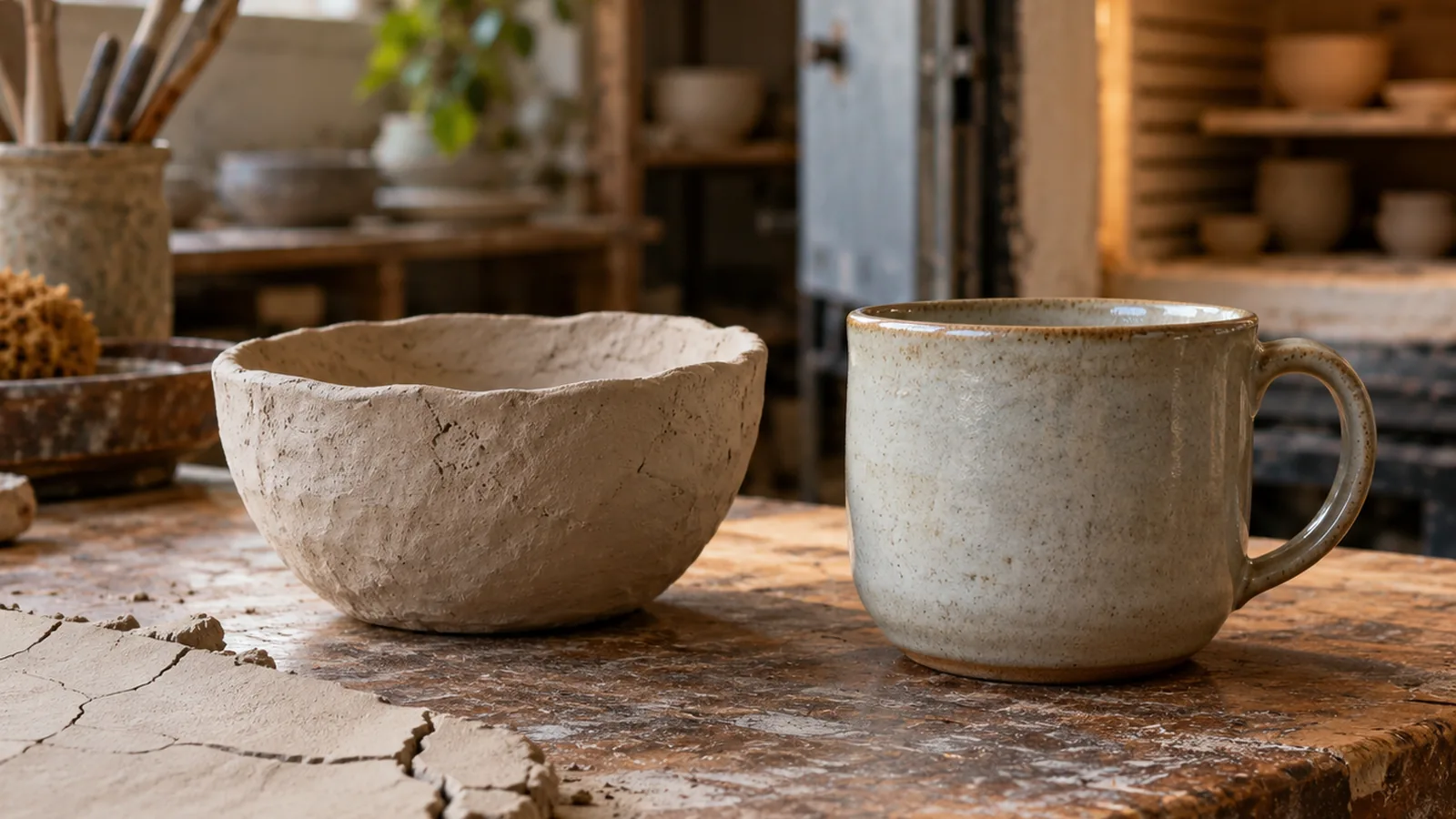
Air dry clay vs kiln fired clay comes down to equipment and use: air-dry clay needs no kiln, while kiln-fired clay must be fired in one; air-dry clay can take 24 hours to dry to the touch. For food, liquids, or functional pottery, choose clay meant for kiln firing and confirm the firing studio can fire it as required.
Should you use air-dry clay or kiln-fired clay?
Quick answer: Choose air-dry clay for indoor decorative pieces that won’t hold food or liquid; it hardens as water evaporates and needs no kiln. Choose kiln-fired clay for functional pottery, including tableware, if the clay body is fired correctly and the glaze suits its use. If the piece must hold water, confirm the fired clay body is sufficiently mature, since firing alone doesn’t make pottery waterproof. Check that your kiln or firing studio accepts the clay body and its required firing cone before buying.
How Do Their Strength and Water Resistance Differ?
There isn’t enough evidence here to rank the two types by strength or durability. No comparable strength figures are available, so choose based on the project’s water exposure and the specific clay body rather than assuming one type is stronger.
Air-dry clay remains vulnerable to water and outdoor exposure. A clear coat doesn’t always solve that problem: Crayola says varnish does not waterproof its air-dry clay. Instructions vary by product, though. AMACO says its air-dry clay can be sealed with shellac “to waterproof,” so check the maker’s directions for the clay you have.
Kiln-fired pottery can also absorb water. Its resistance depends on the clay body and how fully it has been fired; porous or underfired clay may absorb water or leak. Ceramic Arts Network Firing alone doesn’t guarantee a watertight result.
Mature stoneware averages about 2–3% water absorption, while earthenware averages about 8–12%. Those figures describe clay-body categories, not a guarantee for any particular piece. Firing and body choice matter, and “kiln-fired” doesn’t necessarily mean “waterproof”.
A properly matured, vitrified clay body can hold water without glaze; vitrification means the clay has been fired enough for its particles to fuse and reduce porosity. Glaze can add a surface coating, but it can’t replace sufficient vitrification. If your piece must hold water, confirm that its clay body and firing are suited to that use instead of relying on glaze alone.
What Projects Suit Each Type of Clay?
Choose air-dry clay for decorative indoor pieces, and kiln-fired clay for functional pottery such as tableware, provided the clay body is fired correctly and the glaze suits its intended use. For decorative indoor projects, air-dry clay can work without access to a kiln, but Crayola says its finished pieces shouldn’t contact food or liquids. That makes it a fit for ornaments, sculptures, and other indoor objects used for display rather than serving or storage.
For tableware and functional pottery, choose pottery clay intended for kiln firing. The result depends on matching the clay body and glaze to the intended use, and firing the body correctly. If you’re using a shared kiln or firing studio, check which clay and firing cone it accepts before buying materials.
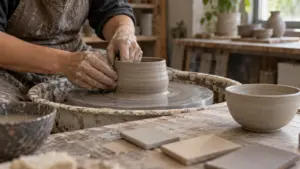
Crayola Air-Dry Clay can also be shaped on a potter’s wheel by intermediate or advanced students, but the maker says this clay isn’t suitable for kiln firing or traditional ceramic glazes. So, wheel shaping doesn’t make it kiln clay: choose it for a wheel-shaped decorative piece, not a project that needs to become fired pottery.
Check whether the air-dry clay you’re buying can be sealed. AMACO says its particular air-dry clay can be sealed with shellac “to waterproof,” while Crayola says varnish doesn’t make its clay waterproof. Follow the instructions for the exact clay you’re buying. A coating doesn’t necessarily make the piece suitable for outdoor use or contact with food or liquid.
What Changes During Drying and Firing?
Air-dry clay hardens as it dries, while kiln-fired clay hardens through firing in a kiln; the hardening method is the main process difference. Air-dry clay needs time to dry, while kiln-fired clay needs a kiln set for the clay body and intended result.
Drying time depends on the piece and its surroundings. Larger or thicker pieces, humid conditions, and changes in airflow or room temperature can extend drying. Crayola’s general guidance for its air-dry clay is 24 hours to touch and 72 hours to dry completely, though piece size and conditions affect those times. Sculpey estimates that its air-dry clay may take about 24 hours to several days.
Kiln firing has no single temperature that suits every clay. Match the firing range to the clay body and follow its maker’s specified cone, a rating used to describe firing conditions. Before buying pottery clay, check that your kiln can fire it, or ask the studio where you plan to fire it which clay and cone it accepts.
As one firing example, functional pottery under ⅜ in (1.9 cm) thick may take about 12–14 hours to reach cone 06 on a slow bisque program; thicker or larger work needs a slower schedule. That example isn’t a general schedule for all clay bodies or pieces.
Air-dry products also differ in their firing instructions. Crayola Air-Dry Clay, for example, isn’t suitable for kiln firing or traditional ceramic glazes, so check the specific product’s directions before firing.
Air-Dry and Kiln-Fired Clay Compared
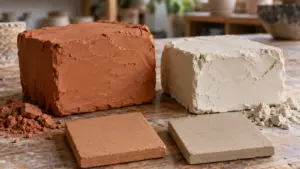
Air-dry clay vs kiln fired clay comes down to how the clay hardens and what you need the finished piece to do. Air-dry clay hardens as water evaporates at room temperature; pottery clay dries and then hardens in a kiln, with the firing temperature set for the clay body and intended result.
| Comparison | Air-dry clay | Kiln-fired clay |
|---|---|---|
| Hardening method | Dries at room temperature as water evaporates | Dries, then hardens through kiln firing |
| Equipment | No kiln required | Requires a pottery kiln; match the kiln’s firing range to the clay body |
| Suitable use | Decorative indoor pieces that won’t hold food or liquid | Functional pottery, including tableware, when the body is fired correctly and the glaze suits its use |
| Water resistance | Vulnerable to water and outdoor exposure; varnish does not waterproof Crayola’s clay | Depends on the clay body and firing; porous or underfired clay may absorb or leak water |
| Water absorption | — | Mature stoneware: about 2–3%; earthenware: about 8–12% |
The strongest practical dividing line is intended use: choose air-dry clay for indoor decoration, and kiln-fired clay for functional pottery when you have access to a suitable firing setup. Firing alone doesn’t make pottery waterproof. A properly matured, vitrified body can hold water without glaze, while a porous body may still leak. Glaze must suit the piece’s use, and it can’t replace sufficient vitrification.
Frequently Asked Questions
Can air-dry clay be sanded or carved after it dries?
Yes, you can sand or carve air-dry clay after it dries, but work gently to reduce chipping or breakage. Drying time depends on the piece and conditions: thick or large pieces can take longer to dry fully.
Can kiln-fired clay crack or warp during drying or firing?
Yes, kiln-fired clay can crack or warp if drying or firing conditions don’t suit the piece. Thicker or larger work needs a slower firing schedule, and you should match the firing cone to the clay body.
How do you seal air-dry clay for outdoor use safely?
Follow the instructions for your clay and sealer. A coating doesn’t necessarily make the piece safe outdoors. Air-dry clay remains vulnerable to outdoor exposure; Crayola says varnish doesn’t waterproof its clay, while AMACO recommends shellac for its own product.
Does kiln-fired clay shrink differently than air-dry clay?
The available guidance doesn’t provide comparable shrinkage figures, so you can’t use shrinkage alone to choose between them. Drying and firing depend on the clay and process: kiln-fired clay needs a firing range suited to its body, and drying time varies with piece size and conditions.
Can you paint or glaze air-dry clay to make it food-safe?
No, painting or glazing air-dry clay doesn’t make it suitable for food use. Crayola says its finished pieces shouldn’t contact food or liquids, and its air-dry clay isn’t suitable for traditional ceramic glazes.
Conclusion
If you’re making an indoor decorative piece and don’t have kiln access, pick air-dry clay and follow its product instructions. If the piece needs to serve food, hold liquid, or function as pottery, choose a clay body meant for kiln firing and confirm the studio can fire it as required. Before buying, decide what the finished piece must do, then check the clay’s directions and your firing options.
Sources
- crayola.com (crayola.com)
- amaco.com (amaco.com)
- crayola.com (crayola.com)
- amaco.com (amaco.com)
- ceramicartsnetwork.org (ceramicartsnetwork.org)
- ceramicartsnetwork.org (ceramicartsnetwork.org)
- crayola.com (crayola.com)
- shop.amaco.com (shop.amaco.com)
- Can I use Crayola Air-Dry Clay on a pottery wheel? (crayola.com)
- sculpey.com (sculpey.com)
- sculpey.com (sculpey.com)
- ceramicartsnetwork.org (ceramicartsnetwork.org)