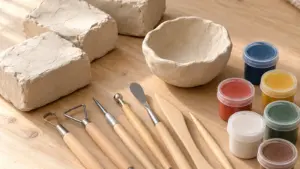
Ceramics vs Pottery Definition: What’s the Difference?
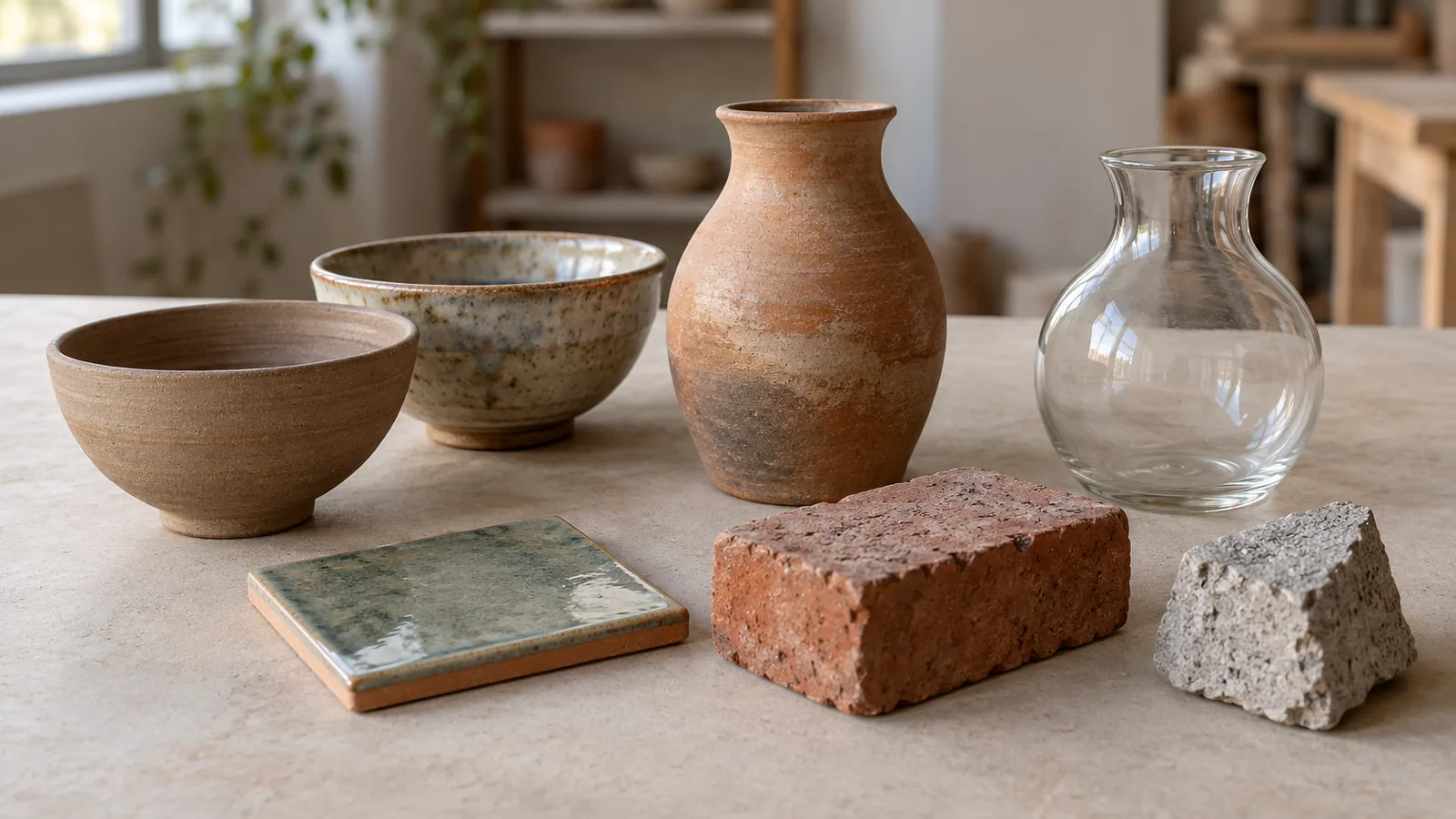
In the ceramics vs pottery definition, pottery is generally a subset of ceramics: it usually means fired clay objects, especially vessels. Ceramics is broader, covering pottery and four other materials or products: bricks, tiles, glass, and cement. Tiles and bricks are usually discussed as building products, not pottery vessels.
Choose the term based on what you mean: use pottery for fired clay vessels, and ceramics for materials, manufacturing, or building products. For sculpture or figurines, pottery and ceramic art can both fit, depending on the work and context. The word pottery alone doesn’t mean a handmade piece is food-safe.
Key Takeaways
- Pottery is a subset of ceramics, usually covering fired clay objects, especially vessels.
- Ceramics also includes tiles, bricks, glass, and cement, so use it for the broader material category.
- Use pottery for fired clay vessels; for tiles and bricks, use ceramics.
- Earthenware, stoneware, and porcelain are traditional pottery types, grouped by clay body and firing temperature.
- Firing makes stoneware vitrified and non-porous, so its body can store liquids and serve food.
Quick Verdict: Pottery Is Usually Ceramic
In craft usage, pottery usually means clay objects that have been shaped and fired, especially vessels such as pots and dishes. Pottery is one part of ceramics, the broader field that includes pottery and other ceramic materials and objects.
That distinction matters because “ceramics” can refer to a broad material category, while “pottery” commonly points to a type of clay object.
For example, tiles and bricks are ceramics, but they’re generally discussed as building products rather than pottery vessels. Glass and cement also fall within the broader category of ceramics in materials-science usage. So, “all pottery is ceramic” is a useful shorthand for craft usage, but “all ceramics are pottery” would be too broad.
The exact label can depend on context for clay sculpture and figurines, which may be described as pottery or ceramic art.
Ceramics vs Pottery at a Glance
Ceramics is the broader term; pottery usually refers to clay objects that have been fired, especially vessels. That makes pottery one part of ceramics, while some ceramic materials and products fall outside pottery.
| Term | Scope | Typical materials or objects | Common examples | Source |
|---|---|---|---|---|
| Ceramics | Broad field of non-metallic, inorganic materials and objects | Clay, glass, cement, bricks, tiles | Bricks and tiles used as building products | mse.umd.edu |
| Pottery | Part of the ceramic field | Fired clay objects, especially vessels | Clay containers and other vessels |
A clay sculpture or figurine can be called pottery or ceramic art, depending on context, so the boundary isn’t always strict.
Which Clay Types Count as Pottery?
The three traditional pottery types are earthenware, stoneware, and porcelain, grouped by their clay bodies and firing temperatures. Firing ranges vary by source, so use the range from your clay or glaze supplier when planning a firing.
| Pottery type | Recommended firing range (°C) | Range in sources (°C) | Source |
|---|---|---|---|
| Earthenware | 1,000–1,150 | 650–1,000; 1,000–1,150 | |
| Stoneware | About 1,200 | 1,150–1,300; about 1,200 | |
| Porcelain | 1,200–1,450 | 1,200–1,450; above 1,300 |
The recommended column uses the University of Waikato’s figures, while the final range column preserves both sources’ reported values. A clay body’s intended firing temperature matters when you choose a firing schedule.
The ranges also show why the names alone don’t tell you an exact firing temperature. In particular, porcelain’s reported ranges overlap with stoneware’s, so firing temperature by itself isn’t enough to identify a clay type.
How Do Pottery Types Differ After Firing?
Earthenware comes out of the kiln slightly porous and coarse, so it may need glazing and a second firing to reduce porosity. That added glaze helps address the body’s porosity; it doesn’t change the basic distinction between earthenware and denser stoneware.
Stoneware is harder and less porous than earthenware, and is usually waterproof. These qualities make it suitable for cooking, baking, storing liquids, and serving.
Stoneware glaze can be decorative rather than functional: one source describes glaze as an optional decoration, while another notes that stoneware is often glazed for decoration. That differs from earthenware, where glazing and a second firing are used to address porosity. A glazed surface may affect the finished look, but the sources describe stoneware’s fired body as non-porous even without making glaze the reason for that quality.
Which Term Should You Use?
For studio work
Use pottery when you mean fired clay work, especially vessels. For sculpture or figurines, either pottery or ceramic art can fit; the choice depends on the work and its context. Both terms can describe clay sculpture, so use the one that best matches how you present the piece.
The American Museum of Ceramic Art also separates pottery into commercial pottery, studio pottery, and art pottery. Those labels can help you describe how a piece was made or presented, while “ceramic” remains a broader term for the material and field.
For U.S. audiences
In the United States, pottery usually suggests ceramic vessels, rather than sculptural objects. If you make a clay figurine or sculpture, “ceramic art” may make the object type clearer; “pottery” can still work when the context supports it. Use “pottery” for vessels when you want the most familiar wording for a U.S. audience.
For material science
Use ceramics when discussing materials, manufacturing, or engineering. The term includes clay and pottery, along with materials such as bricks, tiles, glass, and cement. Ceramics covers more than pottery, which usually refers to fired clay objects, particularly vessels.
For building products, call tiles and bricks ceramics rather than pottery, since they’re generally discussed as building materials, not pottery vessels. In a technical context, define your intended scope if readers might confuse ceramic materials with pottery.
Frequently Asked Questions
Does pottery have to be functional?
No. Pottery often means clay vessels, but the term can also cover some figurines, and clay sculpture may be called pottery depending on context. If the piece is sculptural rather than a container, “ceramic art” may describe it more clearly, especially for U.S. audiences.
Why do people use “pottery” and “ceramics” interchangeably?
People use the terms interchangeably because pottery is ceramic, and some clay objects fit both labels. Usage also varies by context: in Britain, ceramics may be called pottery, while in U.S. usage pottery generally points to ceramic vessels.
Is handmade pottery safe for food and drink?
Handmade pottery isn’t automatically safe for food and drink. The term describes a kind of clay work, not a guarantee about a finished piece. Stoneware is non-porous and usually waterproof, and can be used for serving and storing liquids, but those properties don’t establish that every handmade piece is suitable for food.
Can you make pottery without a kiln?
No, not if you mean finished pottery under the usual definition: pottery is clay shaped and fired. Without firing, you can shape clay, but it doesn’t meet that definition of pottery; the term refers to the fired object, especially a vessel.
What’s the difference between pottery and ceramic art?
Ceramic art can describe clay sculpture and figurines; for U.S. audiences, it often makes a non-vessel object clearer.
Conclusion
If you’re naming a fired clay vessel or a studio practice centered on making vessels, use “pottery.” If you’re discussing materials, manufacturing, building products, or clay sculpture, “ceramics” or “ceramic art” may be clearer. For a figurine or sculpture, choose the term that best describes how you’re presenting the work. Next, check the object and audience: name what it is first, then use the broader term when the material or field matters.
Sources
- amoca.org (amoca.org)
- What are ceramics? (sciencelearn.org.nz)
- Materials Science and Engineering: Ceramics (mse.umd.edu)
- samstag.adelaide.edu.au (samstag.adelaide.edu.au)
- Kinds of Ceramics – Pacific Asia Museum (pacificasiamuseum.usc.edu)