9 Best Pottery Canvas Mats for 2026
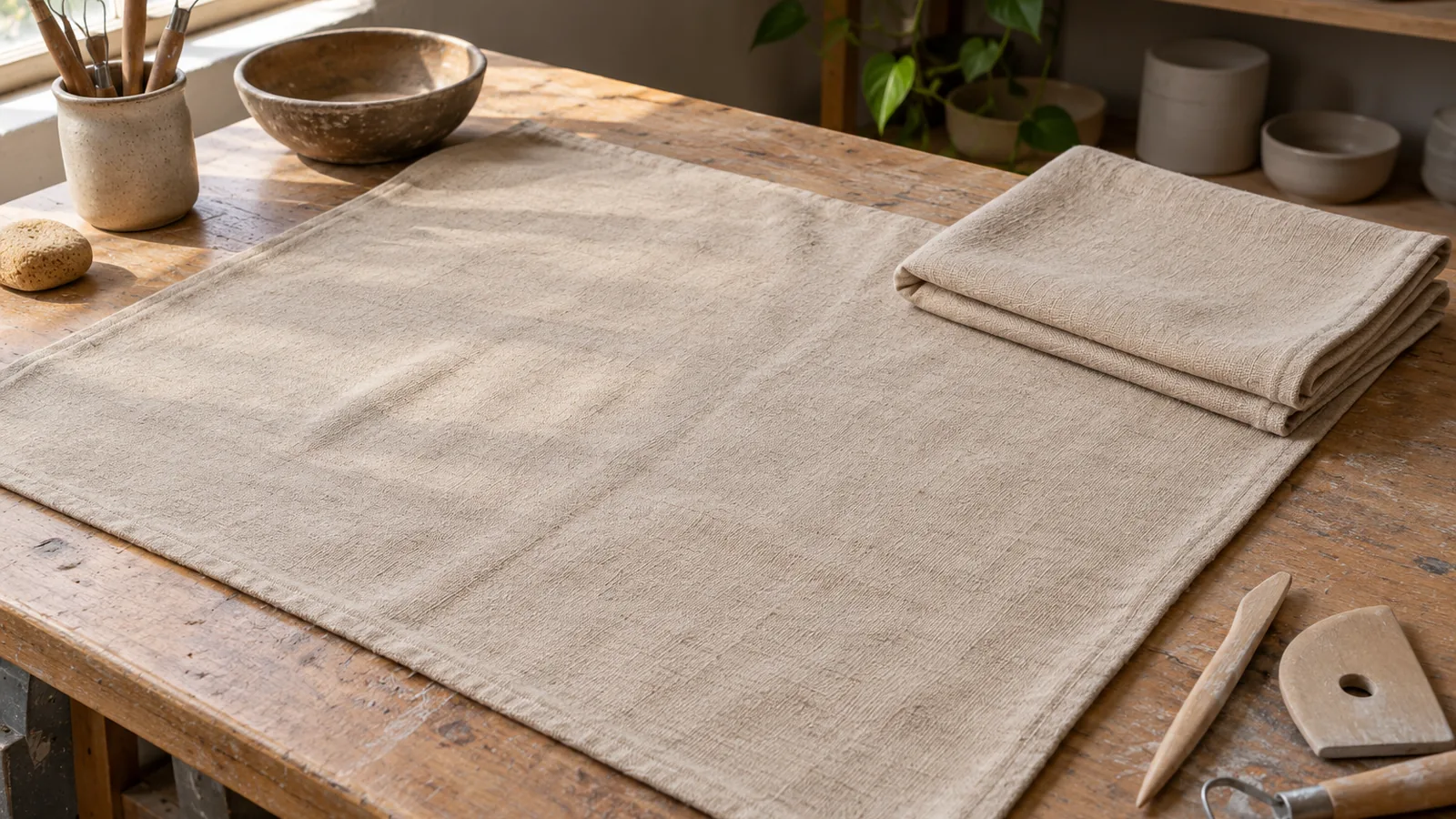
LEYCLUB Pottery Tablecloth is the best pottery canvas mat overall if you want a broad, washable work surface. For table protection, consider TEMONTIAN Pottery Mat; for larger workspaces, Pottery Canvas Fabric; and for absorbency, Pottery Special Linen Tablecloth. SoClaay Pottery Linen Tablecloth suits slab texture, while Pottery Texture Cloth, Linen Pottery Sculpture Fabric, and Pottery Clay Texture Cloth offer woven texture. Pottery Texture Fabric Burlap Tool suits reusable slab work.
Choose by working area, material, surface texture, and care routine. Woven canvas absorbs moisture and can imprint its weave on clay, while non-woven SlabMat leaves a smoother surface SlabMat Brochure.
A textured fabric can leave a pattern on your clay, so choose it when that finish suits your project.
The comparison table covers surface type, dimensions, and material.
Our top picks for pottery canvas mats
- Best Overall: LEYCLUB Pottery Tablecloth, for handbuilding and slab work on a large table
- Best for Table Protection: TEMONTIAN Pottery Mat, for handbuilding and sculpting on a tabletop
- Best for Large Workspaces: Pottery Canvas Fabric, for a large fabric surface for slab rolling, wedging, or handbuilding
How to Choose a Pottery Canvas Mat
Match dimensions to your work
Choose a mat that covers the area where you’ll roll, shape, or assemble clay. For handbuilding, prioritize room for the piece and the tools you keep beside it; for slab work, measure the space needed to roll out your usual slab without running off the edge. A larger mat gives you more working area, while a smaller one takes up less table space. Match the mat to your work area, not just the finished piece.
If you frequently make wide slabs, a compact surface can interrupt rolling and require you to reposition the clay. If you build smaller forms, excess mat area may not add useful room. Choose based on your typical work, rather than assuming the biggest mat is always the best fit.
Choose between smooth and textured clay
Woven canvas can leave its weave on the clay, while smoother, non-woven SlabMat leaves no texture. Canvas can imprint its weave on the slab, which may suit you if you want that surface or don’t mind smoothing it later. SlabMat is the better fit when you want a smoother clay face straight from the work surface.
You can also use each surface on a different side of the same slab: canvas on one face and SlabMat on the other. That gives you one textured side and one smooth side, without choosing a single surface for both. This approach suits projects where the two faces need different finishes; for a consistent finish, use the same surface on both sides.
Consider absorbency and clay moisture
Woven canvas is absorbent, and Bailey Pottery characterizes it as more absorbent than SlabMat. SlabMat is also described as absorbent, but it can become saturated after rolling multiple slabs in one session, and clay that is too moist can stick to it. Clay moisture affects sticking on SlabMat, so a smooth surface doesn’t remove the need to manage moisture.
If you work with wetter clay or need a surface that takes up moisture, canvas is a practical option based on its absorbency. If you prefer SlabMat’s smooth finish, pay attention to moisture and saturation during a session.
Check material, thickness, and care
Ordinary woven canvas absorbs moisture and is durable, but its weave can mark clay; the non-woven SlabMat alternative is smoother and leaves no texture. Material determines surface texture and how the mat interacts with moisture, so choose based on the finish and work habits you want.
Thickness can affect how a mat feels under your hands, but it doesn’t show how much moisture a mat absorbs or how easily clay releases. Comparative measurements for canvas-mat thickness, absorbency, or clay release aren’t available, so use material, working size, and care instructions to choose a mat.
Plan for cleanup as part of the choice. SlabMat care guidance calls for wiping with a damp sponge, avoiding saturation, and drying the mat fully. Dry the mat fully after cleaning to follow that care guidance.
The Clay Mat™ maker describes its mat as washable and recommends removing loose clay, wiping stuck clay with a clean-water sponge, and letting the mat dry. Care directions differ by product, so follow the method given for the mat you choose rather than applying one routine to every surface.
Decide whether printed guides matter
The Clay Mat™ has a 1-in. grid, 1/8-in.
markings, angle lines at 25°, 45°, and 65°, and five circle sizes. Printed guides vary by product and aren’t a standard feature of canvas mats.
The Clay Mat™ maker describes its surface as non-stick and canvas-like, with waterproof backing, but those features don’t make its printed layout typical of canvas mats.
| LEYCLUB Pottery Tablecloth |  | Best Overall | Surface type: Textured woven cloth | Dimensions: 62 x 39 in | Material: Linen-cotton blend | VIEW LATEST PRICE | Read Our Analysis |
| TEMONTIAN Pottery Mat |  | Best for Table Protection | Surface type: Woven linen cloth | Dimensions: 40 x 60 in | Material: Linen | VIEW LATEST PRICE | Read Our Analysis |
| Pottery Canvas Fabric |  | Best for Large Workspaces | Surface type: Woven fabric canvas | Dimensions: 59 x 59 in | Material: Cotton-linen blend | VIEW LATEST PRICE | Read Our Analysis |
| SoClaay Pottery Linen Tablecloth |  | Best for Slab Texture | Surface type: Woven fabric | Dimensions: 59 × 39 in | Material: Cotton linen | VIEW LATEST PRICE | Read Our Analysis |
| Pottery Texture Cloth |  | Best for Soft Texture | Surface type: Woven linen texture cloth | Dimensions: 62.99 × 39.37 in | Material: Linen fabric | VIEW LATEST PRICE | Read Our Analysis |
| Linen Pottery Sculpture Fabric |  | Best for Fine Texture | Surface type: Woven texture fabric | Dimensions: 62.99 × 39.37 in | Material: Linen; coarse fabric | VIEW LATEST PRICE | Read Our Analysis |
| Pottery Clay Texture Cloth |  | Best for Classroom Slabs | Surface type: Coarse woven texture cloth | Dimensions: 62.99 × 39.37 in | Material: Khaki flax linen | VIEW LATEST PRICE | Read Our Analysis |
| Pottery Texture Fabric Burlap Tool |  | Best for Reusable Slab Work | Surface type: Woven burlap texture fabric | Dimensions: 62.99 × 39.37 in | Material: Flax linen | VIEW LATEST PRICE | Read Our Analysis |
| Pottery Special Linen Tablecloth |  | Best for Absorbency | Surface type: Woven linen/hessian fabric | Dimensions: 59 × 39 in | Material: Cotton-linen/hessian | VIEW LATEST PRICE | Read Our Analysis |
More Details on Our Top Picks
LEYCLUB Pottery Tablecloth
For handbuilders who need room for slab work, this large-table cloth is the overall choice. Its 62 × 39-inch work area gives you space for larger projects or multiple slabs, while the linen-cotton blend absorbs excess moisture. The textured woven surface adds grip and supports coil building, slab rolling, and sculpting.
A reviewer reports that it stayed put during handbuilding and liked the subtle texture it transferred to slabs. The cloth also works for painting and crafts, so it can cover more than clay projects.
Lay it flat on your table and use its absorbent surface for wedging, rolling, or shaping. Machine-washable fabric makes cleanup reusable, while the textured weave adds a little surface character to slabs. One reviewer reports unfinished edges, and high-heat drying increased edge fuzziness. Stick to machine washing and avoid high heat if you want to limit fuzzing; the unfinished edges remain a visible detail on this otherwise roomy handbuilding surface.
Pros: Reviewer reports it stayed put during handbuilding · Reviewer reports fast moisture wicking · Reviewer liked the subtle texture transferred to slabs.
Cons: Reviewer reports unfinished edges · Reviewer reports high-heat drying increased edge fuzziness.
Skip it if: you need a cloth with finished edges, since reviewers report unfinished edges and increased fuzziness after high-heat drying.
- Surface type:Textured woven cloth
- Dimensions:62 x 39 in
- Material:Linen-cotton blend
- Thickness:—
- Care method:Machine washable
- Printed guides:—
- Pack quantity:1 piece
TEMONTIAN Pottery Mat
Its 40 × 60-inch linen surface suits tabletop handbuilders who want broad coverage to shield the table from clay mess. The woven cloth gives you a large work surface for handbuilding, sculpting, and ceramic projects. Its fabric friction helps limit slipping, while the absorbent weave takes up excess moisture during clay work.
Set the cloth across your tabletop, then work directly on its woven linen surface. When it needs cleaning, cold machine wash it without bleach, then tumble dry on low or hang it to dry. The single mat also suits pottery clay and molds.
Review feedback is mixed on durability, with some concerns about material quality, so repeated studio use may be less appealing if long-term wear is your main concern. Its main practical advantage is covering a wide tabletop while helping keep it cleaner.
Cons: Review site reports concerns about material quality.
Skip it if: your tabletop is small; this 40 × 60-inch cloth needs plenty of room.
- Surface type:Woven linen cloth
- Dimensions:40 x 60 in
- Material:Linen
- Thickness:—
- Care method:Cold machine wash; low tumble dry
- Printed guides:—
- Pack quantity:1 mat
Pottery Canvas Fabric
Potters with large worktables get a roomy surface for slab rolling, wedging, and handbuilding. It covers worktables or wedging boards and is intended to absorb moisture from wet clay, helping clay release during slab work.
Lay the cloth over your table or board, then machine-wash it after clay work to clear dust and debris. The cotton-linen blend suits several studio tasks, including sculpting, and the machine-washable fabric simplifies cleanup. Canvas can leave texture marks on slabs, and dry clay bits may stick to the cloth. Its broad square surface gives you room to roll slabs and wedge clay without working on a small patch.
Pros: Potters report using canvas for slab rolling · Canvas can be used as a pottery work surface.
Cons: Potters report canvas texture can transfer to clay · A pottery forum user reports dry clay bits can stick to canvas.
Skip it if: you want slabs without texture; canvas may leave marks in the clay.
- Surface type:Woven fabric canvas
- Dimensions:59 x 59 in
- Material:Cotton-linen blend
- Thickness:—
- Care method:Machine washable
- Printed guides:—
- Pack quantity:1 piece
SoClaay Pottery Linen Tablecloth
Unlike TEMONTIAN Pottery Mat, SoClaay’s cotton-linen weave gives slab rollers a linen-patterned surface. Owners report that the large piece works for rolling clay and leaves a linen pattern on the clay. Its absorbent woven fabric suits hand-building, and the texture can add a visible surface detail to slabs. The cloth is a single piece, so you can spread it across your work area without joining sections.
At 59 × 39 in, it gives you room to roll slabs, and you can machine-wash it after use. Owners report that it had not frayed or stretched during use, though one found the fabric thinner than expected. The weave itself leaves texture, so slabs rolled on this cloth may carry its pattern even when a smooth finish is your goal. Its washable cotton-linen surface pairs a broad work area with a lasting linen imprint.
Pros: The large piece worked for rolling clay · It leaves a linen pattern on clay · It had not frayed or stretched during use.
Cons: The fabric is thinner than expected · The weave can leave texture on slabs.
Skip it if: you want unmarked clay, since the weave can leave a linen pattern.
- Surface type:Woven fabric
- Dimensions:59 × 39 in
- Material:Cotton linen
- Thickness:—
- Care method:Machine washable
- Printed guides:—
- Pack quantity:1 piece
Pottery Texture Cloth
Potters seeking a large cloth for slab work or handbuilding will like its soft texture and coarse surface. Its soft, coarse weave offers a textured working surface while remaining gentle on finished clay. The sheet is light yellow and comes as one piece, giving you a broad area to roll slabs or make handles.
Its woven texture can transfer marks to clay, which suits potters who want fabric detail but may not suit projects that need a smooth finish. Clay dust can collect in the fabric, and the surface can take more effort to clean than a wipeable mat. That coarse weave is the defining feature of this cloth.
Pros: Potters report canvas can leave fabric texture on slabs · Potters use cloth as a portable slab-rolling surface.
Cons: Potters report canvas can leave texture marks on clay · Fabric surfaces can be harder to clean than wipeable alternatives.
Skip it if: you need clay with a plain, texture-free finish.
- Surface type:Woven linen texture cloth
- Dimensions:62.99 × 39.37 in
- Material:Linen fabric
- Thickness:2 mm
- Care method:—
- Printed guides:—
- Pack quantity:1 piece
Linen Pottery Sculpture Fabric
For fine clay texture, the coarse linen weave and thin profile give you a large surface to work on. The OHPHCALL Linen Pottery Sculpture Fabric measures 62.99 × 39.37 inches, giving you room to work across a broad area. Its 0.20 mm thickness keeps the fabric thin while its woven surface can add texture to clay, from simple patterns to detailed designs. The light yellow cloth is sold as one piece and is intended for various pottery projects.
Spread the fabric over your work area, then press or roll clay against its coarse surface to transfer texture. The large sheet gives you space for bigger pieces or multiple smaller projects, while the fabric’s light color is easy to see against clay. Its size can be awkward on a compact bench, and the coarse weave leaves a pronounced texture rather than a smooth finish. Coarse linen surface gives this fabric its texture-making purpose.
Skip it if: your bench is compact and you need a small mat; this fabric measures 62.99 × 39.37 inches.
- Surface type:Woven texture fabric
- Dimensions:62.99 × 39.37 in
- Material:Linen; coarse fabric
- Thickness:0.20 mm
- Care method:—
- Printed guides:—
- Pack quantity:1 piece
Pottery Clay Texture Cloth
Khaki flax linen with a coarse, 2 mm weave suits classroom slab makers who want fabric texture in clay. The cloth’s burlap-style surface can imprint a woven pattern, making it useful for slab-building and classroom projects. Its 62.99 × 39.37 in surface gives you a broad area for working with clay, and the listed thickness is 2 mm. The khaki cloth is also suited to personal pottery projects where you want texture transfer rather than a smooth slab.
Lay the cloth across your work surface and press clay against its coarse weave to transfer the pattern. The texture is intentional, but it can mark clay when you want a smooth finish. The care method isn’t part of the product details, so routine cleaning isn’t established.
Coarse woven texture is the defining feature, while khaki flax linen identifies its material and color. The title says the set contains 2 pieces, while the specifications say 1 item, so the stated pack count conflicts.
Pros: Coarse weave offers an intentional clay-texture effect · Large listed dimensions suit broad work surfaces · Listing identifies classroom and personal-project uses.
Skip it if: you want a plain finish, because the coarse weave can imprint fabric texture.
- Surface type:Coarse woven texture cloth
- Dimensions:62.99 × 39.37 in
- Material:Khaki flax linen
- Thickness:2 mm
- Care method:—
- Printed guides:—
- Pack quantity:2 pcs (title); 1 item (specs)
Pottery Texture Fabric Burlap Tool
Potters who need portable slab fabric get reusable cloth for building slabs and transferring a woven texture. The jojofuny Pottery Texture Fabric Burlap Tool includes two flexible pieces of flax linen, each 62.99 × 39.37 in. Its burlap-style weave can imprint clay as you roll or shape slabs, adding texture without a rigid board.
At 0.2 mm thick, the fabric stays lightweight and easy to move between work areas. The texture is intentional, so this suits makers who want a patterned surface rather than a smooth slab.
Lay the cloth beneath or over clay while working, then lift it to reveal the woven imprint. Its flexible format makes it portable for slab work, and the reusable fabric supports repeated projects. The same weave can leave marks on slabs, which may not suit work that needs a smooth finish.
Clay dust can also collect in fabric, so expect cleanup after use. This cloth is most useful when you want the texture itself to become part of the finished clay surface.
Pros: Potters report canvas fabric leaves marks that can be smoothed with a rib (2025) · A flexible fabric surface can suit portable clay work (2020).
Cons: Potters report fabric texture may transfer onto slabs (2025) · Potters report canvas can collect clay dust (2020).
Skip it if: you want the clay surface free of texture; the burlap-style weave can leave impressions.
- Surface type:Woven burlap texture fabric
- Dimensions:62.99 × 39.37 in
- Material:Flax linen
- Thickness:0.2 mm
- Care method:—
- Printed guides:—
- Pack quantity:2 pieces
Pottery Special Linen Tablecloth
At 59 × 39 inches, the Pottery Special Linen Tablecloth suits hand-builders who need a roomy, absorbent surface. Its tightly woven cotton-linen and hessian fabric offers a large area for hand-building and ceramic art-pad work, while the coarser weave can leave texture on slabs. That texture may help with textured slab projects, but it can get in the way when you want a smooth finish. The rectangular cloth is sold as one piece and is designed to hold its shape during use.
Set it out as a work surface, then machine-wash it when clay builds up. The 59 × 39-inch work area gives you space for larger pieces, and the machine-washable fabric makes cleanup simpler. Its heavy-duty, tightly woven construction is reported as sturdy, and the fabric is not easily deformed.
The coarse weave is the main limitation for smooth slab work, where its texture may transfer to the clay. It’s a practical fit for hand-building projects that benefit from a textured surface.
Pros: Large 59 × 39 in surface · Reported sturdy, high-quality fabric · Useful for varied pottery projects.
Cons: Coarse weave may hinder smooth slab surfaces · Fabric texture differs from tightly woven pottery canvas.
Skip it if: your slabs need an even, smooth finish; the coarse weave may mark the clay.
- Surface type:Woven linen/hessian fabric
- Dimensions:59 × 39 in
- Material:Cotton-linen/hessian
- Thickness:—
- Care method:Machine washable
- Printed guides:—
- Pack quantity:1 piece
Pottery Canvas Mats: Key Specs Side by Side
Here is how the 9 picks line up on surface type, dimensions, material and pack quantity. Cells marked with a dash are specs the maker leaves out of its listing.
| Pick | Surface type | Dimensions | Material | Pack quantity |
|---|---|---|---|---|
| LEYCLUB Pottery Tablecloth | Textured woven cloth | 62 x 39 in | Linen-cotton blend | 1 piece |
| TEMONTIAN Pottery Mat | Woven linen cloth | 40 x 60 in | Linen | 1 mat |
| Pottery Canvas Fabric | Woven fabric canvas | 59 x 59 in | Cotton-linen blend | 1 piece |
| SoClaay Pottery Linen Tablecloth | Woven fabric | 59 × 39 in | Cotton linen | 1 piece |
| Pottery Texture Cloth | Woven linen texture cloth | 62.99 × 39.37 in | Linen fabric | 1 piece |
| Linen Pottery Sculpture Fabric | Woven texture fabric | 62.99 × 39.37 in | Linen; coarse fabric | 1 piece |
| Pottery Clay Texture Cloth | Coarse woven texture cloth | 62.99 × 39.37 in | Khaki flax linen | 2 pcs (title); 1 item (specs) |
| Pottery Texture Fabric Burlap Tool | Woven burlap texture fabric | 62.99 × 39.37 in | Flax linen | 2 pieces |
| Pottery Special Linen Tablecloth | Woven linen/hessian fabric | 59 × 39 in | Cotton-linen/hessian | 1 piece |
Frequently Asked Questions
Can I use a pottery canvas mat with a slab roller?
Yes, woven canvas can serve as a slab-rolling surface, and its weave can leave texture on the clay. Canvas adds a woven imprint to the slab, so choose it if you want that texture or plan to smooth it afterward. If you want a smooth face, use a non-woven surface instead.
Can I use a canvas-covered board for wedging clay?
Yes, woven canvas is an absorbent work surface, and Pottery Canvas Fabric is intended for use over worktables or wedging boards. Canvas can absorb moisture during clay work, while its weave may mark the clay. Choose it if that texture suits your work.
What surface is best for drying freshly thrown pots?
For a surface that absorbs moisture, choose woven canvas; it absorbs more than SlabMat. Canvas absorbs more than SlabMat in that comparison. The available surface guidance concerns clay work and moisture, so it doesn’t establish a specific drying surface for freshly thrown pots.
Do pottery mats work with both light and dark clay?
Woven canvas and non-woven SlabMat are described by their texture and absorbency, not by clay color. Canvas can imprint its weave on clay, while SlabMat leaves no texture. Choose between them based on the finish you want; the available guidance doesn’t give separate instructions for light or dark clay.
Is a washable, waterproof clay mat worth choosing over canvas?
Choose the Clay Mat™ if washable care and waterproof backing matter more to you than canvas’s absorbency and woven texture. Choose canvas for its absorbency or weave imprint.
Conclusion
If you want a textured clay surface, choose woven canvas; if a smooth face matters more, choose SlabMat and manage moisture to reduce sticking. Before choosing, measure your usual work area, decide which surface finish you prefer, and choose a mat whose care routine fits your studio habits.
Sources
- baileypottery.live (baileypottery.live)
- stoneleafpottery.com (stoneleafpottery.com)
- theceramicshop.com (theceramicshop.com)
- reddit.com (reddit.com)
- midsouthceramics.com (midsouthceramics.com)
- The Clay Mat™ | Shayne Berlin Ceramics (shayneberlinceramics.com)