9 Best Earthenware Clays for 2026
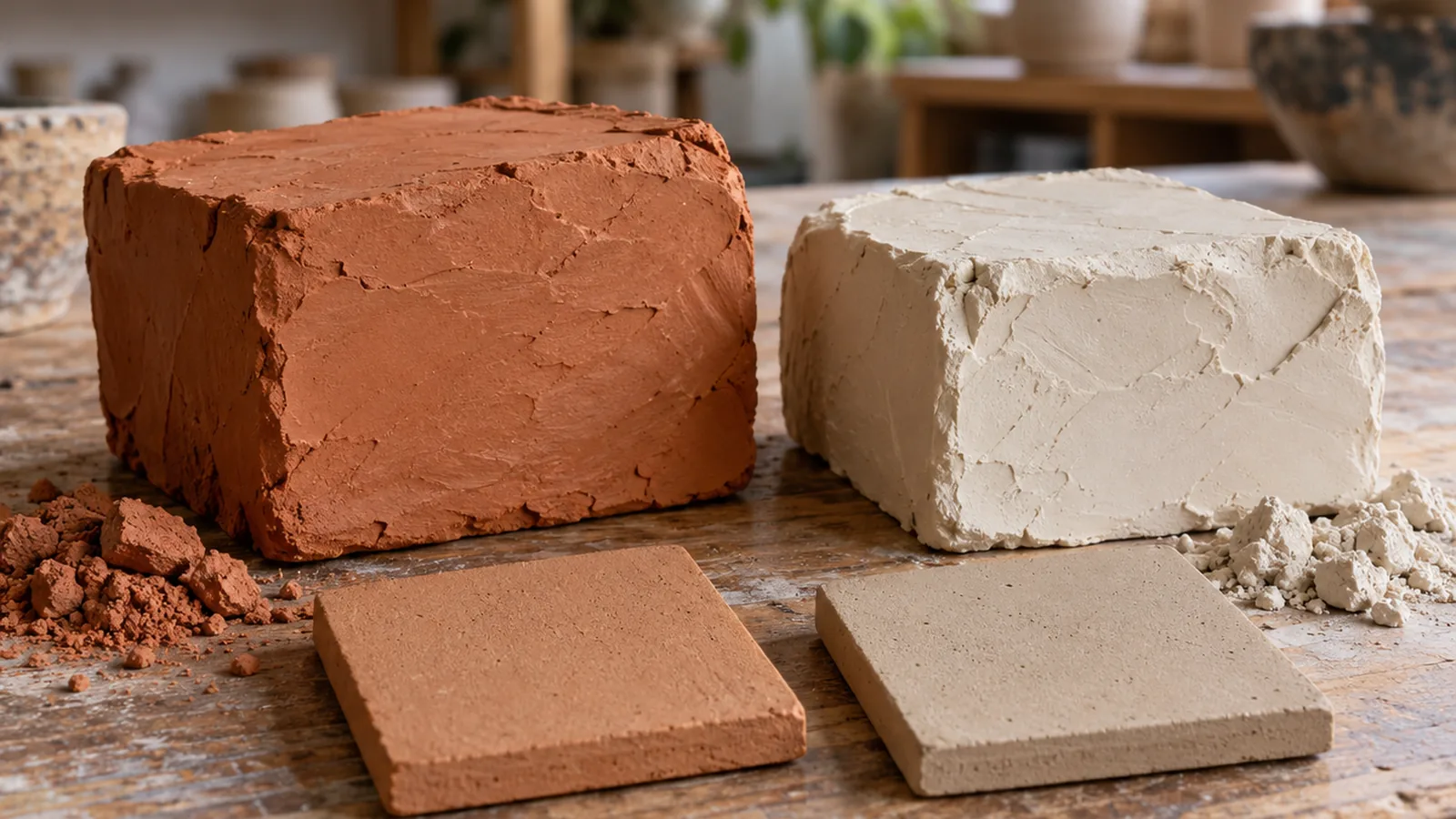
Amaco Terra Cotta 77 Clay is the Best Overall pick. For white bodies, compare SIO-2 PA White Earthenware Clay, Rocky Mountain CT3 Clay, and Aurora Whiteware Clay; for terracotta, consider SIO-2 PT Terracotta Clay, Old Potters Terra Cotta Clay, or Deouss Terra Cotta Clay. ReArt Low Fire Clay and Activa Blackjack Earthenware Clay round out the options.
Start with your kiln’s firing range, then choose the fired color and forming methods you need. Workability, texture, shrinkage, and water absorption can also shape how a body suits your projects.
Firing range matters: match the clay’s stated range and glaze maturity to your kiln’s firing temperature. The comparison table covers clay type, workability, and package weight.
Our top picks for earthenware clays
- Best Overall: Amaco Terra Cotta 77 Clay, suited to frequent potters, classrooms, and larger handbuilt or thrown forms
- Best for Whiteware: SIO-2 PA White Earthenware Clay, for potters wanting white low-fire clay for throwing, handbuilding, or modeling
- Best for Bulk Studios: Rocky Mountain CT3 Clay, with a 50-pound size suited to larger studio needs
How to Choose Earthenware Clay
Match the firing range to your kiln
Start with the clay’s stated firing range, then compare it with the temperatures your kiln can reach and hold reliably. A range gives you more than one firing point; a single Cone entry is a separate specification, not a full range.
AMACO White Art Clay No. 25 is rated from Cone 04 to Cone 3, while Laguna R-2 Red lists a Cone 06–2 oxidation firing range and separately shows Cone 06 in its Cone field. Cone 04–3 versus Cone 06–2 is a useful comparison: the first body’s listed range extends to Cone 3, while the second’s extends to Cone 2. Laguna R-2 Red’s Cone field and firing range give different information, so use the range when comparing firing options.
Laguna Whiteware has a Cone 06 specification, rather than a range. Match the specification to the firing temperature you plan to use. A single Cone entry describes one point, while a clay’s stated range is useful only if your firing plan falls within it.
Choose red, buff, or white clay
Choose by the fired color you want and how that color will work with your decoration. AMACO White Art Clay No. 25 fires off-white; its manufacturer says that opaque and transparent glazes and underglazes retain their color and brilliance on that body. Off-white fired color is a practical starting point if you want the body to make less of a visual shift to your glaze colors.
Laguna R-2 Red is a red earthenware body. Its red color gives you a visibly different starting point from an off-white body, so compare fired-color descriptions before settling on a clay. If you’re choosing between red and white, make the body color part of the decision rather than treating the glaze as the only source of color.
Buff can be a useful middle preference if you want a less stark body than white and less red than terracotta, but the provided product details here don’t identify a specific buff option. For the choices supported by the cited specifications, compare the red R-2 body with the off-white AMACO body and the white Laguna Whiteware.
Check forming method and texture
Match the clay’s stated uses to the way you plan to form your work. AMACO White Art Clay No. 25 is extremely plastic and suitable for wheel throwing, handbuilding, and modeling. Its listed uses make it a flexible choice when you want one clay for different techniques.
Laguna R-2 Red is for throwing and Majolica, while Laguna Whiteware has good throwing qualities. If you mainly throw, these details offer direct points of comparison. For handbuilding or modeling, choose a body whose stated uses include those methods, since throwing suitability alone doesn’t establish that it suits every forming approach.
Texture matters as you work, but compare it through the properties the product details actually describe. “Extremely plastic” is a useful clue when you want a highly workable body; it doesn’t, by itself, tell you how every clay will feel in your hands. Choose based on the forming method and workability description that best match your planned piece.
Compare shrinkage and water absorption
Shrinkage and water absorption help you compare what happens as clay dries and fires, but compare percentages only when they refer to the same test conditions. AMACO White Art Clay No. 25 has 6.3% shrinkage and 13.7% water absorption at Cone 04. AMACO’s figures are at Cone 04, which gives you a defined firing point for those two percentages.
Laguna R-2 Red is listed at 6% shrinkage and 10% water absorption, but those percentages don’t specify a test Cone. That means the figures aren’t a direct, like-for-like comparison with AMACO’s Cone 04 measurements. Don’t rank bodies by small percentage differences without accounting for the conditions behind the numbers.
Laguna Whiteware is listed with 6% shrinkage and 17% water absorption alongside its Cone 06 specification. These figures can help you compare listed properties, but keep each body’s stated firing information attached to its percentages.
Match the body to your glaze
Choose a clay and glaze that mature at compatible firing temperatures. AMACO recommends glazes that mature at Cone 05 for White Art Clay No. 25. Cone 05 glaze maturity gives you a specific starting point when pairing that body with a glaze.
Color matters here, too: AMACO says its off-white body allows opaque and transparent glazes and underglazes to retain their color and brilliance. If you want the glaze’s color to read clearly, consider the body’s fired color alongside the glaze’s maturity temperature. Don’t select a glaze by color alone; the firing point must also fit the clay you’re using.
| Amaco Terra Cotta 77 Clay |  | Best Overall | Clay type: Low-fire earthenware | Workability: Medium grog; coarse formula | Package weight: 50 lb | VIEW LATEST PRICE | Read Our Analysis |
| SIO-2 PA White Earthenware Clay |  | Best for Whiteware | Clay type: White kiln-fired earthenware | Workability: Fine, smooth, plastic | Package weight: 27.6 lb | VIEW LATEST PRICE | Read Our Analysis |
| Rocky Mountain CT3 Clay |  | Best for Bulk Studios | Clay type: Moist de-aired pottery clay | Workability: Texture: Smooth | Package weight: 50 lb | VIEW LATEST PRICE | Read Our Analysis |
| SIO-2 PT Terracotta Clay |  | Best for Terracotta | Clay type: Terracotta low fire ceramic clay | Workability: Smoothness, plasticity, consistency | Package weight: 27.6 lb | VIEW LATEST PRICE | Read Our Analysis |
| Old Potters Terra Cotta Clay | 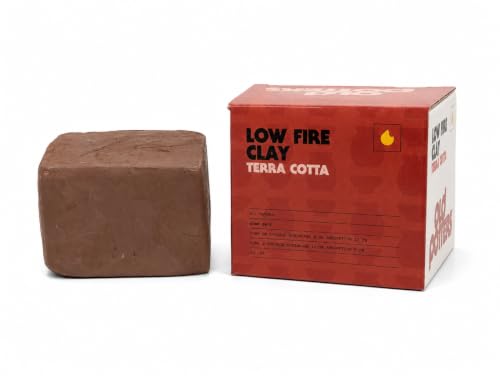 | Best for Small Projects | Clay type: Low fire pottery clay | Workability: Extraordinary plasticity | Package weight: 10 lb | VIEW LATEST PRICE | Read Our Analysis |
| Deouss Terra Cotta Clay |  | Best for 20-Pound Batches | Clay type: Low fire pottery clay | Workability: Strong plasticity, easy molding | Package weight: 20 lbs | VIEW LATEST PRICE | Read Our Analysis |
| ReArt Low Fire Clay |  | Best for Versatile Forming | Clay type: Low fire pottery clay | Workability: Smooth texture, easy molding | Package weight: 5 lb | VIEW LATEST PRICE | Read Our Analysis |
| Aurora Whiteware Clay |  | Best for Smooth Whiteware | Clay type: Whiteware clay (Lo-Fire) | Workability: Smooth texture | Package weight: 15 lb | VIEW LATEST PRICE | Read Our Analysis |
| Activa Blackjack Earthenware Clay |  | Best for Porous Fired Ware | Clay type: Blackjack earthenware low fire clay | Workability: Very easy to work with | Package weight: 10 lb | VIEW LATEST PRICE | Read Our Analysis |
More Details on Our Top Picks
Amaco Terra Cotta 77 Clay
For frequent potters who need one body for varied studio work, AMACO Terra Cotta 77 is a well-documented all-round choice. Its Cone 06–5 range covers wheel throwing and handbuilding. The 50 lb moist body blends red and buff clays with medium grog, firing from terra cotta to darker red-brown.
It’s a well-supported best earthenware clay choice for larger forms and tiles. At cone 5, shrinkage is 10.5% and water absorption is 0.9%.
The coarse texture helps release air in large forms, and the body is designed to help tiles fire flat. Grog helps resist cracking and warping, though its texture may feel less smooth for fine throwing. The 50 lb box can be cumbersome to move, and red slip can stain tools and work surfaces.
Pros: Grog helps reduce cracking and warping · Suitable for wheel throwing and handbuilding · Coarse formula suits large forms and tiles.
Cons: 50 lb box may be cumbersome to move · Red clay slip can stain tools and surfaces.
Skip it if: fine throwing calls for a smoother body, because the medium grog leaves a coarse texture.
- Clay type:Low-fire earthenware
- Firing range:06-5 to cone color
- Best use:Crafting; wheel or handbuild
- Fired color:Terra cotta to red-brown
- Workability:Medium grog; coarse formula
- Shrinkage:10.5% at cone 5
- Water absorption:0.9% at cone 5
- Package weight:50 lb
SIO-2 PA White Earthenware Clay
With a Cone 3–5 range, SIO-2 PA White Earthenware Clay suits potters seeking whiteware for low-fire work. It fires white and works for wheel throwing, handbuilding, and modeling, so you can use one body across sculptural and functional forms. Its fine, plastic texture supports shaping, while 20% water content and 16 plasticity give you specific working details to compare with other clays.
The 27.6 lb package gives you clay for a range of projects, and the smooth body accepts standard glazes for single or twice firing. Its 0.4% firing shrinkage is low, while drying shrinkage is 6.8%, a useful distinction when planning forms and dimensions. The 1911–2019°F firing range corresponds to Cone 3–5, and the white fired color suits work where a light clay body matters. Choose this body for white low-fire pieces, not for a red or buff finish.
Pros: An independent potter described SIO-2 clay as very smooth and forgiving to work with (2026) · Listing specifies wheel throwing, handbuilding, and modeling · Manufacturer sheet describes a smooth texture and excellent plasticity.
Skip it if: you need red or buff clay after firing; this body fires white.
- Clay type:White kiln-fired earthenware
- Firing range:Cone 3–5; 1911–2019°F (listing)
- Best use:Wheel throwing, handbuilding, modeling
- Fired color:White
- Workability:Fine, smooth, plastic
- Shrinkage:0.4%
- Water absorption:—
- Package weight:27.6 lb
Rocky Mountain CT3 Clay
For studios buying clay in bulk, Rocky Mountain CT3 suits larger workloads with its 50-pound bag. This moist, de-aired pottery clay has a smooth texture for forming, and its cone 04 firing range makes it a low-fire choice. Its wet and fired colors are white, giving you a consistent light body from working clay to finished pieces. The package is also offered in 5-, 10-, and 25-pound sizes, so you can choose a smaller amount if a full bulk bag is more than your studio needs.
The smooth body is suited to handbuilding or wheel work, and its moist, de-aired form arrives ready to shape. White fired color gives your pieces a light finish after oxidation. The main limitation is its low firing range: cone 04 may not suit a studio schedule built around higher-temperature firings. Choose it for a studio that can fire low-fire work and wants a substantial supply of white clay; the 50-pound bag is the largest listed size.
Skip it if: your kiln schedule goes hotter than cone 04.
- Clay type:Moist de-aired pottery clay
- Firing range:Cone 04
- Best use:—
- Fired color:Fire Color: White
- Workability:Texture: Smooth
- Shrinkage:—
- Water absorption:—
- Package weight:50 lb
SIO-2 PT Terracotta Clay
Terracotta-focused potters will find this differs from SIO-2 PA White Earthenware Clay, with its pink-to-straw fired palette. The 27.6-pound body fires at cone 05½–04, a low-fire range suited to electric home kilns. Its calcium carbonate content contributes to color variation with firing temperature and atmosphere.
SIO-2 PT Terracotta Clay works for wheel throwing, hand-building, and modeling, with smooth, consistent plasticity. It suits single or twice firing and pairs with typical ceramic glazes. Fires from pink to straw depending on temperature and atmosphere; firing at 1040°C or higher brings resistance to frost and environmental degradation for outdoor pieces.
Its firing window is narrow, so it won’t suit a kiln setup that can’t reach cone 05½–04. The 27.6-pound size gives you a substantial amount for pots, tiles, or other projects.
Skip it if: you want a consistent terracotta-red finish; this clay fires from pink to straw depending on temperature and atmosphere.
- Clay type:Terracotta low fire ceramic clay
- Firing range:Cone 05½-04 (1020–1085°C)
- Best use:Electric home kilns
- Fired color:Palette from pink to straw tones
- Workability:Smoothness, plasticity, consistency
- Shrinkage:—
- Water absorption:—
- Package weight:27.6 lb
Old Potters Terra Cotta Clay
Potters making smaller batches should consider this 10-pound terracotta clay, which suits wheel throwing and hand building at cones 06–2. It has extraordinary plasticity and a smooth, moist consistency that can be cut into chunks for shaping, sculpting or throwing. The clay comes in terra-cotta and white, with package dimensions of 8 x 6 x 5 inches.
For making, its low-fire range and stated uses cover both wheel work and hand building, while the moist clay can also be molded. The 10-pound package provides material for multiple projects, but may run short for a large piece or a long production batch. Its terra-cotta color gives you a warm-colored clay body, and the small package keeps the amount on hand manageable for compact projects.
Skip it if: your oversized pieces or ongoing production call for more clay at once.
- Clay type:Low fire pottery clay
- Firing range:Cone 06-2
- Best use:Wheel throwing and hand building
- Fired color:—
- Workability:Extraordinary plasticity
- Shrinkage:—
- Water absorption:—
- Package weight:10 lb
Deouss Terra Cotta Clay
For a middle-size batch, this 20-pound terracotta clay suits throwing and hand building. Its low-fire body fires at Cone 06 and has a natural red color. Smooth, plastic, easy to mold, and non-sticky, it works for throwing, sculpting, and hand-building projects. You can choose a 5-pound or 20-pound size, with this option offering more clay than the smaller pack without requiring a bulk studio quantity.
The moist clay can be kneaded, cut into chunks, and shaped, with small amounts of water added as needed. For the stated firing method, bisque to Cone 04, then glaze and fire to Cone 06. Air drying is possible, but the finished craft may crack and won’t be permanent.
Moist blocks can develop mold in dark, damp conditions; the product notes that this mold is harmless and can act as a natural plasticizer. The 20-pound package suits projects that need a substantial, manageable batch.
Skip it if: a 20-pound batch won’t cover the amount your studio needs.
- Clay type:Low fire pottery clay
- Firing range:Cone 06
- Best use:Potters throw and hand building
- Fired color:—
- Workability:Strong plasticity, easy molding
- Shrinkage:—
- Water absorption:—
- Package weight:20 lbs
ReArt Low Fire Clay
Made from fine, uniform kaolin, ReArt Low Fire Clay suits potters who want versatile forming for wheel work and handbuilding. Its smooth, plastic texture molds easily, and its 5 lb package gives you clay for small-to-medium pottery. The body fires from Cone 04 to Cone 3, spanning low-fire work across that range.
You can shape it by hand or throw it on the wheel, then fire it within its stated range. The clay is aimed at small-to-medium pieces, so its stated scale is a limitation for potters planning larger forms. Its fine, uniform texture and non-sticky character support shaping, while the five-pound amount keeps this option compact for a focused batch of work.
Skip it if: your plans include large forms; this clay suits small-to-medium pieces.
- Clay type:Low fire pottery clay
- Firing range:Cone 04-3
- Best use:Wheel throwing and hand-building
- Fired color:—
- Workability:Smooth texture, easy molding
- Shrinkage:—
- Water absorption:—
- Package weight:5 lb
Aurora Whiteware Clay
If you want a smooth, white surface for low-fire pottery, Aurora Whiteware Clay fits that brief. This whiteware clay has a smooth texture for forming, and its fired appearance is white. Its low-fire classification makes it a candidate for projects suited to low-fire clay, while the white body serves pieces where a red or buff result won’t suit your finish.
The package weighs 15 lb, giving you a defined amount of clay for your work. Its 12 x 9 x 4 in dimensions also describe the package itself, not a fired piece or a project size.
The main limitation is its color: this clay fires white, so it won’t give you the warm red or buff look available from the other earthenware choices. Its low-fire type and white fired color define its use.
Skip it if: your finished work needs a red or buff body, as this clay turns white in the kiln.
- Clay type:Whiteware clay (Lo-Fire)
- Firing range:—
- Best use:—
- Fired color:Fires white
- Workability:Smooth texture
- Shrinkage:—
- Water absorption:—
- Package weight:15 lb
Activa Blackjack Earthenware Clay
With 14% porosity, Activa Blackjack suits potters seeking porous fired ware and a gray-to-white body. It comes as a 10 lb, ready-to-use earthenware clay, light grey when wet and smooth white with a talc-like finish after firing. Its working range is given as Cones 06–04, while another specification gives Cone 6–8. That difference matters: these ranges call for very different kiln settings, so the stated firing information is inconsistent.
This clay is easy to work, with high plasticity and a silky-smooth texture for throwing, hand building, sculpture, and modeling. It takes glaze on both greenware and bisque, and suits functional pottery. Shrinkage is 10% at Cone 6, and moisture content is 16–20%.
Skip it if: your kiln only fires at Cones 06–04 and you need a consistent firing range.
- Clay type:Blackjack earthenware low fire clay
- Firing range:Cones 06-04
- Best use:Functional pottery
- Fired color:Smooth white talc body
- Workability:Very easy to work with
- Shrinkage:10% (at cone 6)
- Water absorption:—
- Package weight:10 lb
Earthenware Clays: Key Specs Side by Side
Here is how the 9 picks line up on clay type, firing range, best use, fired color and workability. Cells marked with a dash are specs the maker leaves out of its listing.
| Pick | Clay type | Firing range | Best use | Fired color | Workability |
|---|---|---|---|---|---|
| Amaco Terra Cotta 77 Clay | Low-fire earthenware | 06-5 to cone color | Crafting; wheel or handbuild | Terra cotta to red-brown | Medium grog; coarse formula |
| SIO-2 PA White Earthenware Clay | White kiln-fired earthenware | Cone 3–5; 1911–2019°F (listing) | Wheel throwing, handbuilding, modeling | White | Fine, smooth, plastic |
| Rocky Mountain CT3 Clay | Moist de-aired pottery clay | Cone 04 | — | Fire Color: White | Texture: Smooth |
| SIO-2 PT Terracotta Clay | Terracotta low fire ceramic clay | Cone 05½-04 (1020–1085°C) | Electric home kilns | Palette from pink to straw tones | Smoothness, plasticity, consistency |
| Old Potters Terra Cotta Clay | Low fire pottery clay | Cone 06-2 | Wheel throwing and hand building | — | Extraordinary plasticity |
| Deouss Terra Cotta Clay | Low fire pottery clay | Cone 06 | Potters throw and hand building | — | Strong plasticity, easy molding |
| ReArt Low Fire Clay | Low fire pottery clay | Cone 04-3 | Wheel throwing and hand-building | — | Smooth texture, easy molding |
| Aurora Whiteware Clay | Whiteware clay (Lo-Fire) | — | — | Fires white | Smooth texture |
| Activa Blackjack Earthenware Clay | Blackjack earthenware low fire clay | Cones 06-04 | Functional pottery | Smooth white talc body | Very easy to work with |
Frequently Asked Questions
What earthenware clay is best for beginners?
A forgiving clay suited to more than one forming method is a practical beginner choice, and AMACO White Art Clay No. 25 works for throwing, handbuilding, and modeling. Its off-white fired color also lets glaze and underglaze colors retain their color and brilliance. Match its Cone 04 to Cone 3 firing range to your kiln.
Can earthenware clay be used for mugs, dishes, or other functional pottery?
Yes, earthenware can be used for functional forms, but the clay’s absorption and firing details matter when choosing a body. AMACO White Art Clay No. 25 has 13.7% water absorption at Cone 04, while Laguna Whiteware is listed at 17% absorption at Cone 06. Those figures describe the clay bodies, not the performance of a finished glazed piece.
Is fired earthenware clay waterproof?
No, firing alone doesn’t make earthenware waterproof; the listed bodies retain measurable water absorption after firing. AMACO White Art Clay No. 25 is listed at 13.7% absorption at Cone 04, while Laguna R-2 Red is listed at 10%. A glaze can cover the surface, but these figures don’t establish that a finished piece is waterproof.
Can I use stoneware glaze on earthenware clay?
You can use a glaze only when its maturity temperature fits the clay’s firing range; AMACO recommends Cone 05-maturing glazes for White Art Clay No. 25. That clay is rated from Cone 04 to Cone 3, so compare the glaze’s firing temperature with the clay’s range. The glaze being labeled for stoneware alone doesn’t establish temperature compatibility.
Which earthenware clay is best for sculpture or classroom projects?
For sculpture, choose a body whose stated forming methods include modeling, such as AMACO White Art Clay No. 25, which is also suitable for throwing and handbuilding. Its Cone 04 to Cone 3 range gives you the firing window to match to your kiln. For classroom work, a clay suited to multiple methods can support varied projects.
Conclusion
Choose the best earthenware clay by matching your planned firing to the clay’s stated firing range, then choose the fired color and forming uses that suit your work. If glaze color is your priority, consider an off-white body; if you mainly throw, compare the bodies described for throwing. Your next step: write down your kiln’s firing point and preferred body color, then use those two requirements to narrow your choice.
Sources
- White Art Clay No.25 (shop.amaco.com)
- lagunaclay.com (lagunaclay.com)
- lagunaclay.com (lagunaclay.com)