
9 Best Pug Mills for 2026
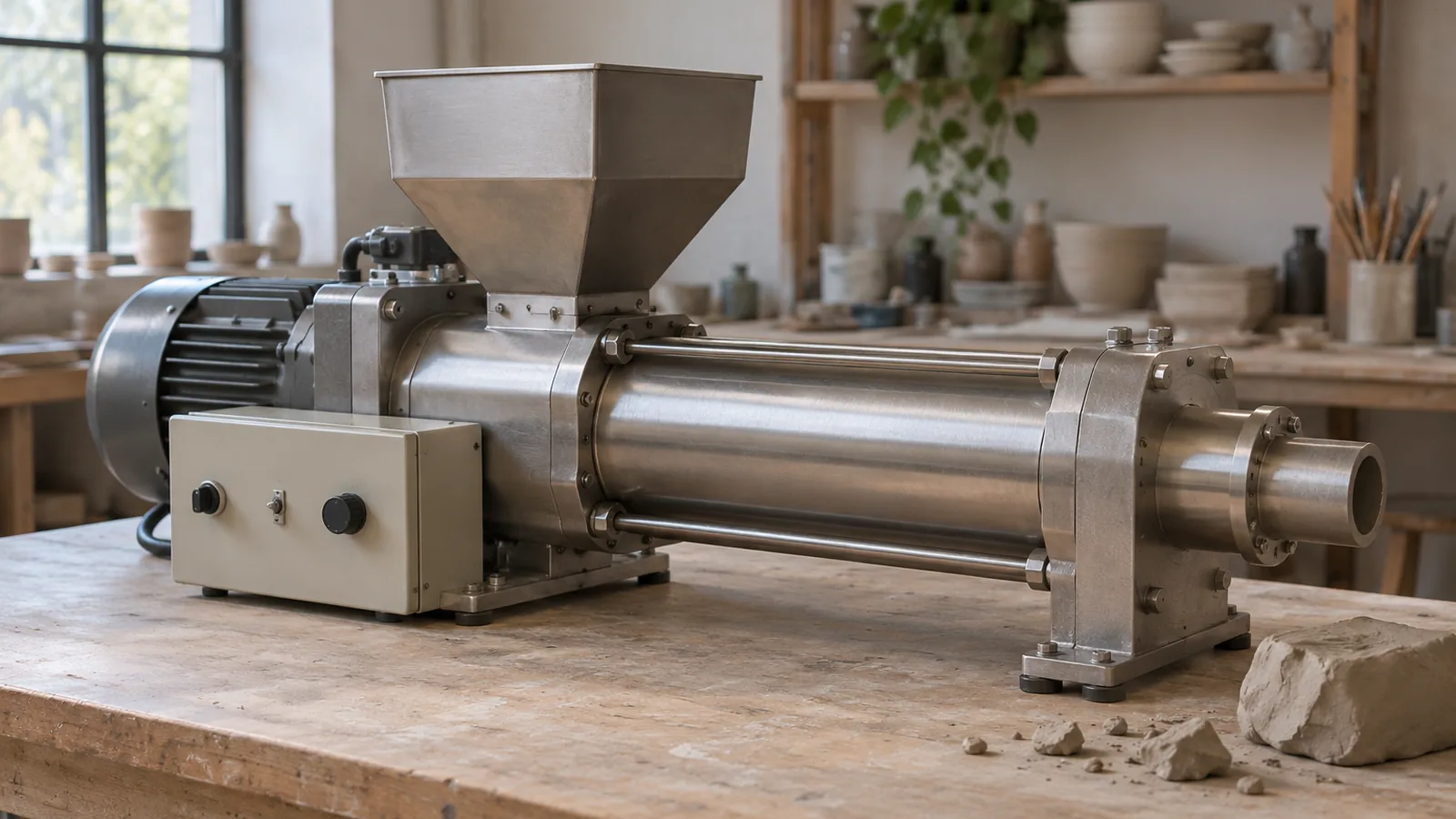
The best pug mill overall is the EQCOTWEA Commercial Ceramic Clay Mixer and Pug Mill, a fit for studios that want a straightforward mixer and extruder. For vacuum de-airing, compare the EQCOTWEA Vacuum Pug Mill, TECHTONGDA Vacuum Pug Mill, WYDDDARY Vacuum Pug Mill, and HQHAOTWU Vacuum Clay Extruder. For clay mixing and extrusion without vacuum de-airing, consider the EQCOTWEA Clay Mixer Pug Mill, JARYANNIX Clay Mixer Pug Mill, Yokoma Ceramic Clay Mixer Pug Mill Extruder Squeeze, and Banfluxion Clay Mixer Pug Mill Extruder.
The right choice depends on whether you need vacuum de-airing, how much clay you process, and whether the machine fits your workspace and electrical supply. Models with stated output rates range from 330 to 397 lb per hour.
Vacuum gauges let you monitor de-airing, while shaft design and outlet size help distinguish machine setups.
The comparison table covers shaft design, capacity, and contact material.
Our top picks for pug mills
- EQCOTWEA Commercial Ceramic Clay Mixer and Pug Mill suits pottery studios seeking a wheeled, 110 V clay mixer and extruder;
- Best Budget: Banfluxion Clay Mixer Pug Mill Extruder
- EQCOTWEA Vacuum Pug Mill combines a stainless-steel dual-shaft system and vacuum control for bubble-free output
| EQCOTWEA Vacuum Pug Mill |  | Best for Bubble-Free Output | Shaft design: Double-shaft | Capacity: 396 LB/H | Contact material: Stainless steel | VIEW LATEST PRICE | Read Our Analysis |
| TECHTONGDA Vacuum Pug Mill |  | Best for High-Volume Vacuum | Shaft design: Stainless steel double shafts | Capacity: 396 lb/h | Contact material: Stainless steel | VIEW LATEST PRICE | Read Our Analysis |
| WYDDDARY Vacuum Pug Mill |  | Best for Vacuum De-Airing | Shaft design: Interleaved dual-shaft spiral blades | Capacity: 397 lbs/h | Contact material: Non-stick discharge inner wall | VIEW LATEST PRICE | Read Our Analysis |
| EQCOTWEA Clay Mixer Pug Mill |  | Best for Wheeled 110V Setup | Shaft design: Stainless steel shaft | Capacity: 330 lb/h | Contact material: Stainless steel shaft and spiral axis | VIEW LATEST PRICE | Read Our Analysis |
| JARYANNIX Clay Mixer Pug Mill |  | Best for Easy Cleaning | Shaft design: Spiral shaft; count unstated | Capacity: 330 lb/h | Contact material: Stainless steel shaft and blades | VIEW LATEST PRICE | Read Our Analysis |
| HQHAOTWU Vacuum Clay Extruder | 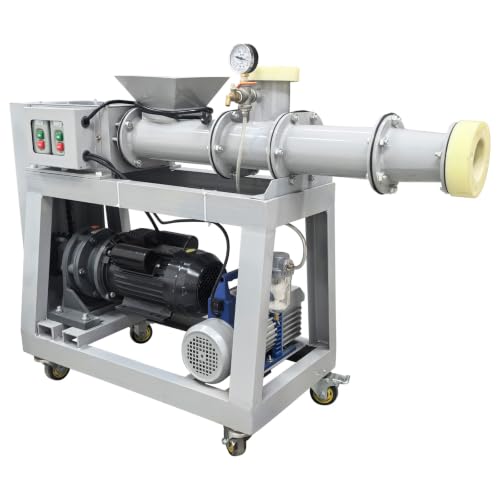 | Best for Double-Shaft Kneading | Shaft design: Dual-shaft stirring and kneading | Capacity: 396.83LB/H | Contact material: Stainless steel | VIEW LATEST PRICE | Read Our Analysis |
| EQCOTWEA Commercial Ceramic Clay Mixer and Pug Mill |  | Best Overall | Shaft design: Stainless steel shaft | Capacity: 330 lb/h | Contact material: Stainless steel shaft | VIEW LATEST PRICE | Read Our Analysis |
| Yokoma Ceramic Clay Mixer Pug Mill Extruder Squeeze |  | Best for studio or classroom | Shaft design: Spiral-blade shaft; count unstated | Capacity: 330 lbs/h | Contact material: Stainless steel shaft and blade | VIEW LATEST PRICE | Read Our Analysis |
| Banfluxion Clay Mixer Pug Mill Extruder |  | Best Budget | Shaft design: Spiral shaft | Capacity: 330 lbs | Contact material: Stainless steel | VIEW LATEST PRICE | Read Our Analysis |
More Details on Our Top Picks
EQCOTWEA Vacuum Pug Mill
For studios that need de-aired clay at a steady pace, EQCOTWEA’s vacuum pug mill targets bubble-free output. Its stainless-steel dual shafts process clay at a stated 396 lb per hour. A 1,500W motor drives the machine, and its vacuum pressure gauge lets you monitor de-airing. The chain drive is designed for stable operation under heavy loads, while the stainless-steel contact surfaces resist rust and are easy to clean.
The mill measures 43.3 x 27.55 x 11.81 in and runs on 110V power. Four wheels make it easier to move around a studio, and two brakes hold it in place; its power switches lock automatically after activation.
Skip it if: your floor space can’t fit a machine that’s 43.3 inches long.
- Voltage:110V
- Outlet diameter:—
- Vacuum de-airing:—
- Shaft design:Double-shaft
- Capacity:396 LB/H
- Motor power:1500W
- Contact material:Stainless steel
TECHTONGDA Vacuum Pug Mill
Its 396 lb/h capacity suits studios processing large clay batches, with vacuum de-airing for high-volume production. The TECHTONGDA uses stainless steel double shafts to grind clay and a 2.4-inch outlet for extrusion. Its vacuum pump removes air bubbles during mixing, while a gauge lets you monitor vacuum levels as the machine runs. The stainless steel contact surfaces resist corrosion, and the ABS nozzle has a wear-resistant finish for smooth clay output.
At 48.4 inches long, the machine needs a substantial footprint, though its universal wheels help you move it and two braked casters lock it in place. A chain drive is designed for low-speed, heavy-load operation, and the unit is built for clay preparation and refining. Its large frame is the main drawback for a compact studio, where it can take up valuable floor space.
Skip it if: a 48.4-inch-long machine won’t fit in your studio.
- Voltage:—
- Outlet diameter:2.4 in
- Vacuum de-airing:Vacuum pump
- Shaft design:Stainless steel double shafts
- Capacity:396 lb/h
- Motor power:—
- Contact material:Stainless steel
WYDDDARY Vacuum Pug Mill
For pottery studios and small-to-medium ceramic shops, vacuum de-airing helps produce dense, uniform clay blanks. The WYDDDARY Vacuum Pug Mill uses an industrial vacuum system with a pressure gauge and interleaved dual-shaft blades to knead and remove air. Its 397 lb-per-hour capacity suits higher-volume preparation, while the 110V, 1500W dual-motor setup includes an independent vacuum pump. The outlet measures 2.36 in, and the machine measures 43.3 x 27.55 x 11.81 in.
Lockable casters with foot brakes help you move it between workstations, and dual push-button controls operate the machine. A non-stick discharge wall supports easier cleaning, while the dual shafts mix clay during extrusion. Its 110V power supply and 2.36 in outlet shape how it fits your studio workflow.
Keep dry clay out of the feed: it can overheat the motor and trigger automatic shutdown. The machine is built for prepared clay, not direct feeding of dry clay.
Skip it if: you plan to feed dry clay directly into the mill; dry feed can overheat the motor and trigger automatic shutdown.
- Voltage:110V
- Outlet diameter:2.36 in
- Vacuum de-airing:Industrial-grade vacuum system
- Shaft design:Interleaved dual-shaft spiral blades
- Capacity:397 lbs/h
- Motor power:1500W
- Contact material:Non-stick discharge inner wall
EQCOTWEA Clay Mixer Pug Mill
Unlike the EQCOTWEA Vacuum Pug Mill, this model suits studios needing a wheeled 110 V setup for mixing and extrusion. A 1500 W motor moves up to 330 lb of clay per hour through a 2.36-inch outlet for prepared clay. A stainless steel shaft and spiral axis contact the clay, and the chain drive powers the machine.
Four built-in casters support repositioning around the studio. At 165 lb, it has a substantial listed weight, and its dimensions are 30.31 × 18.11 × 35.83 inches.
The 110 V supply and four casters make this a practical fit for studios that need a movable mixer on that power supply. Its listed output sits at the low end of the 330-to-397 lb/h range among picks with stated rates, so it suits workflows that don’t need the highest listed throughput.
Pros: Listing states 330 lb/h capacity (2026) · 110 V supply stated in listing (2026) · Stainless steel shaft and spiral axis stated in listing (2026).
- Voltage:110 V
- Outlet diameter:2.36 in
- Vacuum de-airing:—
- Shaft design:Stainless steel shaft
- Capacity:330 lb/h
- Motor power:1500 W
- Contact material:Stainless steel shaft and spiral axis
JARYANNIX Clay Mixer Pug Mill
Small studios reclaiming or mixing clay will appreciate the detachable cylinder for easier cleaning. The JARYANNIX Clay Mixer Pug Mill has a 330 lb/h rated output and uses a stainless steel spiral shaft and blades to mix and knead clay. One-touch controls and an extended pressure handle support feeding, while lockable wheels help you move and steady the machine. Its 1.5 kW motor runs on 110 V, and a covered chain drive powers the shaft.
The detachable mud cylinder makes cleanup more direct, and the lockable wheels let you position the machine around a compact studio. Its stainless steel mixing assembly is designed to keep clay material clean, while the covered chain drive protects the drive components. The 330 lb/h capacity suits modest studio reclaiming and mixing, though it may not match higher-volume production needs. Its stated uses include pottery, sculpture, and ceramic crafts.
Pros: Listing claims stainless steel shaft and blades · Listing claims detachable cylinder for cleaning · Listing includes lockable wheels.
Skip it if: your production target is above 330 lb/h.
- Voltage:110 V
- Outlet diameter:—
- Vacuum de-airing:—
- Shaft design:Spiral shaft; count unstated
- Capacity:330 lb/h
- Motor power:1.5 kW
- Contact material:Stainless steel shaft and blades
HQHAOTWU Vacuum Clay Extruder
For studios that want dual-shaft kneading, the HQHAOTWU Vacuum Clay Extruder combines stirring with vacuum de-airing. Its 1,500 W motor drives a stated capacity of 396.83 lb per hour, while the vacuum process removes air bubbles from clay. The dual shafts knead the clay, and stainless steel contacts the material. A vacuum gauge displays readings during operation, and the machine has casters with brakes for repositioning.
It runs on 110 V and has a self-locking dual-control switch. The casters can help you move it around the studio, then hold its position during use. Its main limitation is that the 110 V supply may not suit a studio set up for a different voltage. The combination of vacuum de-airing and dual-shaft kneading is aimed at refining clay before ceramic work.
Skip it if: your studio’s power supply runs at a voltage other than 110 V.
- Voltage:110V
- Outlet diameter:—
- Vacuum de-airing:Vacuum de-airing extrusion technology
- Shaft design:Dual-shaft stirring and kneading
- Capacity:396.83LB/H
- Motor power:1500W
- Contact material:Stainless steel
EQCOTWEA Commercial Ceramic Clay Mixer and Pug Mill
Its stainless steel shaft resists rust and keeps clay clean, giving pottery studios a balanced Best Overall choice for mixing and extrusion. A heavy-duty chain pairs with the 110 V, 1500 W motor for low-speed, high-torque work; capacity reaches 330 lb of clay per hour. A 2.36-inch outlet discharges the mixed clay.
Four built-in casters make it easier to move and position around your workspace, while the integrated switch locks when pressed. The chain drive supports steady operation. Its 110 V supply limits it to studios set up for that input, and the 330 lb-per-hour capacity suits a defined production scale. The casters give you a practical way to reposition this mixer between work areas.
Skip it if: your studio doesn’t have a 110 V electrical supply.
- Voltage:110 V
- Outlet diameter:2.36 in
- Vacuum de-airing:—
- Shaft design:Stainless steel shaft
- Capacity:330 lb/h
- Motor power:1500 W
- Contact material:Stainless steel shaft
Yokoma Ceramic Clay Mixer Pug Mill Extruder Squeeze
Potters who need a 110 V mixer and extruder for studio or classroom work get a practical clay-preparation setup. The Yokoma Ceramic Clay Mixer Pug Mill Extruder Squeeze mixes clay and other raw materials, then pushes the mixture through a 2.4 in outlet. Its 2 HP motor drives a stainless-steel spiral blade, while a covered chain drive and extended-handle pressure plate control the mechanism.
The machine’s 110 V supply suits studios using that electrical setup, and its casters help with positioning. The extended handle controls the pressure plate, while the chain’s outer cover shields the drive mechanism. Its output tops out at 330 lb per hour, so it may be limiting for potters who need to process larger batches quickly. The stainless-steel shaft and blade handle both mixing and clay preparation in one machine.
Skip it if: you need to make more than 330 lb of clay per hour.
- Voltage:110 V
- Outlet diameter:2.4 in (60 mm)
- Vacuum de-airing:—
- Shaft design:Spiral-blade shaft; count unstated
- Capacity:330 lbs/h
- Motor power:2 HP (1500 W)
- Contact material:Stainless steel shaft and blade
Banfluxion Clay Mixer Pug Mill Extruder
A 2.4-inch outlet supports clay prep for busy pottery studios seeking a budget-minded mixer. The Banfluxion Clay Mixer Pug Mill Extruder processes up to 330 lb of clay per hour, with a 1500W, 110V motor and spiral shaft for kneading and refining clay. Stainless-steel core parts contact the clay.
At 30.3 x 18.1 x 36.6 inches, it takes a defined floor footprint, while four brake casters let you roll it into position and lock it steady. A guarded chain drive and one-button control keep operation simple, and the extended mud-plate handle aids feeding. Its 110V supply limits it to compatible outlets, and the 36.6-inch height makes overhead clearance a real workspace consideration.
Skip it if: your studio cannot accommodate a 36.6-inch-tall machine with a 30.3-by-18.1-inch footprint.
- Voltage:110V
- Outlet diameter:2.4 in
- Vacuum de-airing:—
- Shaft design:Spiral shaft
- Capacity:330 lbs
- Motor power:1500W
- Contact material:Stainless steel
Pug Mills: Key Specs Side by Side
Here is how the 9 picks line up on voltage, outlet diameter, shaft design, capacity and motor power. Cells marked with a dash are specs the maker leaves out of its listing.
| Pick | Voltage | Outlet diameter | Shaft design | Capacity | Motor power |
|---|---|---|---|---|---|
| EQCOTWEA Vacuum Pug Mill | 110V | — | Double-shaft | 396 LB/H | 1500W |
| TECHTONGDA Vacuum Pug Mill | — | 2.4 in | Stainless steel double shafts | 396 lb/h | — |
| WYDDDARY Vacuum Pug Mill | 110V | 2.36 in | Interleaved dual-shaft spiral blades | 397 lbs/h | 1500W |
| EQCOTWEA Clay Mixer Pug Mill | 110 V | 2.36 in | Stainless steel shaft | 330 lb/h | 1500 W |
| JARYANNIX Clay Mixer Pug Mill | 110 V | — | Spiral shaft; count unstated | 330 lb/h | 1.5 kW |
| HQHAOTWU Vacuum Clay Extruder | 110V | — | Dual-shaft stirring and kneading | 396.83LB/H | 1500W |
| EQCOTWEA Commercial Ceramic Clay Mixer and Pug Mill | 110 V | 2.36 in | Stainless steel shaft | 330 lb/h | 1500 W |
| Yokoma Ceramic Clay Mixer Pug Mill Extruder Squeeze | 110 V | 2.4 in (60 mm) | Spiral-blade shaft; count unstated | 330 lbs/h | 2 HP (1500 W) |
| Banfluxion Clay Mixer Pug Mill Extruder | 110V | 2.4 in | Spiral shaft | 330 lbs | 1500W |
Factors to Consider When Choosing Pug Mills
Vacuum de-airing and clay workflow
Choose vacuum de-airing if removing trapped air is part of your regular clay-preparation workflow. A pug mill without vacuum may suit a workflow where you mix or wedge clay separately, but it won’t perform that vacuum step. Treat vacuum as a process choice, not a guarantee of a particular clay result.
Match the machine’s stated functions to the steps you need it to perform, including mixing, pugging and vacuum de-airing.
Outlet diameter and pug size
Use the outlet diameter to judge the size of the pug the machine can form. A larger opening can suit a workflow that needs thicker pugs, while a smaller opening may better match your usual portions and handling needs. Choose around the pug size you actually use, rather than treating a bigger outlet as automatically better.
The common mistake is confusing outlet size with overall production capacity. The opening indicates pug dimensions; it does not, by itself, tell you how much clay the mill can process over time.
Capacity and motor power
Compare rated hourly capacity with the amount of clay you expect to process, then consider motor power alongside that figure. Use a stated rate as a comparison point, not as a promise of your real-world workload.
Clay condition and the way you feed and operate a machine affect the work it has to do. A common mistake is choosing by the largest hourly figure alone. Consider whether the motor and output suit your regular batch size and pace, rather than assuming a rating guarantees that pace in your studio.
Voltage and electrical supply
Match the machine’s stated voltage and phase to the electrical supply available where you plan to use it. Motor power and voltage describe different things: power relates to the motor’s rating, while voltage must match the supply. Treat both as selection criteria, not interchangeable measures.
Choose a configuration that suits your studio supply and planned installation; a higher power figure won’t help if the electrical requirements don’t fit your workspace.
Shaft design and contact materials
Shaft configuration affects how a mill handles clay during mixing and pugging. Look for a design suited to your workflow, and consider how the arrangement fits the clay you process and the consistency you need. Shaft layout is a functional choice, not just a construction detail.
Clay-contact materials also matter because they touch the material you’ll use. Compare the stated contact surfaces with your studio’s needs, including how you plan to clean and maintain them. Judge each machine by its stated features.
Workspace, mobility, and maintenance
Measure the intended work area and account for the machine’s footprint, access for feeding clay, and room to operate it. Think through where you’ll position it and how you’ll move clay to and from the mill. A machine that fits on the floor still needs to fit your working route and daily process.
Plan for cleaning and maintenance as part of the workflow. Consider which parts you’ll need to reach, how you’ll access them, and whether the machine’s setup suits the space available for that work.
Frequently Asked Questions
What is the best pug mill for pottery?
The best pug mill depends on whether you need vacuum de-airing, how much clay you process, and how much space and electrical capacity your studio has. For higher-volume work, the listed models with stated output rates range from 330 to 397 lb per hour; choose a vacuum model if you want the machine to remove air as it mixes and kneads clay.
Can a pug mill mix clay and reclaim dry scraps?
Yes, a pug mill can mix and knead clay for reclaim, but dry scraps need preparation before they go into the machine. The WYDDDARY model’s instructions warn that feeding dry clay can overheat its motor and trigger an automatic shutdown.
Can clay from a pug mill go straight to the wheel, or does it still need wedging?
Clay extruded from a pug mill is prepared for use, but whether it needs more wedging depends on the mill’s process and the clay’s condition. Vacuum de-airing removes air during processing, so choose a vacuum model when reducing air pockets is a priority.
What pug mill is best for a home pottery studio?
For a home studio, prioritize a machine that fits your available floor space and power supply, then match its output to your workload. The EQCOTWEA Clay Mixer Pug Mill runs on 110 V, has casters, and measures 30.31 × 18.11 × 35.83 in.
Is stainless steel better than aluminum for porcelain or light-colored clay?
Stainless steel is a practical choice when you want stainless contact surfaces in your clay workflow. Several listed mills use stainless steel shafts or contact surfaces, but the product details here don’t establish how stainless steel compares with aluminum for porcelain or light-colored clay.
Conclusion
Choose a vacuum model if removing air is part of your clay-preparation workflow; choose a mixer-pug mill if mixing and extrusion are enough. Then narrow your choice by matching the machine’s output to your batch needs and its footprint and voltage to your studio. Before deciding, write down your available floor space, electrical supply and typical clay volume, then compare those needs against the stated features of your preferred pick.
Sources
- ceramicartsnetwork.org (ceramicartsnetwork.org)
- ceramicartsnetwork.org (ceramicartsnetwork.org)