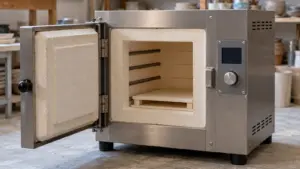
Do You Need a Kiln Vent and When Is It Required?
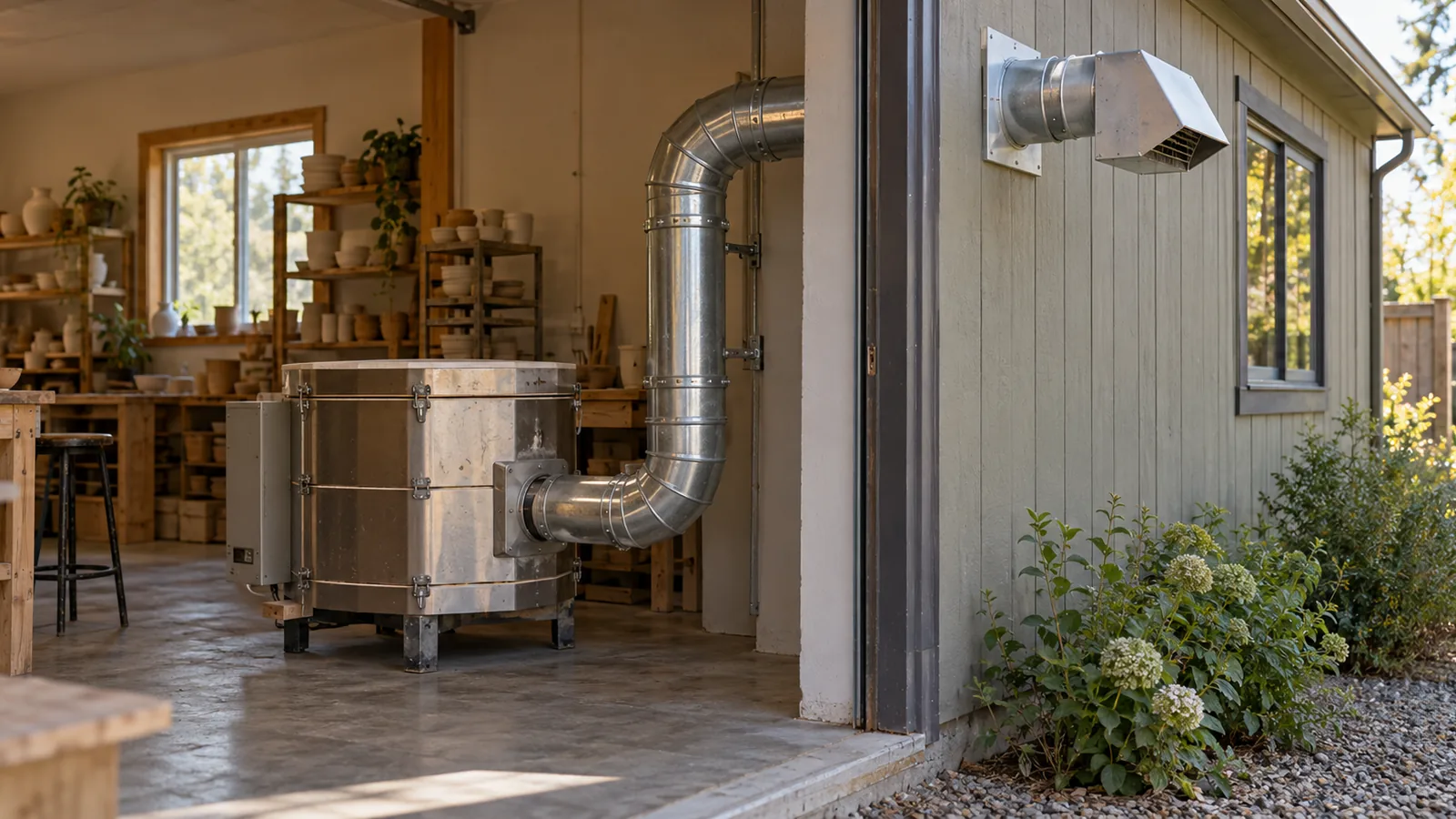
Yes, you need a kiln vent for indoor firing: the CPSC recommends mechanical exhaust outdoors, with the outlet at least 4 feet from openings. Guidance differs for small electric kilns. Check local code, and use outdoor exhaust even if you can open a window.
Quick answer
Do you need a kiln vent?
If you fire a kiln indoors, use mechanical exhaust that discharges outdoors; CPSC guidance applies to both electric and fuel-fired kilns. There’s no single CFM figure for every setup: match the fan and duct to the vent system, since a canopy hood and a downdraft vent have different airflow needs. Keep the outlet at least 4 feet from building openings and away from fresh-air intakes. Guidance differs for small indoor electric kilns, but the more protective choice is outdoor exhaust; if you can’t provide it, don’t fire indoors without ventilation.
- For an indoor kiln, install mechanical exhaust to the outdoors and follow the vent system’s airflow and duct limits.
- Place the exhaust outlet at least 4 feet from windows, doors, and other building openings, and away from fresh-air intakes.
- If outdoor exhaust isn’t possible, move firing outdoors or pause indoor firing until you can arrange suitable exhaust.
- Fire raku outdoors, away from open windows and air intakes, because of smoke and carbon-monoxide exposure.
- Check local permit and building-code requirements before installing or changing exhaust.
Kiln Types and Locations That Require Venting
Electric and fuel-fired kilns used indoors call for mechanical ventilation to the outdoors under the CPSC’s guidance, including studio, garage, basement, and other enclosed rooms. That recommendation covers both downdraft vents, which draw fumes from the kiln, and canopy hoods, which capture fumes above it.
For a small indoor electric kiln, guidance differs: Texas Department of Insurance allows room ventilation through open doors or windows, or a supply fan, as potentially adequate; the CPSC recommends mechanical exhaust outdoors. If you want the more protective setup, use a dedicated outdoor exhaust rather than relying only on room airflow.
- Electric kilns: The CPSC recommendation applies to indoor electric kilns, including small models; Texas guidance offers the less intensive room-ventilation option for small indoor electric kilns.
- Gas or other fuel-fired kilns: Indoor use falls under the same CPSC recommendation for mechanical ventilation outdoors.
- Downdraft vents and canopy hoods: Both are venting approaches, but hood airflow and placement guidance applies to canopy systems, not downdraft vents.
- Top-loaders: The guidance provided does not distinguish top-loading kilns from other electric or fuel-fired designs, so the loading style alone does not establish a different venting requirement.
- Raku firing: Fire outdoors, away from open windows and air intakes, because smoke and carbon monoxide can enter nearby spaces.
A studio, garage, or basement does not create an exception in the CPSC’s indoor-kiln recommendation. For any room, check local permit and building-code requirements before installing a vent: there is no single nationwide permit rule specific to pottery kiln vents, and requirements depend on your jurisdiction and work. A canopy hood may also be subject to local mechanical-code rules.
How Much Ventilation Does an Indoor Kiln Need?
An indoor kiln’s ventilation needs depend on the system: downdraft vents and canopy hoods use different airflow targets, so no single CFM figure applies to every kiln. Match the fan, duct size, and duct run to the vent manufacturer’s instructions. The numbers vary by system.
| Setup | Airflow (CFM) | Duct diameter (in.) | Maximum duct run (ft) | Hood height above kiln (in.) |
|---|---|---|---|---|
| Skutt EnviroVent 2 downdraft | 140 | 4 | 60 | — |
| Vent-A-Kiln overhead fan, 265-CFM model | 265 | 5 | 10 | — |
| Vent-A-Kiln overhead fan, 500-CFM model | 500 | 6 | 10 | — |
Chart of the table above.
A canopy hood’s 12–30-inch clearance is a placement range, not a substitute for the hood’s airflow requirement. The 250-CFM recommendation applies to canopy hoods, while the EnviroVent figures describe downdraft systems.
Keep duct runs within the limit for your specific vent. The EnviroVent 2 allows up to 60 feet with no more than four 90-degree bends; Vent-A-Kiln limits standard flexible hose to 10 feet for the listed overhead fans.
Fumes From Clay, Glazes, and Kiln Materials
Kiln fumes come from both the materials in your work and the firing process, and their mix depends on what you fire and how you fire it. The firing stage matters: some emissions begin during clay-body burnout, while others are associated with bisque or higher-temperature firing.
Organic carbon in clay bodies can burn out at 300–600°F (149–316°C). During bisque firing, sulfur in clay can produce sulfur oxides, and nitrogen-containing material can produce nitrogen oxides. Those gases can form even when you’re firing plain clay.
Glazes add other possible sources. Chlorine- and fluoride-bearing glaze materials can release chlorine and fluorine gases, while glazes containing lead, antimony, cadmium, selenium, or precious metals may produce fumes at or above stoneware firing temperature. Gums and overglaze oils can also add organic emissions.
The recipe and schedule change the emissions: clay and glaze ingredients, firing schedule, and kiln atmosphere all affect which fumes occur and when. That makes a single temperature or list of compounds a poor guide to every firing. Check the ingredients in your clay and glaze materials, and treat unknown or changing materials as a reason to keep ventilation in use rather than assuming a firing is fume-free.
Warning
Raku firing should be done outdoors, away from open windows and air intakes, because it produces smoke and can expose you to carbon monoxide.
What Can You Use Instead of a Kiln Vent?
If you can’t install a kiln vent, move the firing outdoors or arrange mechanical exhaust to the outdoors; a schedule change or fume extractor isn’t established here as a replacement for indoor kiln ventilation.
- Outdoor firing: 1. Choose a genuinely outdoor location. 2. Keep the kiln away from open windows and air intakes. 3. For raku, follow this outdoor placement because smoke and carbon monoxide are hazards. The guidance specifically identifies raku; it doesn’t establish that every outdoor setup is suitable.
- Window or wall exhaust: 1. Use a mechanical exhaust system that discharges outdoors for an indoor kiln. 2. Route the outlet through a wall or vertically, with weather protection for a wall outlet. 3. Keep the outlet at least 4 feet (1.2 m) from building openings and away from fresh-air intakes. Follow the vent maker’s limits for duct size and run length, which vary by system.
- Fume extractor: 1. Check whether the extractor is designed for kiln fumes and can discharge outdoors. 2. Confirm its installation instructions fit your kiln and room. 3. A standalone filter doesn’t meet the guidance for mechanical ventilation to the outdoors. The available sources don’t establish a filter-only extractor as an alternative.
- Firing schedule changes: 1. Ask your kiln or glaze supplier whether a schedule change is appropriate for your materials. 2. Keep ventilation in place. Fume emissions vary with clay, glaze ingredients, firing schedule, and kiln atmosphere, and changing the schedule alone isn’t shown here to control exposure.
If none of these options gives you outdoor placement or exhaust to the outdoors, don’t fire the kiln indoors without ventilation. Check local requirements before installing or altering exhaust, since permits depend on the jurisdiction and work involved.
Frequently Asked Questions
Can a kiln vent exhaust through a window?
Yes, if the vent uses a properly installed outlet that discharges outdoors. Keep the exhaust outlet at least 4 feet from openings such as windows and doors, and away from fresh-air intakes; a wall outlet needs weather protection.
How often should a kiln vent be cleaned or inspected?
Inspect the vent and duct before firing, and clean them when buildup, blockage, or damage appears. The guidance gives no fixed interval for cleaning or inspection, so follow your vent’s manual and check that the fan, duct, and outdoor outlet remain clear and connected.
Can a bathroom exhaust fan work as a kiln vent?
A bathroom fan can work only if its airflow, duct, and installation meet the kiln vent requirements and the exhaust discharges outdoors. Match the fan to the kiln system, since a canopy hood and a downdraft vent have different airflow targets.
Do gas kilns produce carbon monoxide that needs venting?
Yes, gas kilns produce combustion gases, and indoor fuel-fired kilns should vent directly outdoors. The available guidance recommends outdoor ventilation for indoor fuel-fired kilns.
Use a dedicated duct for the kiln vent rather than sharing one with another appliance. Vent instructions specify system-specific duct sizes and limits, so a shared duct could fail to meet the kiln vent’s required installation conditions; check local code before installing exhaust.
Conclusion
If you fire indoors and can route exhaust outside, choose a vent matched to your kiln and follow its installation instructions. If you can’t provide outdoor exhaust, move firing outdoors or pause until you can arrange a suitable setup; don’t rely on a filter or schedule change as a substitute. Your next step is to check local permit and building-code requirements, then confirm the vent layout with its manufacturer before installation.
Sources
- cpsc.gov (cpsc.gov)
- skutt.com (skutt.com)
- tdi.texas.gov (tdi.texas.gov)
- PDF Embedder Viewer (skutt.com)
- wichita.edu (wichita.edu)
- ventakiln.com (ventakiln.com)
- support.skutt.com (support.skutt.com)
- rma.venturacounty.gov (rma.venturacounty.gov)
- michigan.gov (michigan.gov)
- oregon.gov (oregon.gov)
- hotkilns.com (hotkilns.com)
- ehs.princeton.edu (ehs.princeton.edu)
- ceramicartsnetwork.org (ceramicartsnetwork.org)
- ceramicartsnetwork.org (ceramicartsnetwork.org)