How to Choose a Kiln for Home Pottery

Choose a kiln for home pottery by matching its cone rating and chamber size to your clay, glaze, and largest work, then confirm your home’s electrical supply can support it. A 120-V rating alone doesn’t confirm circuit fit: one 120-V test kiln has a 20-A fuse rating, so have a qualified electrician check the exact model’s requirements before you choose.
Quick answer
How do I choose a kiln for home pottery?
Match the kiln’s rated cone to the firing requirements on your clay and glaze labels, then size its chamber for your largest piece and typical load. Before choosing a model, compare its voltage, phase, amperage, wattage, plug or receptacle, and circuit needs with your home’s supply, and have a qualified electrician verify the circuit and installation. Choose electric for routine bisque and glaze firing; choose raku only for specialized raku work, or gas if you have the required fuel supply, exhaust plan, and ventilation.
- Set the firing range: Match the kiln rating to your clay and glaze. Common ranges are low fire, Cone 09–1; mid fire, Cone 5–6; and high fire, Cone 8–10.
- Size the chamber: Measure your largest piece and account for shelves, clearance, typical load, firing frequency, and likely growth over roughly 5 years.
- Compare kiln types: Electric suits routine pottery firing; gas needs a natural-gas or propane supply and combustion exhaust planning; raku is for specialized rapid firing.
- Check electrical fit: Compare every nameplate detail with your home supply. A 120-V rating alone doesn’t confirm circuit compatibility: one 120-V test kiln has a 20-A fuse rating.
- Plan the location and full cost: Provide ventilation with fumes exhausted outdoors, check the exact installation clearances, and include electrical work and operating needs in your budget.
How to choose a kiln for home pottery
Define the clay and results you want. Write down the clay body and glaze you plan to use, plus the finish and firing schedule they require. Common targets include earthenware near Cone 04, stoneware often at Cone 6, and some porcelain at Cone 10, but check the specific clay and glaze labels.
Identify the required firing range. Choose a kiln rated for at least the firing cone specified by your clay and glaze manufacturers; common kiln ratings include Cone 1, Cone 8, and Cone 10. Low fire is typically Cone 09–1, mid fire Cone 5–6, and high fire Cone 8–10. A cone number doesn’t equal one fixed temperature: heat-work depends on heating rate and time, so use witness cones to check results.
Estimate the size and volume of your work. Measure your largest piece, then plan chamber width, length, and depth around it, allowing room for shelves and clearance. For heat circulation, leave about 1 in (2.5 cm) between shelf edges and chamber walls. Estimate how much work you’ll fire at once, how often you’ll fire, and what you may make over roughly the next 5 years.
Compare kiln types against your firing plans. Consider whether you need routine bisque and glaze firing or a specialized process. Gas kilns can fire in oxidation or reduction, but need a natural-gas or propane supply, combustion exhaust planning, and suitable ventilation. Raku kilns suit rapid raku firing, not routine bisque and glaze work.
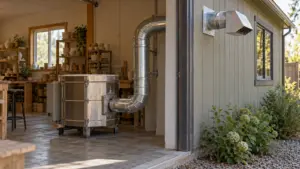
Check electrical service, installation, and ventilation. Compare the kiln nameplate’s voltage, phase, amperage, wattage, plug or receptacle, and circuit requirements with your home supply, then have a qualified electrician verify the circuit and installation. Plan a well-ventilated location with kiln fumes exhausted outdoors; don’t connect fumes to ductwork that could carry them into other rooms.
Set a budget that accounts for the full setup. Include the kiln, any electrical work or installation changes, and likely operating needs; extra capacity can increase purchase, electrical, and operating demands.
Verify the exact kiln against your home and firing plan. Before choosing a model, confirm its rated cone, chamber dimensions, nameplate details, and installation requirements all fit your planned work and location. For a garage installation, verify the kiln-specific floor and clearance requirements.
Which kiln type fits your pottery and space?
Electric kilns fit most home pottery when you want straightforward operation and routine bisque and glaze firing; choose a raku kiln only for specialized raku work. For how to choose a kiln for home pottery, start with the firing atmosphere and work you plan to make, then weigh each type’s loading and installation demands.
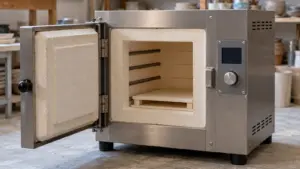
- Electric: For your home studio, electric kilns are comparatively straightforward to operate and typically fire in oxidation. They suit routine pottery firing when their rated cone matches your clay and glaze. Top-loading models generally cost less; front-loading models can make loading easier but weigh more. Compare these trade-offs with your available space and access.
- Raku: Choose this type for specialized, rapid raku firing. It doesn’t replace a kiln for routine bisque and glaze firing, so it won’t suit you if you need one kiln for raku and everyday pottery work.
- Other kiln types: Verified details on firing control, installation needs, and suitable pottery uses aren’t available for other kiln types. Check the specific kiln’s requirements before choosing a different fuel or design for your home.
For electric models, decide between top and front loading based on how you’ll load your work and what your space can accommodate. A front-loading kiln may simplify access, but its greater weight matters when planning where it will sit. Then check the model’s rated cone against the clay and glaze requirements, and confirm its electrical and installation needs before purchase.
L&L lists one 0.5-cu-ft test kiln at 120 V with a 20-A fuse rating, while its 0.3-cu-ft Plug-N-Fire is specified for a standard 15-A circuit. Compare the full nameplate details with your home supply and have a qualified electrician verify the circuit and installation.
Match kiln capacity and utilities to your home
Estimate kiln capacity by the largest piece you need to fire, your usual load, and how often you want to fire. To decide how to choose a kiln for home pottery, measure your work and compare it with the chamber’s usable space, then verify the kiln’s electrical and installation needs against your home.
For capacity, measure the largest piece’s width, length, and height, including any handles or other projections. Compare those dimensions with the chamber’s interior and the shelves you plan to use. Leave room for shelves and clearance around the ware, and account for shelf shape and the number of usable shelf layers. Skutt advises leaving about 1 in (2.5 cm) of wall clearance between shelf edges and chamber walls for heat circulation.
Next, estimate how many pieces you expect to fire at once and how often you want to run the kiln. Choose enough usable shelf area for a typical load, not just the largest piece. Allow for likely growth over roughly 5 years, while weighing added capacity against purchase, electrical, and operating needs.
Before choosing a model, compare its nameplate with your home’s electrical supply. A 120-V rating alone doesn’t confirm that a kiln fits a standard 15-A circuit: one L&L test kiln rated at 120 V has a 20-A fuse rating. L&L’s Plug-N-Fire, by contrast, is listed at 120 V, 15 A, and 1,500 W, with a standard 15-A circuit specified for that model.
For a garage, confirm the proposed spot, floor, and circuit before purchase. L&L recommends a dedicated circuit rated at 125% of the kiln’s maximum amperage.
Compare home pottery kiln requirements
Choose a kiln by matching its firing range and chamber size to your work, then confirm your home’s electrical and installation requirements before comparing models. The available specifications cover firing ranges, capacity, electrical service, and installation, but they don’t provide comparable data for multiple kiln types.
| Item | Firing range or rating | Capacity (cu ft) | Electrical requirements | Installation requirements | Source |
|---|---|---|---|---|---|
| L&L DL11-D test kiln | — | 0.5 | 120 V; 20-A fuse rating | — | hotkilns.com |
| L&L Plug-N-Fire | Cone 10; 2350°F | 0.3 | 120 V; 15 A; 1,500 W; standard 15-A circuit | — | hotkilns.com |
| Garage kiln installation | — | — | Dedicated circuit rated at 125% of kiln’s maximum amperage | Floor: noncombustible, 2 in thick, extending 12 in beyond kiln base; 18 in from noncombustible walls; 36 in from combustible walls and flammable items | hotkilns.com |
Treat the garage spacing and floor figures as installation conditions for that setting, and have a qualified electrician verify the circuit before purchase. The firing ranges are useful for narrowing choices, but confirm the clay and glaze requirements because cone ratings don’t map to one fixed temperature.
Frequently Asked Questions
Can I run a pottery kiln from a regular household outlet?
Sometimes, if the kiln’s full electrical requirements match the outlet and circuit. Have a qualified electrician verify the circuit before you connect a kiln.
Do I need a programmable kiln controller?
No, a programmable controller isn’t required for every kiln, but the firing schedule still needs to suit your clay and glaze. Cone number alone doesn’t indicate one fixed temperature, because heat-work depends on heating rate and time; witness cones help you check the firing result. Choose the controls based on the schedules you plan to run.
What ongoing costs should I expect with a home pottery kiln?
Plan for electricity, along with any recurring operating needs tied to your firing setup; the available guidance doesn’t provide a cost estimate. Capacity can raise operating needs, so compare the chamber size you need with how much work you’ll fire and how often. Include electrical or installation changes in your overall budget.
How long does a pottery kiln take to fire and cool?
Firing time depends on the schedule, including heating rate and time, so there isn’t one duration for every firing. The available guidance doesn’t give a general cooling time; plan your schedule around the specific clay and glaze requirements, and allow the kiln to cool before unloading.
Is it safe to leave a pottery kiln running unattended?
No general rule makes an unattended firing safe. Plan for outdoor fume exhaust and a well-ventilated location. Don’t route kiln fumes into ductwork that could carry them into other rooms.
Conclusion
If your clay, glaze, and typical loads point to a standard firing plan, choose an electric kiln that fits those needs and your home’s verified electrical service. If you need raku or another specialized firing process, choose a kiln built for that work and confirm its installation needs before committing.
Your next step is to write down the clay and glaze firing requirements, measure your largest piece, and ask a qualified electrician to check the proposed kiln’s nameplate against your home supply. Compare models only after those checks.
Sources
- Ceramic Kilns: What buyers need to know (kilnfrog.com, 2021-07-13 16:43:07 -0500)
- kiln-link.skutt.com (kiln-link.skutt.com)
- hotkilns.com (hotkilns.com)
- kilnfrog.com (kilnfrog.com)
- skutt.com (skutt.com)
- ceramicartsnetwork.org (ceramicartsnetwork.org)
- skutt.com (skutt.com)
- ceramicartsnetwork.org (ceramicartsnetwork.org)
- ceramicartsnetwork.org (ceramicartsnetwork.org)
- ceramicartsnetwork.org (ceramicartsnetwork.org)
- skutt.com (skutt.com)
- ortonceramic.com (ortonceramic.com)
- ortonceramic.com (ortonceramic.com)
- hotkilns.com (hotkilns.com)