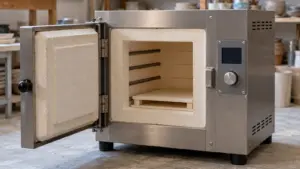
10 Best Kiln Controllers for 2026
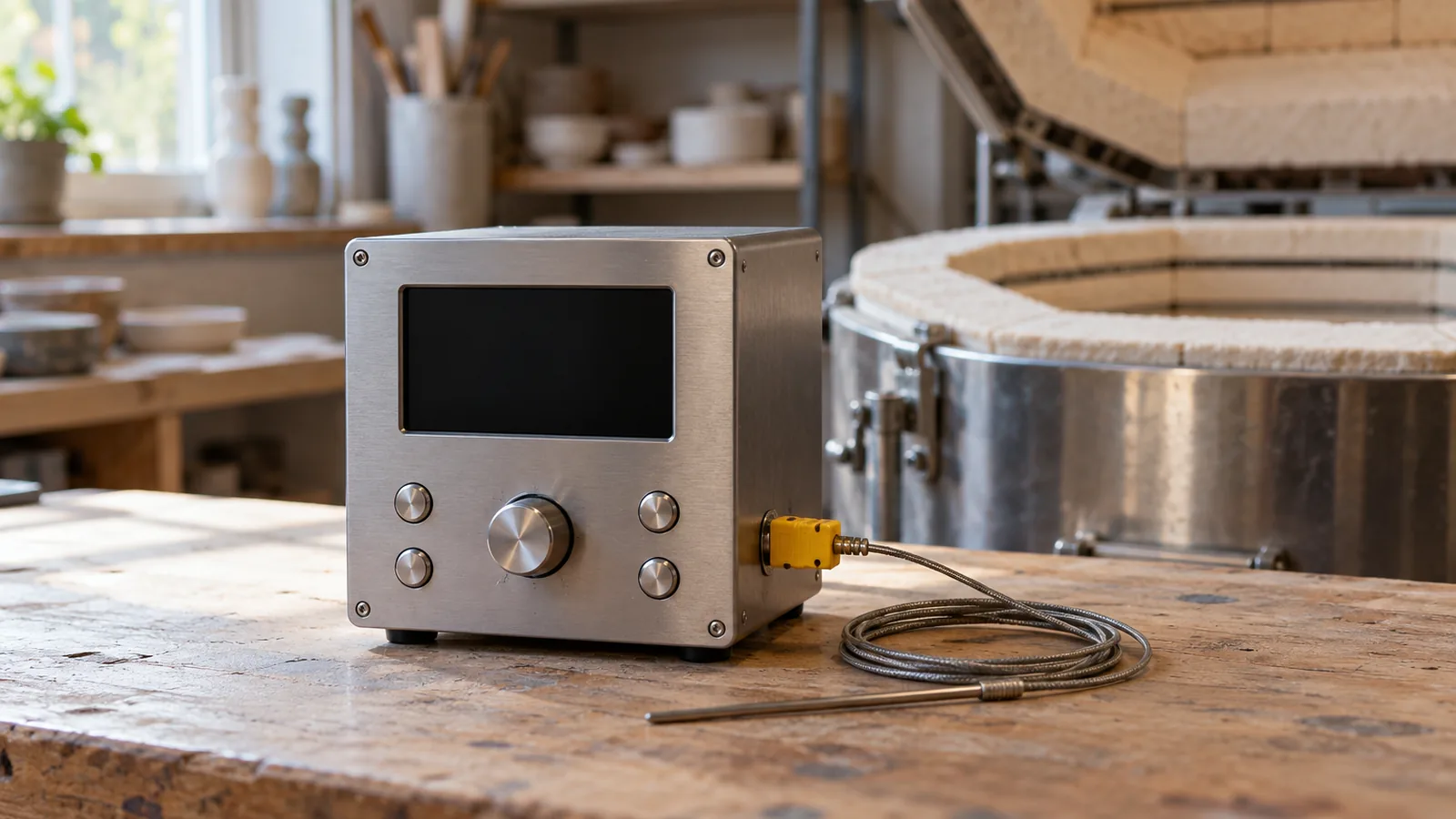
The Ramp Soak Kiln Controller is the Best Overall for programmable ramp-and-soak firing. For other needs, the Ramp Soak Temperature Controller Kiln SSR Thermocouple Programmable Control 60 Segment and Fahrenheit Ramp Soak Controller offer ramp-and-soak control; the Plug and Play Kiln Controller suits a plug-in setup. The Fahrenheit PID Kiln Controller, Happybuy PID Kiln Controller, Happybuy PID Temperature Controller Kiln Thermocouple SSR Relay Electric Oven Jewelry, Plug and Play PID Controller, Plug and Play Timer Controller, and Yechiry XY504 PID Controller round out the options.
Start by matching voltage, amperage, and maximum temperature, then check thermocouple, relay, transformer, and wiring compatibility. Choose between a single target temperature and stored ramp-and-hold programs, based on how you fire.
For multi-zone firing, cone programs, or controlled cooling, match the controller’s features to your kiln and firing schedule. Match all three nameplate ratings to avoid choosing a controller that doesn’t suit the kiln.
The comparison table compares voltage and amps, control output, and firing modes.
Our top picks for kiln controllers
- Best Overall: Ramp Soak Kiln Controller for hobby and studio potters who want multi-stage ramp/soak firing schedules in a complete kit
- Best Dual SSR Programs: Ramp Soak Temperature Controller Kiln SSR Thermocouple Programmable Control 60 Segment for DIY or intermediate kiln builders and upgraders with a PID-capable SSR panel
- Best for Segment Control: Fahrenheit Ramp Soak Controller for DIY potters and hobbyists building a 220 V SSR-based kiln who want segment-based ramp
How to Choose a Kiln Controller
Match voltage, amperage, and kiln temperature
Start with the kiln’s nameplate and compare its voltage, amperage, and maximum temperature with the controller’s requirements and temperature rating. Those figures determine whether the controller fits the kiln’s electrical supply and intended firing range; matching only the voltage can leave a mismatch in amperage or temperature capacity.
Also compare the installation parts, including the controller, thermocouple, relays, transformer, and wiring. Replacing a controller on an older manual kiln can require a thermocouple, relays, a transformer, enclosure work, and high-voltage wiring expertise, so the controller’s purchase price alone doesn’t describe the full retrofit. Some conversion kits are designed as 1:1 replacements for specified automatic-controller models and adapt the faceplate and wiring.
Check thermocouple compatibility
Match the controller’s thermocouple input to the sensor installed in your kiln. Thermocouple types aren’t interchangeable by assumption: controller options include Type K, N, S, and R, while another controller specification supports Type K, S, or R. Match the sensor type so the controller can read the kiln temperature using its supported input.
For a retrofit, include the thermocouple in the installation plan rather than treating it as a separate detail. A plug-in, stand-alone controller can be a less invasive alternative to replacing an older kiln’s built-in controls, but it still needs a thermocouple installed in the kiln. That option makes sense when you want to avoid a larger control-panel conversion and can accommodate the sensor installation.
Choose single-setpoint or ramp-and-soak control
Choose a single-setpoint control if your firing routine needs a target temperature, rather than a sequence of programmed temperature changes. Choose ramp-and-soak control when you need to specify how quickly the kiln heats or cools, where it pauses, and how long it holds a temperature; these controls can store profiles with rates, setpoints, and holds. A hold sets time at temperature, while a ramp controls the rate of temperature change.
Base the choice on the firing schedule you actually use. A programmed schedule can include preheat, a final hold, and controlled cooling, while a simpler firing may not need those stages. Don’t choose a more complex control just for its feature count if your regular schedules don’t use the added stages.
Compare program segments and firing modes
For programmed firing, compare both the number of segments in each program and the number of programs the controller can store. A segment is one stage of a firing profile, such as a ramp, setpoint, or hold; a controller with more segments per program gives you room for a longer schedule, while more stored profiles let you keep more schedules ready to use. Match segment capacity to your longest schedule, rather than choosing by the largest number alone.
Then look at firing modes and their practical effect. Ceramic cone-fire programs can cover a range of cones and may include preheat, a final hold, or controlled cooling; selectable firing speed can change the total firing time. If your work depends on a particular cone or cooling process, prioritize those controls over a general-purpose program count.
Decide whether zone control or connectivity matters
Zone control matters when the kiln setup needs control across multiple zones. Some controllers support single-zone or multi-zone operation, while another supports outputs for up to four zones. Choose zone control for a multi-zone kiln; otherwise, compare the features you’ll use in your firing routine.
Connectivity is worth paying for when you’ll use remote monitoring or updates. One controller includes Wi-Fi for those functions, along with built-in diagnostics. If you don’t need remote access, weigh that feature against controls that directly affect your schedules, such as program storage, segments, and firing modes.
| Ramp Soak Kiln Controller | 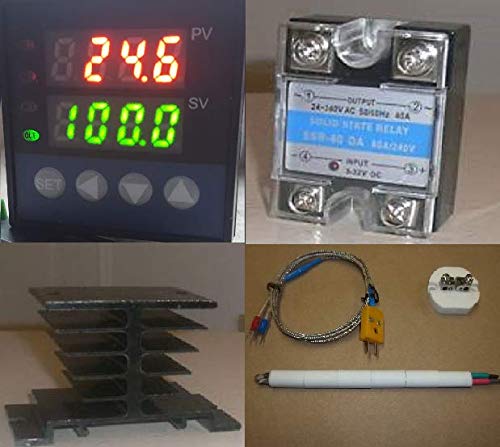 | Best Overall | Voltage & Amps: 90–260 VAC supply; current rating unlisted | Control Output: Voltage pulse to drive SSR (SSR included) | Firing Modes: Ramp & soak; ON/OFF or fuzzy-logic PID | VIEW LATEST PRICE | Read Our Analysis |
| Ramp Soak Temperature Controller Kiln SSR Thermocouple Programmable Control 60 Segment |  | Best Dual SSR Programs | Voltage & Amps: 90–260 VAC | Control Output: Voltage pulse to drive SSR | Firing Modes: Ramp/soak; ON/OFF or fuzzy PID auto-tune | VIEW LATEST PRICE | Read Our Analysis |
| Fahrenheit Ramp Soak Controller |  | Best for Segment Control | Voltage & Amps: 90–260 VAC | Control Output: Voltage pulse output for SSR | Firing Modes: Ramp/soak; ON/OFF or fuzzy PID | VIEW LATEST PRICE | Read Our Analysis |
| Plug and Play Kiln Controller |  | Best 20A Plug-In | Voltage & Amps: 120 V, up to 20 A | Control Output: SSR; 40 A rated | Firing Modes: PID ramp-and-soak | VIEW LATEST PRICE | Read Our Analysis |
| Fahrenheit PID Kiln Controller |  | Best Panel Retrofit | Voltage & Amps: 90–260 VAC | Control Output: Voltage-pulse SSR drive | Firing Modes: Programmable ramp-and-soak; no cone mode | VIEW LATEST PRICE | Read Our Analysis |
| Happybuy PID Kiln Controller | | Best Dual SSR Kit | Voltage & Amps: 90–260 VAC; 2x40A SSR | Control Output: Voltage pulse to drive SSR | Firing Modes: ON/OFF, step & continuous PID | VIEW LATEST PRICE | Read Our Analysis |
| Happybuy PID Temperature Controller Kiln Thermocouple SSR Relay Electric Oven Jewelry |  | Best Sensor Compatibility | Voltage & Amps: 90–260 VAC supply; 40A SSR | Control Output: Voltage pulse to drive SSR | Firing Modes: ON/OFF, step PID, continuous PID | VIEW LATEST PRICE | Read Our Analysis |
| Plug and Play PID Controller |  | Best Simple Setpoint | Voltage & Amps: 15 A maximum | Control Output: SSR output | Firing Modes: Single set point with timer modes; no ramp/soak | VIEW LATEST PRICE | Read Our Analysis |
| Plug and Play Timer Controller |  | Best Timer Functions | Voltage & Amps: 15 A maximum | Control Output: Out1 = SSR (heating or cooling side) | Firing Modes: Single set point; timer modes | VIEW LATEST PRICE | Read Our Analysis |
| Yechiry XY504 PID Controller |  | Best Universal Input | Voltage & Amps: 100–240 VAC | Control Output: Relay or SSR (SINOTIMER spec) | Firing Modes: Heating and cooling | VIEW LATEST PRICE | Read Our Analysis |
More Details on Our Top Picks
Ramp Soak Kiln Controller
For studio potters building multi-stage firing schedules, this all-around controller kit handles ramp-and-soak firing without sourcing core parts separately. It has 60 programmable segments: 30 ramp steps and 30 soak steps, plus fuzzy-logic PID control and auto-tuning. The kit includes a thermocouple probe, SSR and heatsink for a 220V kiln. You can switch the display between Fahrenheit and Celsius, and the temperature range is -200 to 1800 °C, depending on input type.
The 48 × 48 × 90 mm panel-mount controller has a 90–260 VAC supply and voltage-pulse output for its included SSR. Owners say auto-tuning helps with setup once they understand the instructions, and the compact kit can simplify installation. Programming directions can overwhelm beginners, and the output needs a compatible SSR rather than direct heater wiring. Match the wiring and load rating to your kiln before firing; the bundled SSR is part of this controller’s setup.
Pros: The seller helped with tuning and with choosing the right part for their kiln · Auto-tune makes initial setup easier once the instructions are understood · Buyers describe the bundled SSR and heatsink as substantial, adding a safety margin.
Cons: Programming instructions can feel overwhelming, especially for beginners · Buyers should confirm controller rating and wiring for high-current kilns before use.
Skip it if: you need a controller that can power a heater without a compatible SSR.
- Voltage & Amps:90–260 VAC supply; current rating unlisted
- Thermocouple Type:Universal input; probe types unnamed
- Control Output:Voltage pulse to drive SSR (SSR included)
- Firing Modes:Ramp & soak; ON/OFF or fuzzy-logic PID
- Programs & Segments:60 segments (30 ramp, 30 soak)
- Zone Control:—
- Temperature Range:-200 to 1800 °C (input-dependent)
- Connectivity:—
Ramp Soak Temperature Controller Kiln SSR Thermocouple Programmable Control 60 Segment
Its 60 total segments, split into 30 ramp and 30 soak steps, suit DIY kiln builders who want detailed ramp-and-soak schedules. Choose segment timing in minutes or seconds.
Installation calls for wiring a compatible SSR panel, so this suits builders comfortable with electrical setup rather than plug-and-play buyers. Voltage-pulse output drives SSRs; ON/OFF control and fuzzy PID auto-tuning give you options for regulating heat. The front-panel auto/manual switch and soft-start function add practical control, while high/low and deviation alarms can flag temperature limits.
Programming takes patience: owners report a learning curve, and one needed seller help tuning PID settings. Plan for setup time to program the schedules and tune the controller.
Cons: A learning curve: one 2020 eBay reviewer misunderstood the programming, finding segments rather than a fixed program count · Voltage-pulse output needs a compatible SSR, so it is not a plug-and-play kiln controller (KellerKunst, 2026).
Skip it if: you aren’t prepared to wire a compatible SSR panel.
- Voltage & Amps:90–260 VAC
- Thermocouple Type:Type K probe included; universal input
- Control Output:Voltage pulse to drive SSR
- Firing Modes:Ramp/soak; ON/OFF or fuzzy PID auto-tune
- Programs & Segments:60 segments (30 ramp, 30 soak)
- Zone Control:—
- Temperature Range:-200 to 1800 °C (input-dependent)
- Connectivity:—
Fahrenheit Ramp Soak Controller
DIY potters building 220 V SSR-based kilns get segment-focused firing control, with schedules up to 60 steps. The Fahrenheit Ramp Soak Controller includes an SSR and heatsink for 220 V kiln builds. It offers 30 ramp and 30 soak segments, with timing in minutes or seconds.
Its universal input and 90–260 VAC supply support flexible setups, and the display switches between °F and °C. For detailed firing schedules, it’s a practical best kiln controller choice over simple on/off control.
The panel-mount unit drives an SSR with voltage-pulse output, and buyers report a clear display and accurate temperature control after setup. Its 96 × 48 × 90 mm body fits a control-panel installation. Some owners needed days of practice with segment programming and found the instructions hard to understand at first. Auto-tuning uses fuzzy-logic PID, and a front-panel switch lets you choose auto or manual control.
Pros: A 2018 eBay buyer found the included SSR and heatsink substantial, suggesting good build quality · A 2018 eBay buyer called the unit compact and easy to install, with everything needed in the kit · The display is clear and the controller holds kiln temperature accurately once set up.
Cons: A buyer said they had trouble understanding the programming instructions at first (eBay feedback) · Some owners needed a few days of practice before the segment programming felt comfortable (eBay review).
Skip it if: you want a controller that’s ready to use without learning segment programming.
- Voltage & Amps:90–260 VAC
- Thermocouple Type:—
- Control Output:Voltage pulse output for SSR
- Firing Modes:Ramp/soak; ON/OFF or fuzzy PID
- Programs & Segments:60 segments total (30 ramp, 30 soak)
- Zone Control:—
- Temperature Range:-200 to 1800 °C (input-dependent)
- Connectivity:—
Plug and Play Kiln Controller
The Thermomart CKP-PID-RS-P&P20 runs 60 ramp-and-soak segments, with 30 ramps and 30 soaks, for separate bisque and glaze schedules. A ceramic thermocouple measures from -50 to 1300 °C, and you can choose Fahrenheit or Celsius display. A buzzer and flasher signal temperature limits or thermocouple failure.
To use it, connect the kiln heater to the controller’s rear socket, place the sensor in the kiln, and set your program. The North American version has a standard male plug and matching female receptacle; NEMA 5-20P and 5-20R connectors are available on request at no extra charge.
Pros: Ceramics buyer reports 60 segments suited bisque and glaze schedules · Reviewer reports pre-purchase help matching kiln load and wiring · Reviewer says parts matched listing and arrived well packed.
- Voltage & Amps:120 V, up to 20 A
- Thermocouple Type:Ceramic thermocouple
- Control Output:SSR; 40 A rated
- Firing Modes:PID ramp-and-soak
- Programs & Segments:60 segments; 30 ramps, 30 soaks
- Zone Control:—
- Temperature Range:-50 to 1300 °C
- Connectivity:—
Fahrenheit PID Kiln Controller
For pottery kiln owners planning custom firings, its panel-mount format suits a retrofit. It supports up to 60 program segments, with ramp-and-soak schedules for custom firing.
Temperature display switches between Fahrenheit and Celsius, and the front panel has an auto/manual control switch. If the best kiln controller for your setup needs programmable schedules rather than cone mode, this controller offers ramp-and-soak control without cone firing.
It runs on 90–260 VAC and sends a voltage-pulse output to drive an SSR. Thermocouple inputs include K, S, E, J, T, B, and N types; the available input affects the temperature range. You can set time in minutes or seconds and choose time- or value-dominant control.
One pottery owner used it to upgrade a kiln and reported success with three parallel SSRs, while noting that programming took time to understand. The controller can advance before the target temperature is reached, so its manual and your kiln’s heating capability matter when setting a schedule.
Pros: Owner used it to upgrade a pottery kiln · It worked with three parallel SSRs · Helpful seller support.
Cons: Programming took time to understand · It can advance before target temperature is reached.
Skip it if: you need cone-based firing, since this controller has no cone mode.
- Voltage & Amps:90–260 VAC
- Thermocouple Type:K, S, E, J, T, B, N
- Control Output:Voltage-pulse SSR drive
- Firing Modes:Programmable ramp-and-soak; no cone mode
- Programs & Segments:Up to 60 segments/program
- Zone Control:—
- Temperature Range:−200 to 1800 °C; input-dependent
- Connectivity:—
Happybuy PID Kiln Controller
Owners of related Happybuy kiln boxes report good value and workable performance; this dual-SSR kit suits hobby potters with a 220V kiln. Happybuy PID Kiln Controller includes two 40 A SSRs with heatsinks, a kiln probe thermocouple, and a controller with self-tuning PID. It accepts 90–260 VAC input and drives the relays with a voltage-pulse output. You can select Fahrenheit or Celsius and use ON/OFF, step PID, or continuous PID control.
The DIN 1/16 panel-mount body measures 48 x 48 x 90 mm, and the kit’s probe supports several thermocouple types. Its single set point controls one zone, so it can’t run stored ramp-and-hold firing profiles. Owners of related Happybuy models report that programming takes effort, and one reviewer said a single-temperature setting limited kiln uses. This kit is built for two hot lines on a 220V kiln, with one set point rather than a programmed firing schedule.
Skip it if: your firing plans require saved ramp-and-hold programs or control of multiple kiln zones.
- Voltage & Amps:90–260 VAC; 2x40A SSR
- Thermocouple Type:K, E, S, B, J, T, R, N
- Control Output:Voltage pulse to drive SSR
- Firing Modes:ON/OFF, step & continuous PID
- Programs & Segments:Single set point
- Zone Control:Single zone (one set point)
- Temperature Range:-200 to 1800 °C (input-dependent)
- Connectivity:—
Happybuy PID Temperature Controller Kiln Thermocouple SSR Relay Electric Oven Jewelry
The 48 mm DIN panel-mount unit suits small-studio potters who need broad sensor compatibility. Happybuy PID Temperature Controller accepts K, E, S, B, J, T, R and N thermocouples, plus PT100/RTD, and includes an adjustable kiln thermocouple with a 1 m extension wire. Its 40 A SSR is rated for 24–240 V AC, while the controller accepts a 90–260 VAC supply.
Installation uses a voltage-pulse output to drive the SSR, with a compact 48 × 48 × 90 mm panel-mount body. You get automatic PID self-tuning, ON/OFF, step-type PID and continuous PID modes, plus an alarm for heating or cooling. It controls one setpoint and one zone, so you can run a target temperature without stored multi-stage ramp-and-hold programs. That single-setpoint limit makes it a poor fit for firing schedules that need programmed ramps and holds.
Cons: Compact unit with heatsinks may need careful heat management in long, high-load firings (factoryworkbench.com, 2026 guide) · The 48 mm panel footprint is compact, so cutout fit must be checked before buying (craftedblog.com, 2026 roundup).
Skip it if: you need to save firing programs with several ramp-and-hold stages.
- Voltage & Amps:90–260 VAC supply; 40A SSR
- Thermocouple Type:K, E, S, B, J, T, R, N; also PT100/RTD
- Control Output:Voltage pulse to drive SSR
- Firing Modes:ON/OFF, step PID, continuous PID
- Programs & Segments:Single set point
- Zone Control:Single set point (single zone)
- Temperature Range:-200 to 1800 °C (input-dependent)
- Connectivity:—
Plug and Play PID Controller
For small-kiln owners who want simple setpoint control, this plug-in unit keeps firing straightforward. Happybuy Plug and Play PID Controller handles heaters drawing up to 15 A and reads temperatures from -50 to 1000 °C. It offers one setpoint, plus T1 and T2 timer modes with cycle, loop, and delay options. You can choose Celsius or Fahrenheit and calibrate the sensor.
Plug the heater into the rear socket, place the 6-inch thermocouple in the kiln, then power the controller and set your target. The probe has connectors for swapping, and a 15 A circuit breaker provides overcurrent protection. This is a single-zone controller, so it won’t run ramp-and-soak schedules or multi-stage cone programs; its setpoint-and-timer approach suits simpler temperature control.
Pros: Built-in 15 A circuit breaker replaces a fuse that wears out · Covers up to 1000 °C, enough for typical pottery and glass firing ranges.
Cons: Limited to 15 A, which reviewers say restricts larger kilns · No ramp/soak programming, so multi-stage cone schedules are not possible.
Skip it if: your firing schedule uses ramp-and-soak steps or your kiln draws over 15 A.
- Voltage & Amps:15 A maximum
- Thermocouple Type:—
- Control Output:SSR output
- Firing Modes:Single set point with timer modes; no ramp/soak
- Programs & Segments:1 set point only
- Zone Control:Single zone (one set point)
- Temperature Range:-50 to 1000 °C (-58 to 1832 °F)
- Connectivity:None (no Wi-Fi or app)
Plug and Play Timer Controller
Small kiln owners who want timer functions with single set-point control get two timers and five timer modes. It handles up to 15 A, and a 15 A circuit breaker replaces the short-life fuse. The Type K thermocouple reads and controls up to 1000 °C (1832 °F). A buzzer and flasher sound for high or low temperature or a thermocouple fault.
Setup is four steps: plug the heater into the back socket, drop the 6 in thermocouple into the kiln, power on, and set your temperature. A forum owner who ran a plug-and-play PID on a small test kiln in 2021 said setup was not truly plug-and-play. It holds one set point only, so it cannot run ramp-and-soak schedules.
Pros: A WarmGlass forum owner described using a plug-and-play PID on a small test kiln (2021) · The owner reported eventually getting the temperature alarm to sound at its preset · The forum discussion includes practical setup experience for kiln use.
Cons: That owner said setup was not truly plug-and-play and required effort to understand the controls (2021) · The owner reported difficulty and misinformation while configuring the alarm (2021).
Skip it if: your kiln draws over 15 A; the controller’s maximum current is 15 A.
- Voltage & Amps:15 A maximum
- Thermocouple Type:Type K
- Control Output:Out1 = SSR (heating or cooling side)
- Firing Modes:Single set point; timer modes
- Programs & Segments:1 set point only
- Zone Control:—
- Temperature Range:Up to 1000 °C
- Connectivity:—
Yechiry XY504 PID Controller
Hobby potters with a small kiln get the most from its universal input. The display shows set point and process temperature together, and the range runs from 0 to 1300 °C.
Auto tuning sets PID values for your setup. It accepts 100 to 240 VAC at 50 or 60 Hz, so one unit covers many power supplies. It holds one setpoint at a time, so it can’t run a programmed cone firing with ramps and holds.
What to check: Note which thermocouple type your kiln uses, since you pick the sensor type from the panel.
Skip it if: you fire to programmed cones with ramps and holds; the controller supports only one setpoint.
- Voltage & Amps:100–240 VAC
- Thermocouple Type:10 types incl. K, S, R (SINOTIMER spec)
- Control Output:Relay or SSR (SINOTIMER spec)
- Firing Modes:Heating and cooling
- Programs & Segments:1 setpoint at a time
- Zone Control:—
- Temperature Range:0-1300 °C (adjustable)
- Connectivity:—
Kiln Controllers: Key Specs Side by Side
Here is how the 10 picks line up on voltage & amps, thermocouple type, control output, firing modes and programs & segments. Cells marked with a dash are specs the maker leaves out of its listing.
| Pick | Voltage & Amps | Thermocouple Type | Control Output | Firing Modes | Programs & Segments |
|---|---|---|---|---|---|
| Ramp Soak Kiln Controller | 90–260 VAC supply; current rating unlisted | Universal input; probe types unnamed | Voltage pulse to drive SSR (SSR included) | Ramp & soak; ON/OFF or fuzzy-logic PID | 60 segments (30 ramp, 30 soak) |
| Ramp Soak Temperature Controller Kiln SSR Thermocouple Programmable Control 60 Segment | 90–260 VAC | Type K probe included; universal input | Voltage pulse to drive SSR | Ramp/soak; ON/OFF or fuzzy PID auto-tune | 60 segments (30 ramp, 30 soak) |
| Fahrenheit Ramp Soak Controller | 90–260 VAC | — | Voltage pulse output for SSR | Ramp/soak; ON/OFF or fuzzy PID | 60 segments total (30 ramp, 30 soak) |
| Plug and Play Kiln Controller | 120 V, up to 20 A | Ceramic thermocouple | SSR; 40 A rated | PID ramp-and-soak | 60 segments; 30 ramps, 30 soaks |
| Fahrenheit PID Kiln Controller | 90–260 VAC | K, S, E, J, T, B, N | Voltage-pulse SSR drive | Programmable ramp-and-soak; no cone mode | Up to 60 segments/program |
| Happybuy PID Kiln Controller | 90–260 VAC; 2x40A SSR | K, E, S, B, J, T, R, N | Voltage pulse to drive SSR | ON/OFF, step & continuous PID | Single set point |
| Happybuy PID Temperature Controller Kiln Thermocouple SSR Relay Electric Oven Jewelry | 90–260 VAC supply; 40A SSR | K, E, S, B, J, T, R, N; also PT100/RTD | Voltage pulse to drive SSR | ON/OFF, step PID, continuous PID | Single set point |
| Plug and Play PID Controller | 15 A maximum | — | SSR output | Single set point with timer modes; no ramp/soak | 1 set point only |
| Plug and Play Timer Controller | 15 A maximum | Type K | Out1 = SSR (heating or cooling side) | Single set point; timer modes | 1 set point only |
| Yechiry XY504 PID Controller | 100–240 VAC | 10 types incl. K, S, R (SINOTIMER spec) | Relay or SSR (SINOTIMER spec) | Heating and cooling | 1 setpoint at a time |
Frequently Asked Questions
Can a kiln controller fire to a cone accurately without witness cones?
Some controllers offer cone-fire programs, but the article does not establish that they replace witness cones. Cone-fire programs on one controller cover cone 022 through cone 12 and can include preheat, a final hold, and controlled cooling. Pick the program that matches your target cone, since selectable firing speed can change total firing time by up to 40%.
Which kiln controller is easiest for a beginner to program?
A controller with a simple key layout is the easiest starting point, based on one buyer’s report. A pottery buyer called a 12-key controller straightforward and adequate for their work. Start with a single target temperature, and add ramps and holds only when a firing needs them.
Can I monitor or control a kiln firing from my phone?
A controller with Wi-Fi supports remote monitoring and updates, and one model also includes built-in diagnostics. Choose a Wi-Fi model only if remote access matters more to you than a simpler control panel.
Do I need multi-zone control for my pottery kiln?
No, you only need multi-zone control if your kiln heats in separate zones. Some controllers handle single-zone or multi-zone operation, and another supports outputs for up to four zones. If your kiln has one heating section, put your budget toward segment count and firing modes instead.
What is the best digital controller for a pottery kiln?
The best digital controller is the one that matches your kiln’s nameplate voltage, amperage, and maximum temperature. Match the thermocouple type too, since controllers accept different inputs such as Type K, N, S, and R. Then choose by firing need: cone-fire programs for cone work, and enough segments to cover your longest ramp-and-soak schedule.
Conclusion
If you’re replacing the controls on an older kiln, settle the electrical and sensor match before anything else. If your firings hold one target temperature, a single-setpoint controller covers it. If you run preheat, holds, or controlled cooling, pick a ramp-and-soak model with enough segments for your longest program, and add zone control or Wi-Fi only when you’ll use them.
Your next step: write down the kiln’s nameplate voltage, amperage, and maximum temperature, along with its thermocouple type. Then count the stages in your longest firing and shortlist only the controllers that match both.
Sources
- community.ceramicartsdaily.org (community.ceramicartsdaily.org)
- bartlettinstrument.com (bartlettinstrument.com)
- reddit.com (reddit.com)
- ortonceramic.com (ortonceramic.com)
- PID Kiln Temperature Controller 60 Ramp Soak Setpoints Paragon Pottery Ceramic (ebay.com)
- Plug & Play PID Temperature Controller Box Kiln Probe Pottery Glass Annealing (ebay.com)
- kilncontrol.com (kilncontrol.com)
- evenheat-kiln.com (evenheat-kiln.com)
- Genesis 2.0 (bartlettinstrument.com)
- reddit.com (reddit.com)
- PIDKiln – PID Temperature Controller to Ceramic/Glass/Metal Kiln – Instructables (instructables.com)