9 Best Stoneware Clays for 2026
AMACO 38 White Stoneware Clay is the best overall pick if you want a smooth, no-grog body for throwing, slab work, and handbuilding. It’s rated cone 5–10, with 1.4% absorption at cone 10. For other needs, consider AMACO A-Mix No. 11 or Old Potters White for white bodies; Rocky Mountain Best Mix or Dover for throwing and handbuilding; AMACO Buff No. 46 for a buff body; and SIO-2 Luna, Rocky Mountain Speckled Buff, or SIO-2 Toffee Caramel for speckled or warm-colored work.
Choose by matching the clay’s firing range to your kiln and comparing shrinkage and absorption at your intended cone. Forming method and texture matter too, especially if you plan to join pieces.
Fired color can change with atmosphere, so a cone rating alone won’t predict the result.
The comparison table lists each clay’s firing cone, forming method, and color.
Our top picks for stoneware clays
- Best Overall: AMACO 38 White Stoneware Clay, for potters wanting smooth white clay for throwing or handbuilding, especially with cone 10 access
- Best for White Handbuilding: AMACO A-Mix No. 11 Stoneware Clay, for potters wanting smooth white stoneware for throwing and handbuilding
- Best Smooth Mid-Fire: Rocky Mountain Best Mix Stoneware Clay, for potters wanting smooth mid-fire clay for throwing or handbuilding
How to Choose Stoneware Clay
Match the clay to your firing cone
The best stoneware clay is one whose rated cone fits your kiln schedule and the work you’re making. Compare the clay’s firing range with your intended cone, then use shrinkage and absorption figures for that cone rather than relying on a body’s name or its broad range. A body can behave differently across its firing range: AMACO Buff No. 46 lists 12% shrinkage and 1.8% absorption at cone 5, compared with 13.2% shrinkage and 0% absorption at cone 10.
Treat the kiln atmosphere as part of the match, since oxidation and reduction can produce different fired colors. Choose a body with figures at your target cone, and compare those figures with your needs for finished pieces.
Choose a body for your forming method
Start with how you plan to shape the clay. Some bodies are described for throwing and handbuilding, while others are positioned for specific work such as large throwing or slab rolling. A body made for one method may not suit another as well, so match the stated forming uses to your studio process.
For example, AMACO White Stoneware No. 38 is positioned for large throwing, slab rolling, and handbuilding. If you’ll join pieces or attach handles, account for the body’s shrinkage as you plan those connections.
Package size and minimum order also affect the fit. According to Laguna Clay, compare the amount you can use with the minimum order and package increments, especially if you’re choosing a body for a small batch or trying several clays. A body that suits your forming method may still be an impractical purchase if the required quantity exceeds what your project needs.
Compare texture, plasticity, and grog
Texture affects how a clay feels during forming and how much smoothing the surface may need. Smooth bodies suit work where a fine surface matters; grog, which is fired clay added to a body, gives it texture. Laguna describes B-Mix 5 with grog as having fine grog and a slight texture, while potters differ on whether that texture feels helpful or abrasive.
Look for descriptions that fit the way you work, such as smooth, slightly coarse, or non-sticky. A body described as all-purpose for throwing and handbuilding may suit a studio that uses both methods. Grog changes surface feel as well as the body’s texture, so a rougher body may not be easier to handle; comfort depends on the person and task.
Plasticity describes how readily clay can be shaped and worked. The provided body descriptions distinguish smoothness and texture, but don’t supply a comparable plasticity measure; use the described texture and intended forming method as practical selection cues.
Check shrinkage and water absorption
Shrinkage tells you how much a piece contracts as it dries and fires; absorption indicates how much water the fired body takes up. Compare both at your intended cone, since figures taken at different firing temperatures aren’t direct substitutes.
For pieces that must fit together, shrinkage matters to sizing and joins. AMACO notes shrinkage when handles or other pieces are attached to its White Stoneware No. 38. For functional ware, absorption gives you a useful measure of the fired body’s water uptake; compare the figure with the requirements of your intended use rather than treating a lower number as automatically better.
A body’s firing temperature can change both values, as the cone 5 and cone 10 figures for Buff No. 46 show.
Consider fired color and glaze results
Fired color can change how a glaze looks, so consider the body’s color alongside the glaze you plan to use. Stoneware descriptions include colors such as cream, off-white, and warm off-white or tan in oxidation. Firing conditions also affect the outcome.
AMACO recommends testing because clay color and composition can change glaze results. Test with the clay and firing conditions you plan to use.
| AMACO 38 White Stoneware Clay |  | Best Overall | Firing Cone: Cone 5–10; best at 10 | Forming Method: Throwing, slab rolling, hand modeling | Clay Color: White | VIEW LATEST PRICE | Read Our Analysis |
| AMACO A-Mix No. 11 Stoneware Clay |  | Best for White Handbuilding | Firing Cone: Cone 5–10 | Forming Method: Wheel throwing, handbuilding | Clay Color: Off-white | VIEW LATEST PRICE | Read Our Analysis |
| Rocky Mountain Best Mix Stoneware Clay | 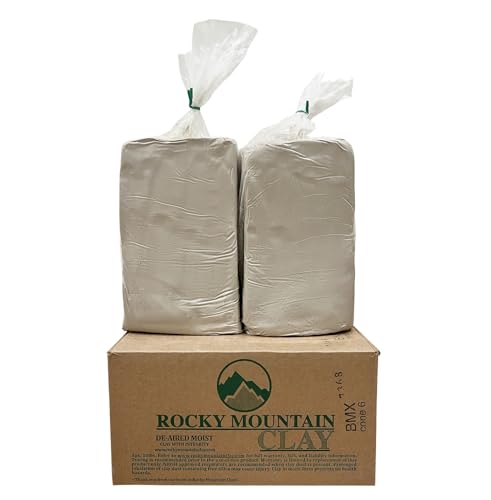 | Best Smooth Mid-Fire | Firing Cone: Cone 5–7 (mid-fire) | Forming Method: Wheel throwing, handbuilding | Clay Color: Wet white; fired white/gray | VIEW LATEST PRICE | Read Our Analysis |
| Rocky Mountain Dover Stoneware Clay |  | Best for Cone 6–10 | Firing Cone: Cone 6–10 | Forming Method: Wheel throwing, handbuilding | Clay Color: Light grey wet; white oxidation | VIEW LATEST PRICE | Read Our Analysis |
| Old Potters White Stoneware Clay |  | Best for Low-Iron White | Firing Cone: Cone 6–10 | Forming Method: Wheel, handbuilding, sculpture | Clay Color: White stoneware | VIEW LATEST PRICE | Read Our Analysis |
| AMACO Buff No. 46 Stoneware Clay |  | Best for Buff Clay | Firing Cone: Cone 5 recommended | Forming Method: Wheel throwing, handbuilding | Clay Color: Buff; warm light buff fired | VIEW LATEST PRICE | Read Our Analysis |
| SIO-2 Luna Speckled Stoneware Clay | 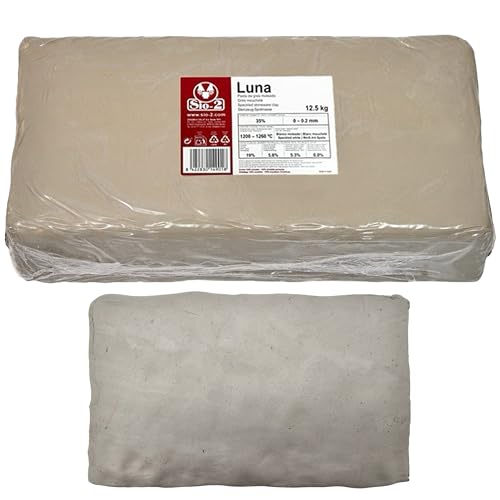 | Best for Speckled Work | Firing Cone: Cone 5–7 | Forming Method: Wheel throwing, hand-building, modelling | Clay Color: Ivory-white, dark speckles | VIEW LATEST PRICE | Read Our Analysis |
| Rocky Mountain Speckled Buff Stoneware Clay |  | Best for Speckled Buff | Firing Cone: Cone 5–7; Cone 6 recommended | Forming Method: Wheel throwing and handbuilding | Clay Color: Wet pinky brown; fired buff specks | VIEW LATEST PRICE | Read Our Analysis |
| SIO-2 Toffee Caramel Stoneware Clay | 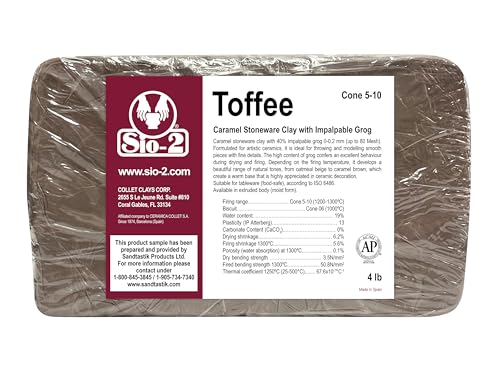 | Best for Warm Tones | Firing Cone: Cone 5–10 | Forming Method: Wheel throwing, handbuilding, modeling | Clay Color: Caramel; fires beige to brown | VIEW LATEST PRICE | Read Our Analysis |
More Details on Our Top Picks
AMACO 38 White Stoneware Clay
For potters needing one versatile body for wheel and hand work, AMACO 38 White Stoneware Clay is an all-around choice. This smooth, grog-free white body suits throwing, slab rolling, and hand modeling, and its cone 5–10 range gives you room to fire at different temperatures. It has strength for throwing large pieces, and the best stoneware clay for your studio depends on matching its firing range to your kiln.
It fires white in oxidation and gray in cone 10 reduction. At cone 5, expect 13% shrinkage and 7% absorption; at cone 10, those figures are 15% and 1.4%. Glaze firing is recommended at cone 10, so studios limited to cone 5 should weigh the higher absorption against their intended use.
Pros: AMACO describes it as strong enough for throwing large pieces · No grog and a smooth white body · Suitable for throwing, slab rolling, and hand modeling.
Cons: Recommended glaze firing is cone 10, so it may not suit studios limited to lower firing temperatures · Listed shrinkage reaches 15% at cone 10.
Skip it if: your studio fires only at cone 5 and you need low water absorption in the finished ware.
- Firing Cone:Cone 5–10; best at 10
- Forming Method:Throwing, slab rolling, hand modeling
- Clay Color:White
- Texture and Grog:No grog; smooth white body
- Shrinkage:13% cone 5; 15% cone 10
- Water Absorption:7% cone 5; 1.4% cone 10
- Package Weight:1 lb
AMACO A-Mix No. 11 Stoneware Clay
Its smooth, off-white body suits potters seeking the best stoneware clay for handbuilding and wheel work. With no grog, it has a smooth surface for shaping slabs, coils, sculpture, or thrown forms. The 50 lb package fires from cone 5 to cone 10. At cone 5, shrinkage is 11.2% and absorption is 7.03%; at cone 10, shrinkage is 12.9% and absorption is 1.6%.
Strong greenware helps pieces hold together before firing, and the clay maintains strength after firing. It’s a versatile body for throwing and all types of handbuilding, though beginners may find it harder to work with. Handle it gently and avoid overwatering; without grog, it’s less rugged than grogged clays.
Cons: Reviewer says it can be harder for beginners to work with (2026) · Reviewer advises gentle handling and avoiding overwatering (2026).
Skip it if: you need grog for rough handling or rugged handbuilding.
- Firing Cone:Cone 5–10
- Forming Method:Wheel throwing, handbuilding
- Clay Color:Off-white
- Texture and Grog:Smooth; no grog
- Shrinkage:11.2% cone 5; 12.9% cone 10
- Water Absorption:7.03% cone 5; 1.6% cone 10
- Package Weight:50 lb
Rocky Mountain Best Mix Stoneware Clay
For wheel throwers and handbuilders, Rocky Mountain Best Mix offers a smooth mid-fire body for versatile forming. This clay fires from cone 5 to 7; it’s white when wet, then fires white in oxidation and grayish-white in reduction. At cone 6, average shrinkage is 13.5%, and absorption is 0.07%. The 50 lb package suits potters who want one clay body for different forming methods.
Potters have described B-Mix as soft, easy to work with, and gentler on hands than groggier clay. One potter reported no cone 6 firing issues, while a handbuilder found it chalky and grainy, drying quickly and cracking at joints. That handbuilder also had trouble rewetting it. Its smooth texture favors work where a less gritty feel matters, but fast drying and difficult rewetting may frustrate handbuilders.
Pros: One potter described B-Mix as soft and easy to work with (2024) · A potter reported it was easier on the hands than groggier clay (2024) · One potter reported no cone 6 firing issues (2024).
Cons: A handbuilder reported chalky, grainy feel and fast drying (2021) · The same handbuilder reported cracking at joints and difficulty rewetting (2021).
Skip it if: easy rewetting matters for your handbuilding; one handbuilder had trouble rewetting this clay body.
- Firing Cone:Cone 5–7 (mid-fire)
- Forming Method:Wheel throwing, handbuilding
- Clay Color:Wet white; fired white/gray
- Texture and Grog:Smooth
- Shrinkage:13.5% at cone 6
- Water Absorption:0.07% at cone 6
- Package Weight:50 lb
Rocky Mountain Dover Stoneware Clay
Unlike AMACO 38 White Stoneware Clay, Rocky Mountain Dover suits intermediate-to-advanced potters firing across cone 6–10. This moist, de-aired body works for wheel throwing and handbuilding, with a smooth consistency and light grey wet color. Oxidation produces a white fired color, while reduction produces a gray-to-white color.
The 50 lb package suits small-to-medium pottery, and cone 6 firing brings 11.5% shrinkage with 2.5% absorption. At cone 10, shrinkage is 12.5%.
Owners report easy wedging and kneading, slabs that joined without seam cracking, and smooth cleanup with a damp sponge. One potter reported crazing on mugs and pinging on other pieces with their glaze combination, an individual issue rather than a confirmed general defect.
Pros: Owner reported easy wedging and kneading (2025) · Owner said slabs scored and joined without seam cracking (2025) · Owner described smooth cleanup with a damp sponge (2025).
Skip it if: you’re making large-scale pottery rather than small-to-medium pieces.
- Firing Cone:Cone 6–10
- Forming Method:Wheel throwing, handbuilding
- Clay Color:Light grey wet; white oxidation
- Texture and Grog:—
- Shrinkage:11.5% cone 6; 12.5% cone 10
- Water Absorption:2.5% cone 6
- Package Weight:50 lb
Old Potters White Stoneware Clay
Potters seeking a low-iron white body for throwing, handbuilding, or sculpture can fire Old Potters White Stoneware Clay from cone 6 to 10. Its low iron content helps keep glaze colors clean, and the manufacturer describes its plasticity as superior. At 11% shrinkage, it gives you a concrete figure to account for as pieces dry and fire. The body is intended for both functional and decorative work.
Its flexible, plastic-like feel suits wheel throwing, slab work, handbuilding, and sculpture. Fired absorption is 3%, and the manufacturer says glazed pieces are food-safe. The cone 6–10 range offers room for different high-fire projects, but this body’s 10 lb package may fall short if you’re preparing a large batch or building a series of substantial pieces.
Skip it if: your batch or series needs more than 10 lb of clay.
- Firing Cone:Cone 6–10
- Forming Method:Wheel, handbuilding, sculpture
- Clay Color:White stoneware
- Texture and Grog:Plastic-like, flexible
- Shrinkage:11.0%
- Water Absorption:3.0%
- Package Weight:10 lb
AMACO Buff No. 46 Stoneware Clay
Owners report smooth, comfortable handling, making AMACO Buff No. 46 a fit for potters who want buff clay for throwing or handbuilding. Its grog-free, smooth body works on the wheel and for slab, pinch, coil, and sculpture methods. At Cone 5, it shrinks 12% and absorbs 1.5% water; at Cone 10, it shrinks 13.2% and absorbs 0%.
The 50 lb body fires warm light buff at Cone 5–6 and suits dishes, sculpture, and planters. Its recommended glaze firing is Cone 5, where the reported shrinkage is 12%. Potters also report that it holds up during throwing and works for handbuilding.
One potter reported pinging and small cracks after a Cone 5 firing in 2025, while another reported glaze crazing and water-absorption concerns in 2023. Test tiles can help you judge how your glaze looks on this buff body.
Pros: A 2025 potter said they enjoyed working with No. 46 · A reviewer describes it as smooth and comfortable on the hands · Reviewer reports it holds up well during wheel throwing.
Cons: One potter reported pinging and mini cracks after a Cone 5 firing (2025) · A potter reported glaze crazing and water absorption concerns (2023).
Skip it if: you want grog or sand to create a visibly textured surface.
- Firing Cone:Cone 5 recommended
- Forming Method:Wheel throwing, handbuilding
- Clay Color:Buff; warm light buff fired
- Texture and Grog:Smooth; no grog or sand
- Shrinkage:12% at Cone 5
- Water Absorption:1.5%
- Package Weight:50 lb
SIO-2 Luna Speckled Stoneware Clay
Potters seeking speckled wheel-thrown or handbuilt work get an ivory stoneware body with dark mineral spots throughout. SIO-2 Luna Speckled Stoneware Clay fires at cone 5–7 and contains 40% impalpable grog. Its 5.8% drying shrinkage and 5.3% firing shrinkage at 1260°C give you useful figures for planning finished dimensions. Water absorption is 0.0% at 1260°C, and transparent glazes enhance the speckles.
You can throw, handbuild, or model the clay, and it supports single firing when thoroughly dry. Potters report easy wheel throwing, well-handled curves, and good carving for handbuilt work. The speckles can feel sharp, while larger minerals may leave craters during slow trimming.
Low-temperature bisque firing can also cause mineral-related flaking. Transparent glaze brings out the dark spots against the ivory-white body, so the mineral pattern remains a visible part of the finished surface.
Pros: Potter reports wheel throwing is a breeze (2026) · Reviewer says curves handle nicely (2026) · Reviewer reports handbuilt clay carved well (2026).
Cons: Reviewer reports some speckles feel sharp (2026) · Reviewer reports trimming can be slow and larger minerals may leave craters (2026).
Skip it if: you want a smooth surface; dark mineral speckles can feel sharp and leave craters during trimming.
- Firing Cone:Cone 5–7
- Forming Method:Wheel throwing, hand-building, modelling
- Clay Color:Ivory-white, dark speckles
- Texture and Grog:40% impalpable grog
- Shrinkage:5.8% dry; 5.3% fired
- Water Absorption:0.0% at 1260°C
- Package Weight:27.6 lb
Rocky Mountain Speckled Buff Stoneware Clay
For experienced potters, this speckled buff body handles wheel throwing and handbuilding. Rocky Mountain Speckled Buff Stoneware Clay fires from Cone 5–7, with Cone 6 recommended. Its buff fired color and manganese specks give finished work a visible speckled surface; the wet clay is pinky brown. The smooth body comes moist and de-aired in a 25 lb package.
At Cone 6, it shrinks 12% and has 0.21% water absorption. It suits both throwing and handbuilding, and owners call it a go-to clay and praise the finished results. Some specks can be felt while throwing.
One potter reports trouble vitrifying at Cone 6, while another says it performs better there than at Cone 5. Bloating may occur above Cone 7.
Pros: 2026 owner: loves the finished product · 2026 owner: names it a go-to clay · Manufacturer describes it as easy to throw and hand-build.
Cons: 2026 potter reports trouble vitrifying at Cone 6 · 2026 potter says it performs better at Cone 6 than Cone 5.
Skip it if: your kiln regularly exceeds Cone 7, as this clay may bloat at higher temperatures.
- Firing Cone:Cone 5–7; Cone 6 recommended
- Forming Method:Wheel throwing and handbuilding
- Clay Color:Wet pinky brown; fired buff specks
- Texture and Grog:Smooth; manganese specks occasionally felt
- Shrinkage:12% at Cone 6
- Water Absorption:0.21% at Cone 6
- Package Weight:25 lb
SIO-2 Toffee Caramel Stoneware Clay
With 40% fine grog, this clay suits potters making warm-toned thrown or modeled work. It fires from oatmeal beige to caramel brown across Cone 5–10, giving glazes a warm base. Its 0–0.2 mm grog is impalpable, and the clay is suitable for wheel throwing, handbuilding, and modeling.
The 4 lb body has 6.2% drying shrinkage and 5.6% firing shrinkage at 1300°C, with 0.1% water absorption at that temperature. Owners describe its feel as silky and say the fired color is nice; one reports that it enhances some glazes. It can make food-safe tableware under ISO 6486. Its high-fire range rules it out for low-fire kilns, and the finished color shifts from beige to brown with firing temperature.
Pros: Owner called the fired color nice · Owner said it enhanced some glazes · Owner described the feel as silky.
Skip it if: your kiln can’t reach Cone 5 and only fires at low temperatures.
- Firing Cone:Cone 5–10
- Forming Method:Wheel throwing, handbuilding, modeling
- Clay Color:Caramel; fires beige to brown
- Texture and Grog:40% impalpable grog, 0–0.2 mm
- Shrinkage:6.2% drying; 5.6% firing
- Water Absorption:0.1% at 1300°C
- Package Weight:4 lb
Stoneware Clays: Key Specs Side by Side
Here is how the 9 picks line up on firing cone, forming method, clay color, texture and grog and shrinkage. Cells marked with a dash are specs the maker leaves out of its listing.
| Pick | Firing Cone | Forming Method | Clay Color | Texture and Grog | Shrinkage |
|---|---|---|---|---|---|
| AMACO 38 White Stoneware Clay | Cone 5–10; best at 10 | Throwing, slab rolling, hand modeling | White | No grog; smooth white body | 13% cone 5; 15% cone 10 |
| AMACO A-Mix No. 11 Stoneware Clay | Cone 5–10 | Wheel throwing, handbuilding | Off-white | Smooth; no grog | 11.2% cone 5; 12.9% cone 10 |
| Rocky Mountain Best Mix Stoneware Clay | Cone 5–7 (mid-fire) | Wheel throwing, handbuilding | Wet white; fired white/gray | Smooth | 13.5% at cone 6 |
| Rocky Mountain Dover Stoneware Clay | Cone 6–10 | Wheel throwing, handbuilding | Light grey wet; white oxidation | — | 11.5% cone 6; 12.5% cone 10 |
| Old Potters White Stoneware Clay | Cone 6–10 | Wheel, handbuilding, sculpture | White stoneware | Plastic-like, flexible | 11.0% |
| AMACO Buff No. 46 Stoneware Clay | Cone 5 recommended | Wheel throwing, handbuilding | Buff; warm light buff fired | Smooth; no grog or sand | 12% at Cone 5 |
| SIO-2 Luna Speckled Stoneware Clay | Cone 5–7 | Wheel throwing, hand-building, modelling | Ivory-white, dark speckles | 40% impalpable grog | 5.8% dry; 5.3% fired |
| Rocky Mountain Speckled Buff Stoneware Clay | Cone 5–7; Cone 6 recommended | Wheel throwing and handbuilding | Wet pinky brown; fired buff specks | Smooth; manganese specks occasionally felt | 12% at Cone 6 |
| SIO-2 Toffee Caramel Stoneware Clay | Cone 5–10 | Wheel throwing, handbuilding, modeling | Caramel; fires beige to brown | 40% impalpable grog, 0–0.2 mm | 6.2% drying; 5.6% firing |
Frequently Asked Questions
What stoneware clay is best for beginners?
A smooth, grog-free body rated for your kiln is a practical starting point, especially if you plan to throw or handbuild. AMACO A-Mix No. 11 suits both methods and has strong greenware, but some beginners find it harder to work with, so handle it gently and avoid overwatering.
Can I fire cone 5 stoneware at cone 6?
Yes, some cone 5 bodies may work at cone 6, but treat that as a test rather than a guarantee. Potters report mixed results with B-Mix 5 at cone 6, including concerns about higher absorption, slumping, or bloating in some forms.
Why should I make glaze test tiles with a new clay body?
Test tiles show how a glaze looks on your clay under your firing conditions. Clay color and composition can change glaze results, and firing atmosphere can affect the body’s fired color. Use the same clay and firing process planned for your finished work.
How should I prepare stoneware clay before throwing or handbuilding?
Wedge the clay to make its consistency workable before shaping it, and avoid adding excess water to smooth, grog-free bodies. Owners report that some clay can arrive very stiff and need extra wedging or hydration, while overwatering can make handling harder.
How can I tell if a stoneware clay body is fully vitrified?
Use the body’s water-absorption figure at your firing cone as a practical indicator of how much water the fired clay takes up. Compare that figure with the intended use, since absorption can change across a clay’s firing range; AMACO Buff No. 46, for example, lists 1.8% at cone 5 and 0% at cone 10.
Conclusion
Choose a clay body by matching its firing range to your kiln, then weigh its forming method, texture, shrinkage, and absorption against the work you plan to make. Cone 5 and cone 10 figures can differ for the same body, so compare measurements at your intended cone. Next, make glaze test tiles with your clay and firing conditions, then choose the body whose fired color and surface suit your finished work.
Sources
- shop.amaco.com (shop.amaco.com)
- https://www.clayandpotterysupplies.com/shop-by-category/clays/Luna-Speckled-Stoneware-Clay-Sample-Size (clayandpotterysupplies.com)
- amaco.com (amaco.com)
- https://www.sio-2.com/gb/blog/news/new-for-2024-luna-speckled-stoneware (sio-2.com)
- shop.amaco.com (shop.amaco.com)
- WC401 B-MIX ^5 (lagunaclay.com)
- lagunaclay.com (lagunaclay.com)
- lagunaclay.com (lagunaclay.com)
- lagunaclay.com (lagunaclay.com)
- reddit.com (reddit.com)
- shop.amaco.com (shop.amaco.com)
- reddit.com (reddit.com)
- reddit.com (reddit.com)
- elantransfers.com (elantransfers.com)