Tabletop vs Floor Pottery Wheel: Which Should You Choose?
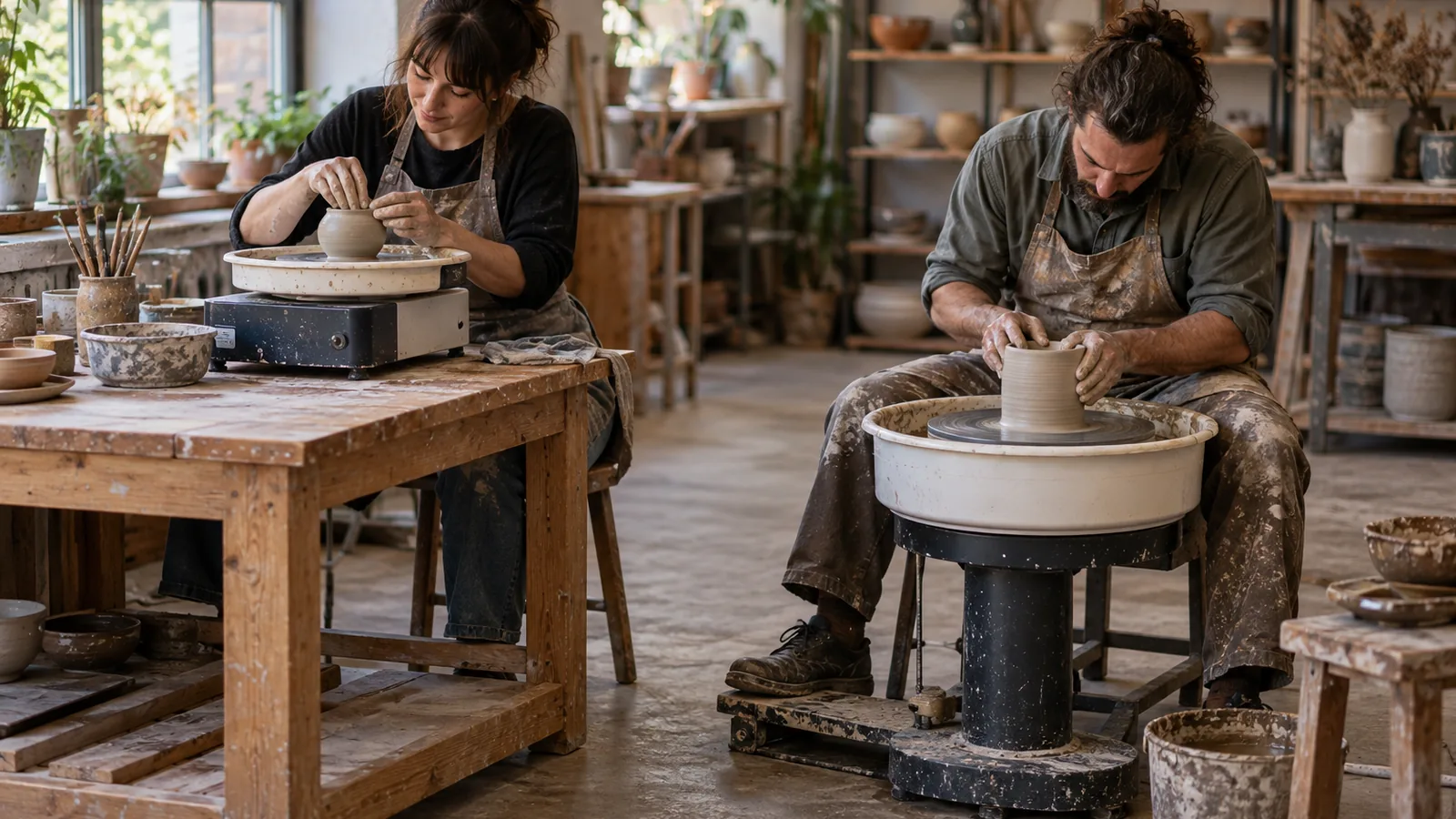
Tabletop vs floor pottery wheel comes down to support: a tabletop model needs a separate work surface, while a floor model stands on its own base; the Artista can also use optional legs that raise it 22 in. Choose based on your workspace and the specific wheel’s footprint, weight, working height, and mounting requirements.
Should you choose a tabletop or floor pottery wheel?
Quick answer: Choose a tabletop wheel if you have a stable, suitable work surface; choose a floor wheel if you want a wheel with its own stand and have room for it. Compare the specific model’s footprint, weight, working height, and mounting needs, since those details vary and aren’t always listed. Before placing a tabletop wheel, confirm that the surface supports it securely and that its setup meets the maker’s requirements.
- Tabletop: Check table space, support, and throwing height.
- Floor: Check the wheel and stand’s footprint and weight.
- Move it often: Check the model’s weight and whether its legs fold or detach.
How Do Tabletop and Floor Wheels Differ?
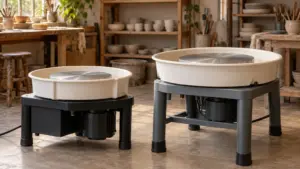
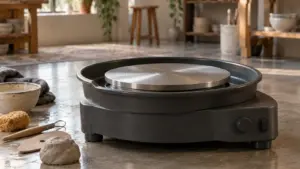
A tabletop wheel needs a separate work surface, while a floor wheel stands on its own base and takes up floor space. The main difference is where the wheel is supported, which changes what you need to make room for.
Speedball’s Artista is sold as a portable tabletop model, but optional legs let you set it up for seated throwing on the floor. The legs come in static steel and folding aluminum versions, so the same wheel can suit different setups.
For a tabletop setup, you’ll need a work surface that can support the wheel and a comfortable throwing position. The available Artista information doesn’t specify a required table size, load rating, or way to secure the wheel, so check those details rather than assuming any table will work. For a floor setup, consider the space taken by the wheel and its stand, plus room to sit and work.
Portability depends on the wheel and setup. The Artista has folding legs for storage; other models vary in weight, footprint, and leg options.
Working position can vary, too. The Artista’s optional legs are intended for seated use, including its static legs, which raise the wheel to 22 in from the floor. That measurement applies to this leg setup, not to tabletop wheels or floor wheels as a whole.
Check the working height of the particular wheel and stand, then compare it with your seat and preferred throwing posture. A wheel’s label tells you where it sits; its specifications tell you whether it fits your room and work habits.
Which Wheel Fits Your Workspace?
Choose a tabletop wheel if you have a stable work surface with enough room and can leave the wheel there; choose a floor-standing model if you want a self-supporting setup or don’t have a suitable table. The best fit depends on how often you’ll move the wheel and the space available, since models differ in size, weight, and setup.
A tabletop wheel needs a separate surface, but the Artista’s listed product information doesn’t give a minimum table size, load rating, or way to secure it. Before choosing one, confirm that your table can support the wheel securely and leaves room for your throwing setup. If you can’t verify those details, ask the manufacturer rather than guessing.
Floor-standing wheels use their own stands, but they still take up floor space. For example, the Clay Boss measures 29.75 × 24.5 × 17.25 in and weighs 68 lb. Check the dimensions against the space where you’ll throw, and consider whether you can move a wheel of that weight into place.
How often you need to move the wheel also matters. Speedball describes the Artista as compact and portable, but its weight and footprint aren’t listed. Its optional folding aluminum legs are designed for portability and storage, while optional static steel legs provide a stable seated setup at 22 in from the floor. Those leg options change how the tabletop wheel can be set up, so check the specific configuration before planning to store or relocate it.
If you’ll move the wheel between work sessions, compare the model’s weight and leg setup, not just whether it’s labeled tabletop or floor-standing. If it will stay in one place, focus on the space it occupies and whether your table or floor can support the setup.
What Should You Check Before Choosing?
Before choosing, compare the wheel’s working height, stability, weight, capacity, and mounting needs with your setup.
- Working height: Check the height at which you’ll throw, including any legs or stand. Speedball’s optional static steel legs raise the Artista to 22 in from the floor for stable seated throwing. The wheel’s height on a table isn’t specified.
- Stability: Check what supports the wheel and how it stays steady during use. The Artista’s optional steel legs are designed for stable seated throwing. Its product information doesn’t say how to secure it to a table.
- Weight: Check the wheel’s weight before planning to move or place it. The floor-standing Clay Boss weighs 68 lb, and the Brent CXC weighs 117 lb. The Artista’s weight isn’t listed.
- Capacity: Compare the maker’s stated capacity with the clay you plan to center, and check what the figure measures. The Artista has a 25 lb centering capacity, and the Clay Boss has a 100 lb centering capacity. The Brent CXC can handle 300 lb of clay continuously.
- Footprint and support: Check the wheel’s dimensions and the surface it will sit on. The Clay Boss measures 29.75 × 24.5 × 17.25 in. The Artista’s footprint, minimum table size, and tabletop load rating aren’t listed.
- Mounting requirements: Check how a tabletop wheel must be secured before choosing it. The Artista’s table-mounting requirements aren’t specified, so confirm them for the wheel you’re considering.
If a listing leaves out a measurement or mounting detail, ask the maker for it before committing to a table or stand.
Compare Tabletop and Floor Wheels at a Glance
Compare the specific wheel and setup, since portability, dimensions, and working height vary by model.
| Criterion | Tabletop example | Floor-standing example |
|---|---|---|
| Placement | Artista sits on a separate work surface | Clay Boss has its own stand |
| Footprint | — | Clay Boss: 29.75 × 24.5 × 17.25 in |
| Weight | — | Clay Boss: 68 lb |
| Portability | Artista is described as portable; optional folding legs support storage and portability | — |
| Working position | Artista can be used seated with optional legs | — |
| Setup requirements | Artista can use separately sold legs for a floor setup | — |
The Artista can sit on a work surface or be configured with optional legs for seated use. Its listed information doesn’t give a weight, footprint, minimum table size, or table load rating, so check those details before choosing a support surface. Floor models also differ substantially in weight: the Brent CXC is listed at 117 lb, compared with the Clay Boss at 68 lb. If you need to move a wheel often, confirm the exact model’s weight and leg arrangement rather than relying on its tabletop or floor category.
Frequently Asked Questions
How much do tabletop and floor pottery wheels cost?
Prices vary by seller, so compare current quotes for the specific models and setups you’re considering. Include any separately sold legs or foot pedal in the total, since the Artista’s legs and optional pedal are sold separately.
Are tabletop pottery wheels powerful enough for larger projects?
Some tabletop wheels can handle substantial clay loads, but check the maker’s capacity and what it measures. The Artista is rated for 25 lb of centering capacity, while the floor-standing Clay Boss is rated for 100 lb, so larger projects may call for a higher-capacity model.
How noisy are pottery wheels in an apartment?
The available specifications don’t give noise levels, so you can’t predict apartment noise from a wheel’s tabletop or floor design alone. Check with the maker for operating noise, and consider how the wheel’s support surface or stand may affect vibration in your room.
Do tabletop and floor pottery wheels use the same power supply?
Power-supply requirements vary by model, so check the electrical details for each model rather than assuming the two types match. Also confirm whether the wheel’s controls suit your setup: the Artista can be converted from hand-operated to foot-powered with an optional pedal.
How do you clean a pottery wheel after throwing?
Wipe the wheel and its work area after throwing, and keep water and clay away from electrical parts. Follow the manufacturer’s cleaning instructions for your specific model, since the available product information doesn’t give a model-specific cleaning procedure.
Conclusion
If you have a stable surface that fits your throwing position and can stay set up, choose a tabletop wheel. If you lack suitable table space or want the wheel supported by its own stand, choose a floor model. If you’ll move it often, base the decision on the specific model’s weight and leg setup.
Before buying, measure the space where you’ll work and compare it with the wheel’s dimensions and working height. For a tabletop model, confirm its support and mounting requirements with the maker before setting it on a table.
Sources
- Artista Potter’s Wheel (speedballart.com)
- speedballart.com (speedballart.com)
- speedballart.com (speedballart.com)
- amaco.com (amaco.com)
- speedballart.com (speedballart.com)
- speedballart.com (speedballart.com)
- shop.amaco.com (shop.amaco.com)
- speedballart.com (speedballart.com)