10 Best Ceramic Stains for Pottery for 2026
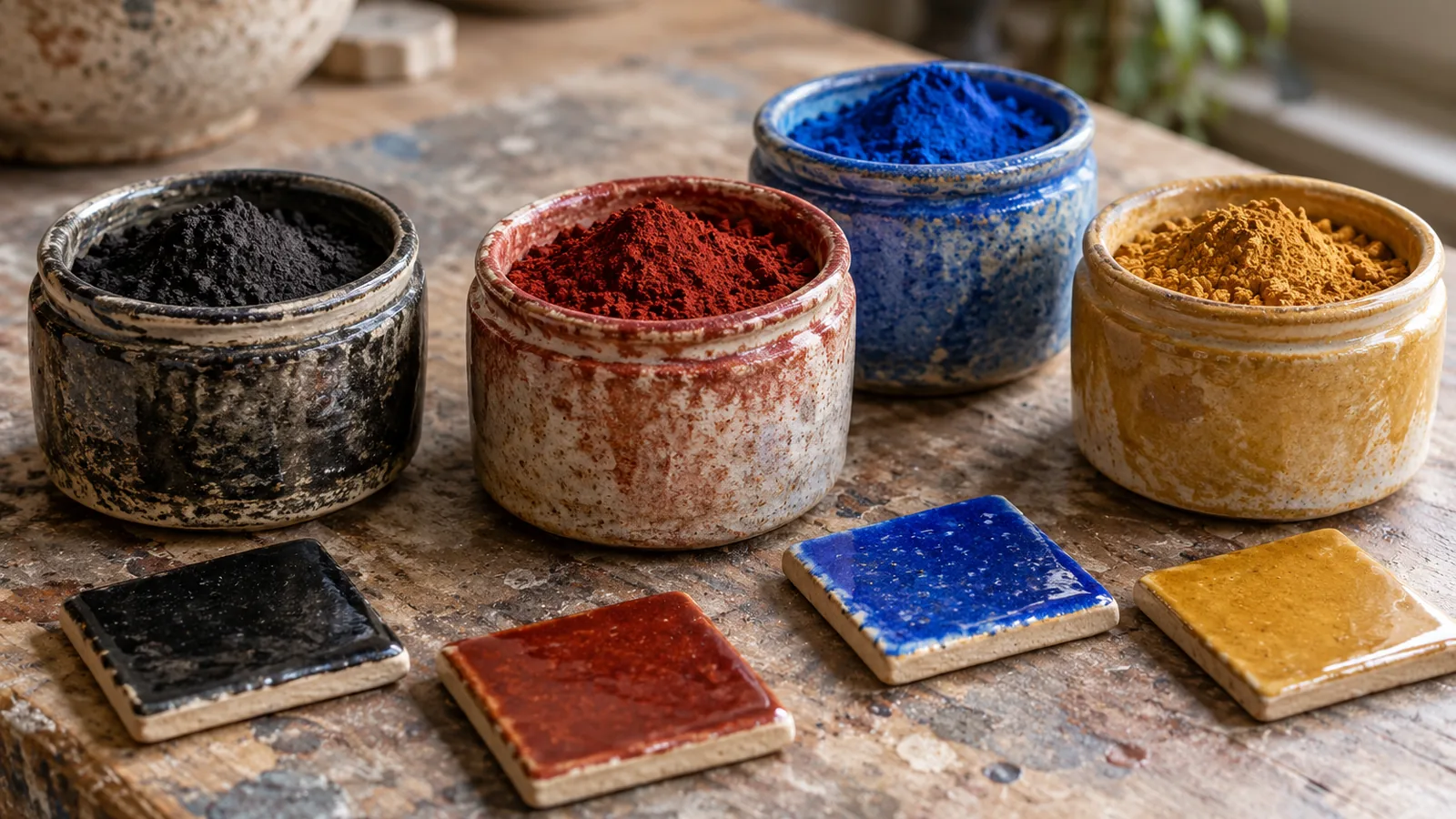
Penguin Pottery Black Ceramic Stain is the Best Overall pick for a studio that needs one stain for clay, slip, glaze, and underglaze. For black alternatives, consider Degussa Ebony Black Ceramic Stain or Blackest Black Jet Black Ceramic Stain; for green, Degussa Midnight Green Ceramic Stain. For red, pink, and yellow, the shortlist includes Degussa Crimson Red Ceramic Stain, Vermilion Red Ceramic Stain, Punch Pink Ceramic Stain, and Pasler Yellow Ceramic Stain. For blue, consider Cobalt Blue Ceramic Stain or Degussa Arctic Blue Ceramic Stain.
Choose by the medium you’re coloring and your kiln’s firing range, since each stain has its own suitable uses and temperature limits. Starting amounts vary: use 10% to 20% stain in clay and 1% to 10% in glaze, then test small batches and adjust.
Test batches help tune the color to your clay or glaze before you use a stain on a full piece.
The comparison table covers each stain’s firing range, suitable uses, and color.
Our top picks for ceramic stains for pottery
- Best Overall: Penguin Pottery Black Ceramic Stain, for potters coloring clay, slip, or glaze black
- Best Black Body Stain: Degussa Ebony Black Ceramic Stain, for potters working in porcelain, earthenware, or stoneware who want a powder black stain
- Best for Red Pottery: Degussa Crimson Red Ceramic Stain, for hobby and studio potters who want a vivid red underglaze or stain
How to Choose Ceramic Stains for Your Pottery
The best ceramic stains for pottery depend on what you’re coloring and how you fire it, so start with the medium.
Where the Stain Will Go: Glaze, Clay Body, Slip, or Underglaze
Each medium takes stain at a different rate, so decide this before you buy.
- Clay body: Mason stain is added to clay at a set ratio.
- Glaze: Glaze batches take stain by dry weight.
- Slip: Slip takes stain by wet weight.
- Underglaze: Choose a stain labeled for underglaze work, since the dosing rules above are for clay, glaze, and slip. For a dark glaze, the Degussa Ebony Black Ceramic Stain is a good example to start with.
Starting Percentages for Glaze, Clay, and Slip
Start at the low end of each range and adjust from there.
- Clay: 10% to 20% stain added to the clay.
- Glaze: 1% to 10% of the batch by dry weight, on a base with 12% to 15% calcium carbonate and no zinc.
- Glaze with opacifier: Stain plus opacifier should total 15% of the batch.
- Slip: 5% to 10% stain by weight of wet slip.
Final percentages come from testing, so mix small test batches across the range and keep the one that gives you the color you want.
Firing Temperature and Cone Range
Match the stain’s rated range to the temperature you actually fire to.
- Firing band: Pick a stain rated for low, mid, or high fire, based on the kiln schedule you use.
- Cone range: Read the cone range on the label and compare it with your kiln’s peak firing.
- Common mistake: Buying a stain for one cone range and then firing a few cones hotter or cooler, which can change the color.
Lead Status and Food-Contact Claims
Food safety depends on the finished glaze, not the stain alone.
- Cadmium: The restriction that applies here is for cadmium.
- FDA limits: The US FDA sets leaching limits for lead and cadmium through Compliance Policy Guides.
- Red and yellow glazes: Cadmium and selenium together produce red and yellow glaze colors.
- ISO lip-area limits: ISO 6486-1:2019 sets a lip-area limit of 4.0 mg/L for lead and 0.4 mg/L for cadmium.
One study reports a 0.3 mg/L limit with no sample exceeding it, while the ISO figure is 0.4 mg/L. Treat the finished glaze as the basis for food-contact decisions. A stain that’s safe in one glaze can behave differently in another, so judge food-contact use by the finished glaze and firing.
Form, Package Size, and Dust Control
Form changes how you mix the stain and how much dust you make.
- Powder: Powders have to be mixed into a base or water before use, and they throw dust while you weigh them.
- Liquid or pre-mixed: Less dust, but you still need to measure the dose carefully.
- Package size: Buy a small package first, since test batches use very little stain.
- Dust control: Weigh powders in a draft-free spot, mix them wet, and wear a dust mask.
| Penguin Pottery Black Ceramic Stain |  | Best Overall | Firing range: Low, mid, high fire; max 1260°C | Suitable uses: Clay, glaze, slip, underglaze | Color: Black | VIEW LATEST PRICE | Read Our Analysis |
| Degussa Ebony Black Ceramic Stain |  | Best Black Body Stain | Firing range: 890-1300°C (1640-2380°F), up to Cone 9 (undated) | Suitable uses: Clay bodies, in-glazes, underglazes, onglazes (undated) | Color: Black | VIEW LATEST PRICE | Read Our Analysis |
| Degussa Crimson Red Ceramic Stain |  | Best for Red Pottery | Firing range: 890–1300 °C (up to cone 9) | Suitable uses: Underglaze decoration (mixed with water) | Color: Red (crimson) | VIEW LATEST PRICE | Read Our Analysis |
| Degussa Midnight Green Ceramic Stain |  | Best Cone 9 Green | Firing range: 900-1300°C (up to cone 9) | Suitable uses: Glazes, slips, clay | Color: Midnight Green (code 004C54) | VIEW LATEST PRICE | Read Our Analysis |
| Pasler Yellow Ceramic Stain |  | Best for Yellow Slip | Firing range: Cone 06–10 (999–1,305°C) | Suitable uses: Glaze, clay, slip, underglaze | Color: Yellow (PUS002-YELLOW) | VIEW LATEST PRICE | Read Our Analysis |
| Blackest Black Jet Black Ceramic Stain |  | Best Deep Black | Firing range: Up to 1250°C (2270°F), 2026 listing | Suitable uses: Underglaze, colored glazes, colored slips | Color: Black (jet black) | VIEW LATEST PRICE | Read Our Analysis |
| Cobalt Blue Ceramic Stain |  | Best Blue Test Batch | Firing range: Up to 1250°C (2270°F) | Suitable uses: Ceramic surfaces; crafts use | Color: Blue | VIEW LATEST PRICE | Read Our Analysis |
| Degussa Arctic Blue Ceramic Stain |  | Best High-Fire Blue | Firing range: 890–1300°C (up to Cone 9) | Suitable uses: Earthenware, stoneware | Color: Blue | VIEW LATEST PRICE | Read Our Analysis |
| Vermilion Red Ceramic Stain |  | Best Red for Mixing | Firing range: 1020–1300°C (manufacturer; 2026) | Suitable uses: Glazes, slips, clay, underglaze | Color: Vermilion red / cinnabar | VIEW LATEST PRICE | Read Our Analysis |
| Punch Pink Ceramic Stain |  | Best Pink for Slips | Firing range: 890–1160°C | Suitable uses: Glazes, slips, underglazes | Color: Punch Pink | VIEW LATEST PRICE | Read Our Analysis |
More Details on Our Top Picks
Penguin Pottery Black Ceramic Stain
Potters coloring clay, slip, and glazes black need one stain that covers all three. This all-round pick works on clay, clay slip, glazes, and underglazes, so one package can cover the whole studio. It fires 2300°F (1260°C) maximum in low, mid, and high fire. For glaze, start at 2 to 15 percent stain and adjust from there.
Stains can be combined, so you can mix new shades when black alone falls short. One user described the black as cool-toned, but one potter reported pieces did not stay black under a different glaze.
What to check: Fire a test tile in your own clay body before coloring a full batch.
Pros: Potter reported using the stain beneath satin and gloss glaze without issues (2024) · One pottery post showed Penguin Pottery stain used on colored clay and slip (2025).
Cons: One potter said black pieces did not stay black under a different glaze (2024) · One user said buff clay made the result look more cream than stark white (2024).
Skip it if: you want stark white on buff clay; the result may look cream-colored.
- Firing range:Low, mid, high fire; max 1260°C
- Suitable uses:Clay, glaze, slip, underglaze
- Color:Black
- Package size:6 fluid ounces
- Form:—
- Lead status:—
Degussa Ebony Black Ceramic Stain
This powder suits potters working in porcelain, earthenware, or stoneware who need a black body stain. It’s listed for clay bodies, in-glazes, underglazes, and onglazes. The key number is 890–1100°C firing range, which gives a concrete guide for clay and glaze work.
Since it’s a dry powder, you add it straight into your clay body or glaze. The 40 g package is small, and the colors run strong, so less powder per batch. One 2023 owner review reports the stain turned gray after firing over 1080°C, and that reviewer switched to a different black for a deep black.
What to check: Fire a test tile at 1100°C and at 1300°C to see where your color holds.
Skip it if: you need black to remain deep above 1080°C; it may fire gray.
- Firing range:890-1300°C (1640-2380°F), up to Cone 9 (undated)
- Suitable uses:Clay bodies, in-glazes, underglazes, onglazes (undated)
- Color:Black
- Package size:40 g (1.41 oz)
- Form:Powder
- Lead status:Lead-free (listing claim, undated)
Degussa Crimson Red Ceramic Stain
Potters decorating red pottery in earthenware, stoneware, or porcelain at cone 6 to 9 get a hard-to-match red. This 20 g (0.71 oz) jar of fine powder mixes with water before use.
You mix the powder with water, so it works as a liquid underglaze. A 2003 Clayart poster called the red under clear glaze very intense and said it did not fire off. Keep this red on decorative surfaces until you settle that question for your own work.
What to check: Match the jar’s model number to your target cone before you mix a batch.
Skip it if: you need cadmium-free red for food-contact dishes; these reds contain cadmium.
- Firing range:890–1300 °C (up to cone 9)
- Suitable uses:Underglaze decoration (mixed with water)
- Color:Red (crimson)
- Package size:20 g (0.71 oz)
- Form:Powder
- Lead status:Lead-free, labeled food-safe
Degussa Midnight Green Ceramic Stain
Unlike the Degussa Ebony Black, this green suits cone 9 potters who want a lead-free powder. The manufacturer states it is suitable for food use, and the color code is 004C54.
You add the powder directly to your glaze, slip, or clay body. This 10 g (0.35 oz) bag suits small test batches, so a full studio glaze run will likely need more than one bag. Keep the 004C54 code on your label so you can match the green in later batches.
Skip it if: you’re preparing a large glaze batch; this 10 g bag may not provide enough stain.
- Firing range:900-1300°C (up to cone 9)
- Suitable uses:Glazes, slips, clay
- Color:Midnight Green (code 004C54)
- Package size:10 g (0.35 oz)
- Form:Powder
- Lead status:Lead free (food use stated)
Pasler Yellow Ceramic Stain
Potters coloring slip yellow will find Pasler Yellow Ceramic Stain suited to that mix. It’s a 60 g yellow pigment powder for clay, slip, glaze, and underglaze, mixed into a ceramic base rather than used as a ready-to-use glaze. Its firing range is cone 06–10 (999–1,305°C), covering low-fire through cone 10 work.
You can blend the powder into slip or another ceramic base to build a custom color. One owner reported using it in colored slip fired to cone 6 on white stoneware. That gives you a specific reference point for slip, though feedback centers on a single reported use.
The yellow stain is identified as PUS002-YELLOW, and the 60 g package is a single-color amount.
Pros: Owner reported it worked for coloring slip at cone 6 on white stoneware (2025) · Listing describes use across clay, slip, glaze, and underglaze (2026) · Powder form suits mixing into custom ceramic recipes.
Cons: Owner feedback is sparse; one reviewer reported experience (2025) · The independent review says to test-fire before committing a full piece (2026).
Skip it if: you want yellow glaze ready to apply, rather than pigment powder to mix into a ceramic base.
- Firing range:Cone 06–10 (999–1,305°C)
- Suitable uses:Glaze, clay, slip, underglaze
- Color:Yellow (PUS002-YELLOW)
- Package size:60 g
- Form:Pigment powder
- Lead status:—
Blackest Black Jet Black Ceramic Stain
Buyers note color matched photos; potters seeking deep-black decoration get a flexible powder for small batches. Mix the powder with water for underglaze work on greenware or bisque, or add it to glaze or slip.
The product is also listed as lead-free, with 0% lead. The 10 g pack suits test batches.
Pros: A manufacturer-site review from 2019 called it an amazing pottery glaze product · An eBay buyer reported prompt arrival (date not shown).
Cons: No owner-reported weaknesses found in the sources reviewed.
Skip it if: you need a larger quantity than the 10 g test-size pack.
- Firing range:Up to 1250°C (2270°F), 2026 listing
- Suitable uses:Underglaze, colored glazes, colored slips
- Color:Black (jet black)
- Package size:0.35 oz (10 g)
- Form:Powder
- Lead status:Lead-free, 0% lead content
Cobalt Blue Ceramic Stain
For hobby potters making small blue test batches, this 25 g powder suits earthenware, stoneware, or porcelain. It’s made in Germany, comes in a flat finish, and is listed for ceramic surfaces and crafts use. Its small amount makes it a practical size for a test batch, while the listed high coverage may help it go further across ceramic work.
Use the powder as a ceramic stain for craft surfaces, with a firing limit suited to many earthenware, stoneware, and porcelain projects. The 25 g package is compact for small studio use, and the flat finish keeps the stated surface result clear. Owner feedback is thin: one 2019 retailer review called it a strong pottery glaze product, but didn’t give a package size. That review offers little guidance on this specific 25 g batch, so its strongest point is the stated firing limit and lead-free pigment.
Cons: No owner complaints about this 25 g size were found in the sources read.
Skip it if: your work fires above 1250°C.
- Firing range:Up to 1250°C (2270°F)
- Suitable uses:Ceramic surfaces; crafts use
- Color:Blue
- Package size:25 g (0.88 oz)
- Form:Powder
- Lead status:Lead-free, 0% lead content
Degussa Arctic Blue Ceramic Stain
Potters coloring earthenware, stoneware, or porcelain at high temperatures will value this blue stain’s broad firing span. Degussa Arctic Blue Ceramic Stain is a lead-free powder in Arctic blue, color 046, made for those ceramic types. The 0.35 oz package gives you a compact amount for studio use.
The powder form can be incorporated into a ceramic recipe, and its lead-free declaration is identified as food-safe. Its 0.35 oz package may be limiting if you need to color a large production batch. The lower firing limit is 890°C, so this stain won’t suit firings below that temperature.
Skip it if: your firing temperature is below 890°C.
- Firing range:890–1300°C (up to Cone 9)
- Suitable uses:Earthenware, stoneware
- Color:Blue
- Package size:0.35 oz
- Form:Powder
- Lead status:Lead-free
Vermilion Red Ceramic Stain
Vermilion Red Ceramic Stain is a powder pigment for glaze, slip, clay, and underglaze. Mason stain is generally added to glazes at 1% to 10% of the glaze batch by dry weight. For potters comparing the best ceramic stains for pottery, its 10 g package offers a small amount for color trials.
It’s declared lead-free, with 0% lead.
Mix the powder into a suitable medium before applying it, or dilute it for brushwork. It can color slips and clay bodies, while a clear gloss or matte glaze is recommended after decorating. The powder form lets you work it into different media, and the glaze guidance gives you a starting concentration.
The firing figures conflict: the manufacturer range reaches 1300°C, while another stated limit is 1250°C.
Skip it if: your firing schedule exceeds 1250°C and you need a stated firing limit above that temperature.
- Firing range:1020–1300°C (manufacturer; 2026)
- Suitable uses:Glazes, slips, clay, underglaze
- Color:Vermilion red / cinnabar
- Package size:10 g (0.35 oz)
- Form:Powder
- Lead status:Lead-free, 0%
Punch Pink Ceramic Stain
Potters coloring slips, underglazes, or glazes who want a pink option will find Punch Pink especially suited to slip work. It’s commonly used in engobes and slips as a coating, and can tint porcelain for neriage. For underglaze use, it can go on greenware, earthenware, or bisque.
Mix about 2 parts powder with 1 part water medium; for glaze, the typical concentration is 1–10% stain. That package size may be limiting if you’re tinting a large amount of clay or glaze. Its stated firing interval tops out at 1160°C, making it a fit for work within that range.
Skip it if: your clay or glaze batch requires more than 10 g of stain.
- Firing range:890–1160°C
- Suitable uses:Glazes, slips, underglazes
- Color:Punch Pink
- Package size:10 g
- Form:Powder
- Lead status:Lead-free, 0%
Ceramic Stains for Pottery: Key Specs Side by Side
Here is how the 10 picks line up on firing range, suitable uses, color, package size and form. Cells marked with a dash are specs the maker leaves out of its listing.
| Pick | Firing range | Suitable uses | Color | Package size | Form |
|---|---|---|---|---|---|
| Penguin Pottery Black Ceramic Stain | Low, mid, high fire; max 1260°C | Clay, glaze, slip, underglaze | Black | 6 fluid ounces | — |
| Degussa Ebony Black Ceramic Stain | 890-1300°C (1640-2380°F), up to Cone 9 (undated) | Clay bodies, in-glazes, underglazes, onglazes (undated) | Black | 40 g (1.41 oz) | Powder |
| Degussa Crimson Red Ceramic Stain | 890–1300 °C (up to cone 9) | Underglaze decoration (mixed with water) | Red (crimson) | 20 g (0.71 oz) | Powder |
| Degussa Midnight Green Ceramic Stain | 900-1300°C (up to cone 9) | Glazes, slips, clay | Midnight Green (code 004C54) | 10 g (0.35 oz) | Powder |
| Pasler Yellow Ceramic Stain | Cone 06–10 (999–1,305°C) | Glaze, clay, slip, underglaze | Yellow (PUS002-YELLOW) | 60 g | Pigment powder |
| Blackest Black Jet Black Ceramic Stain | Up to 1250°C (2270°F), 2026 listing | Underglaze, colored glazes, colored slips | Black (jet black) | 0.35 oz (10 g) | Powder |
| Cobalt Blue Ceramic Stain | Up to 1250°C (2270°F) | Ceramic surfaces; crafts use | Blue | 25 g (0.88 oz) | Powder |
| Degussa Arctic Blue Ceramic Stain | 890–1300°C (up to Cone 9) | Earthenware, stoneware | Blue | 0.35 oz | Powder |
| Vermilion Red Ceramic Stain | 1020–1300°C (manufacturer; 2026) | Glazes, slips, clay, underglaze | Vermilion red / cinnabar | 10 g (0.35 oz) | Powder |
| Punch Pink Ceramic Stain | 890–1160°C | Glazes, slips, underglazes | Punch Pink | 10 g | Powder |
Frequently Asked Questions
Why did my fired ceramic stain look different from the color chart?
Your fired color can shift because the stain’s result depends on the clay or glaze base and the firing temperature. Test the stain in your own medium and kiln range, since a color that works in one glaze can behave differently in another. Start with small batches, then adjust the stain percentage.
Why did my pink ceramic stain turn gray or fade?
Pink stain can turn gray or lose color when the firing conditions or glaze affect its color response. Test it in the clay or glaze you plan to use and fire it to your usual temperature; color results can vary with the medium and firing range. Red and yellow ceramic colors can involve cadmium and selenium.
Can I mix ceramic stains with water, or do I need a glaze base?
Yes, you can mix stain powder with water for an underglaze or decorative application, but glaze coloring requires adding stain to a glaze base. For glaze, a common starting point is 1% to 10% stain by dry batch weight, with a base containing 12% to 15% calcium carbonate and no zinc.
Which ceramic stains work best for nerikomi or marbled clay?
For nerikomi, choose a stain suited to coloring clay and start with a 10% to 20% stain-to-clay ratio. Test a small batch in your clay body and firing range, since the final percentage should be set by the color you get after firing.
How should I test a ceramic stain before using it on a finished piece?
Make small test batches in the same clay, slip, or glaze you plan to use, then fire them to your usual kiln temperature. For clay, start at 10% to 20% stain; for glaze, start at 1% to 10% by dry weight. Compare the fired tests before coloring a finished piece.
Conclusion
Choose your stain by the material you’re coloring first, then match its firing range to your kiln. For food-contact pieces, judge the finished glaze rather than relying on a stain label alone. Start with a small test batch in your clay, slip, or glaze, and fire a test tile on your usual schedule. Keep the recipe and firing notes with the result so you can repeat the color or adjust the mix for your next batch.
Sources
- About Mason Stains (goodearthclays.com)
- Ceramic Stains by Mason Color (seattlepotterysupply.com)
- USING MASON STAINS (freeformclay.com)
- FDA Ceramic Safety: Glaze Standards & Lead Limits (vancassotableware.com, 226 days ago)
- (PDF) High level leaching of heavy metals from colorful ceramic foodwares: a potential risk to human (researchgate.net, 3404 days ago)
- Lead & Cadmium Leaching in Ceramic Tableware: What B2B Buyers Need to Know – GC Porcelain (gcporcelain.com, 178 days ago)