Is Low Fire Pottery Food Safe to Use?
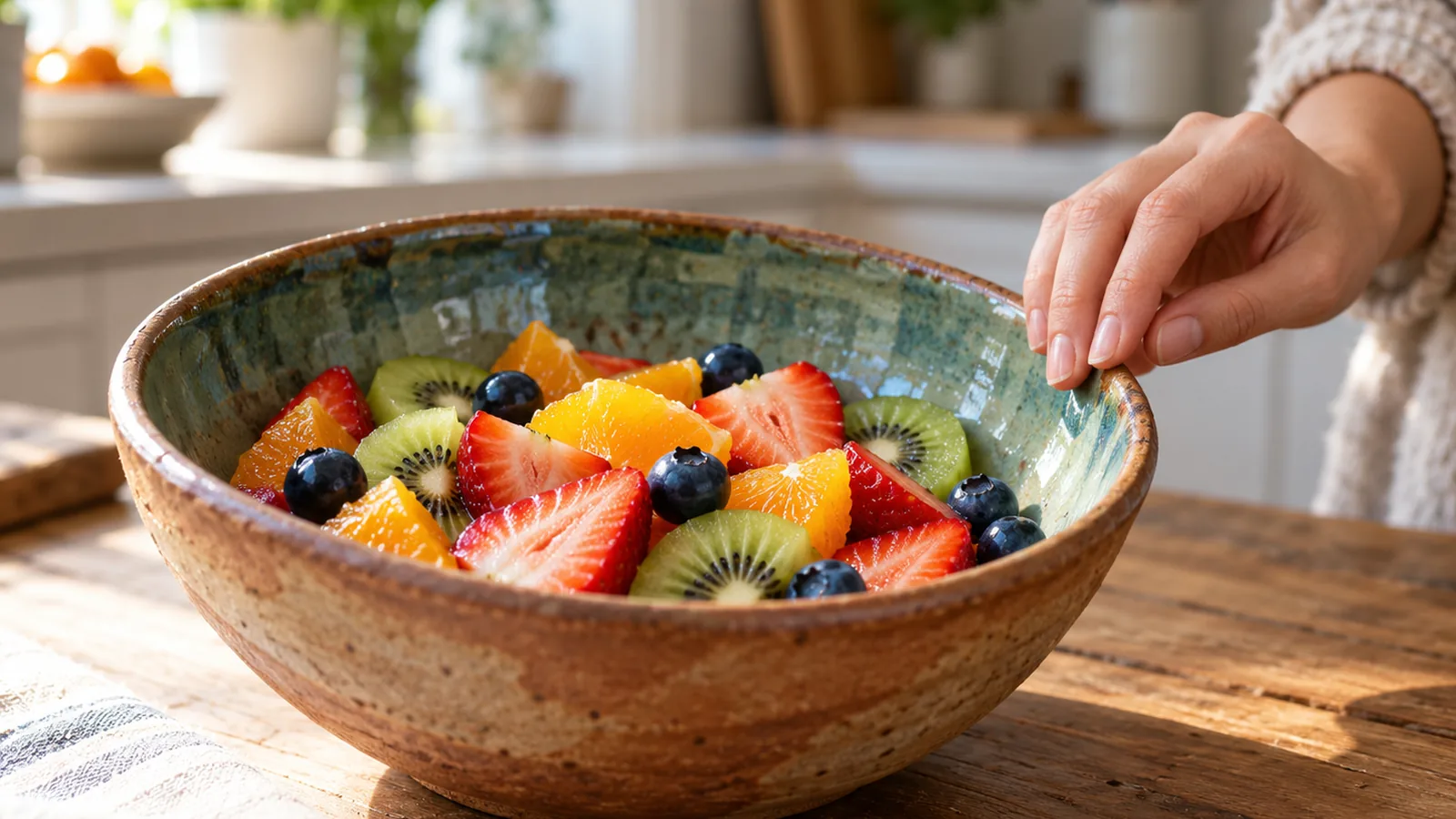
Low fire pottery can be food safe, but low firing alone isn’t proof of safety. The clay and glaze must be compatible and properly fired, leaving a continuous, stable surface for food contact. If the glaze is underfired, damaged, or unsuitable for the clay, don’t use the piece for food or drink.
Is low fire pottery food safe?
Quick answer: Yes, low-fire pottery can be safe for food and drink if the clay and glaze are compatible, properly fired, and leave a continuous, stable surface. Check the maker’s firing instructions and inspect the finished surface for cracks, chips, peeling, or other damage; don’t use a damaged or uncertain piece for food. For a smooth, non-matte glaze, a 24-hour vinegar check can screen for surface changes, but a pass doesn’t measure metal release or replace lab testing.
- Confirm the glaze’s clay compatibility and firing instructions.
- Keep pieces with cracked, chipped, peeling, or worn surfaces out of food use.
- If you use the vinegar screen, fill a glazed test cup halfway and leave it for 24 hours; reject it if the surface changes.
What risks affect low-fire pottery?
Metal migration is the main food-contact risk: lead or cadmium can move from glaze or decoration into food, and exposure may rise with surface damage, certain foods, or longer contact. Improper firing can also leave lead able to contaminate food.
| Risk | More likely when | What to know |
|---|---|---|
| Metal migration from glaze or decoration | The glaze or decoration contains lead or cadmium | These metals can migrate into food. |
| Increased metal migration | The surface is worn, cracked, or chipped; food is hot or acidic; contact lasts longer | These conditions can increase migration. |
| Lead contamination | Lead-glazed pottery is fired at the wrong temperature or for too little time | Proper firing binds lead in the glaze; improper firing may allow contamination. |
Surface condition matters: chips and cracks can increase migration, so avoid food use if the food-contact surface is damaged. Hot or acidic foods and longer contact can raise migration too; take extra care with those uses, especially when the surface is worn.
Firing conditions matter for lead-glazed pottery because proper temperature and time bind lead in the glaze, while improper firing may leave lead able to contaminate food. This concern applies to lead-glazed ware; it doesn’t mean every low-fire piece contains lead. Follow the maker’s firing instructions for the glaze and clay. A food-safe label doesn’t replace those instructions.
How does glaze maturity affect food safety?
How glaze maturity affects food safety
Earthenware remains porous after firing, and glaze forms a glass-like coating that seals its pores. For the finished surface to serve as a food-contact barrier, the glaze must be compatible with the clay and properly matured.
Maturity depends on the firing conditions, not just the glaze label. The firing temperature and duration affect how well the glaze bonds to the clay, so follow the glaze maker’s directions for compatible clay and firing. A glaze marked food-safe still needs to be fired as specified; the label alone can’t establish that the finished piece has a stable, well-bonded surface.
The FDA says lead in lead-glazed pottery is essentially bound in the glaze when the pottery is fired at the proper temperature for the proper time. If firing conditions are wrong, lead may contaminate food. This makes correct firing part of food safety, even when the glaze is intended for food-contact use.
Warning
A food-safe glaze label does not make an underfired or improperly fired piece safe for food use; follow the maker’s firing instructions for the clay and glaze combination.
If you can’t confirm that the glaze was fired as directed, the label alone isn’t enough to establish that the piece is food safe.
Which glaze and surface defects matter?
Glaze and surface defects matter because they can weaken the food-contact surface or allow metals to migrate into food. A glaze’s final behavior depends on firing temperature and duration, kiln location, atmosphere, cooling rate, and how you apply it.
If the clay and glaze are incompatible, the glaze may craze, forming a network of fine cracks, or peel away from the clay. Those defects mean the surface is no longer sound. Metal migration can also increase from worn, cracked, or chipped surfaces, especially with hot or acidic foods and longer contact.
Food-contact suitability includes resistance to degradation from washing detergents, not just a surface that looks smooth after firing. Matte glazes need extra care on plates and bowls: metal utensils can abrade or mark them, so pottery guidance generally advises against matte finishes for those uses.
Warning
A glaze change can invalidate an earlier stability check: a new formulation or firing requires another check, and a formulation change may also call for new laboratory leach testing.
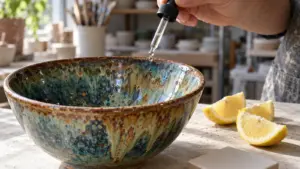
For a rough screen, test a smooth, non-matte glaze by filling a glazed test cup halfway with vinegar and leaving it for 24 hours; reject it for food-contact use if the surface turns cloudy or chalky, or otherwise changes in appearance or texture. A passing check does not measure metal release and cannot replace laboratory leach testing. Lab testing should match the actual glaze formulation and firing, and the materials in the glaze need to be known to request relevant tests.
Check a piece before using it
Before using a low-fire piece for food or drink, verify its materials and firing, then inspect and screen the finished surface.
- Check maker’s instructions: Confirm the glaze is intended for food contact and follow its stated clay-compatibility and firing instructions. If the maker says an underglaze must be sealed, cover it with a clear glaze rated for that clay body and firing range.
- Inspect the surface: Look for a continuous, sound glaze with no cracks, chips, peeling, or other breaks. A sound appearance is part of the check, but it can’t establish that metals won’t migrate into food.
- Consider washing and use: Food-contact suitability includes resistance to washing detergents. For plates or bowls used with metal utensils, avoid matte glazes because utensils can abrade or mark them.
- Try a rough vinegar screen: For a smooth, non-matte glaze, half-fill a glazed test cup with vinegar and leave it for 24 hours. If the surface changes in appearance or texture, such as turning cloudy or chalky, don’t use it for food contact.
- A pass isn’t a safety test: The vinegar screen doesn’t measure metal release. Reliable leach testing must match the glaze formulation and firing; testing can also depend on knowing which materials in the glaze need to be checked.
- Reassess after changes: If you change the glaze formulation or firing, the earlier vinegar check no longer establishes stability. Repeat the screen, and consider new laboratory leach testing when the formulation changes.
A test cup made with the same glaze and fired alongside a pyrometric cone pack can help match lab testing to the actual firing.
Frequently Asked Questions
Can low-fire pottery go in a microwave or oven?
The provided guidance doesn’t establish microwave or oven safety, so a food-safe glaze rating alone doesn’t show that the finished piece can handle either appliance. Check the maker’s instructions for the specific clay-and-glaze combination, and use the piece only for the heating methods those instructions permit.
Is a vinegar test enough to prove pottery is food safe?
No. A vinegar test is only a rough screen and doesn’t measure metal release. A pass doesn’t replace lab testing.
Should low-fire pottery be tested in a lab before use or sale?
Lab testing is the strongest way to check for metal release when you need that evidence, especially before sale, but the test must match the glaze formulation and firing. A test cup made with the same glaze and fired beside a pyrometric cone pack can help match the test to the actual firing.
Are low-fire underglazes food safe without a clear glaze?
An underglaze isn’t automatically established as a food-contact surface; follow its maker’s instructions. If the maker requires a seal, cover it with a clear glaze compatible with the clay body and firing range, then confirm the finished surface is properly fired and continuous.
How should I clean and care for food-safe low-fire pottery?
Wash it in a way that won’t degrade the glaze, since resistance to washing detergents is part of food-contact suitability. Stop using a piece for food if its glazed surface becomes chipped, cracked, or worn, because those defects can increase metal migration, especially with hot or acidic foods.
Conclusion
If you can confirm the clay and glaze are compatible, the glaze was fired as directed, and the finished surface is continuous and stable, use the piece as intended. If any of those points are uncertain, or you see cracks, chips, peeling, or surface changes, keep it out of food use. Check the maker’s instructions first; for added confidence, arrange leach testing that matches the glaze formulation and firing. A vinegar screen can flag visible changes, but it can’t measure metal release.
Sources
- greenwichhouse.org (greenwichhouse.org)
- canada.ca (canada.ca)
- Glaze Stability and Food Safety (ceramicartsnetwork.org)
- fda.gov (fda.gov)