What Age Can Kids Use a Pottery Wheel?
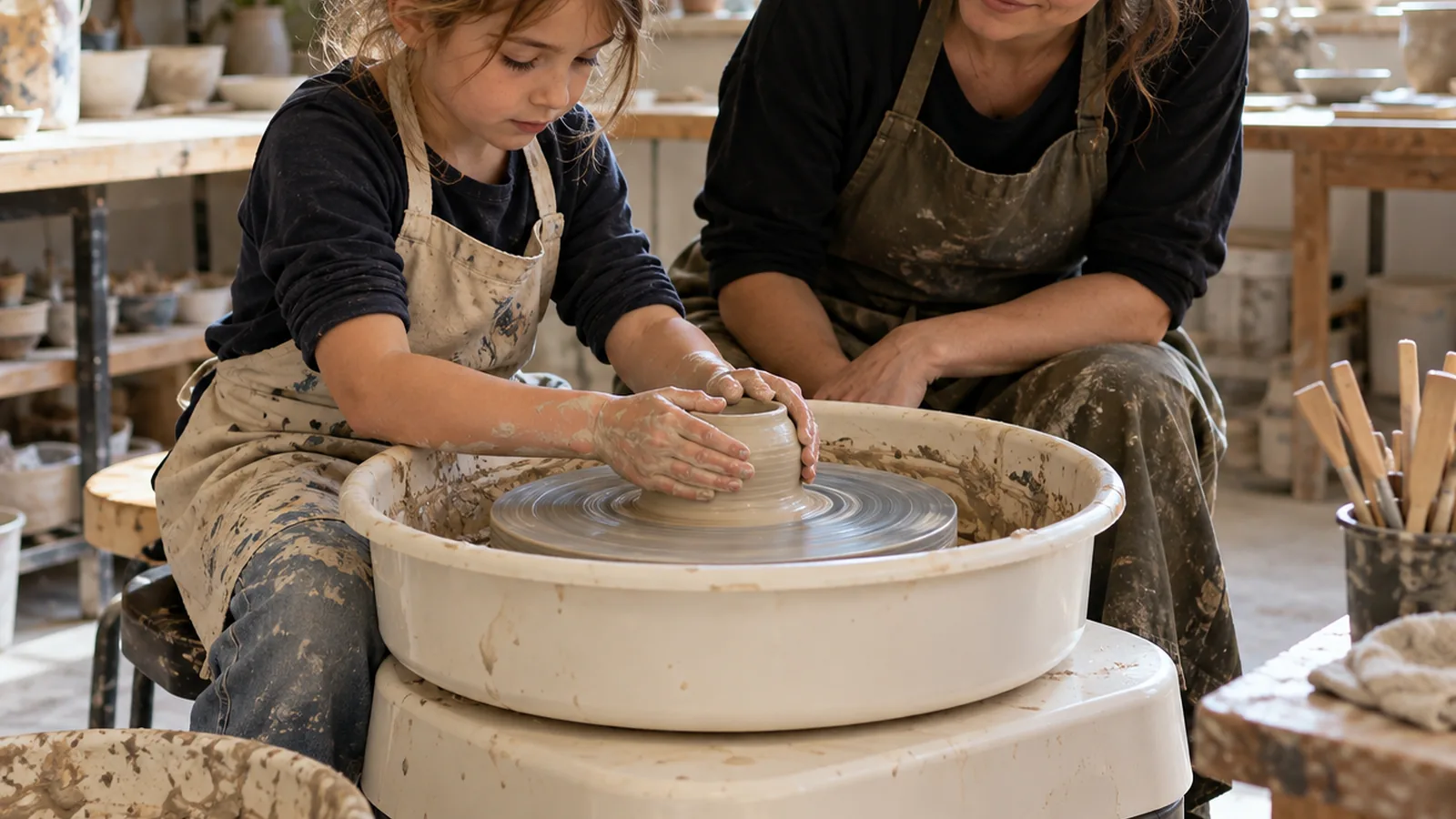
There’s no universal minimum age for using a pottery wheel; studio rules and product ratings vary. Readiness matters more than age: check that your child can sit steadily, reach and control the pedal, and follow instructions, with an adult supervising throughout.
What age can kids use a pottery wheel?
Quick answer: There’s no universal minimum age; some supervised studio wheel lessons accept children from age 5, while other programs set higher limits. Choose a session that allows your child’s age, then check that they can sit steadily, reach and control the pedal on a full-size electric wheel, and follow instructions. Stay with young children throughout, demonstrate the specific wheel’s controls, and follow the studio’s or product’s age and supervision rules.
- Before booking: Confirm the minimum age for the wheel-throwing session, not just the studio’s general children’s program.
- Before starting: Check fit and pedal control, demonstrate the wheel, and keep an adult present.
What skills show a child is ready?
Assess whether your child can sit steadily, reach and control the pedal, and follow instructions. These practical checks aren’t formal age milestones.
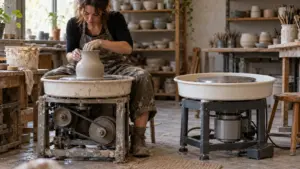
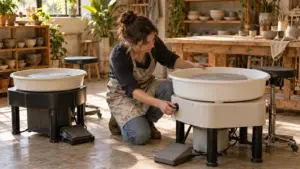
On a full-size electric wheel, check that your child can sit stably and reach and control the foot pedal; wheel height and pedal control affect fit. The pedal controls wheel speed on Skutt wheels, so an adult should demonstrate the specific wheel before use.
| Readiness check | What to assess |
|---|---|
| Seated position | Can your child sit stably? |
| Reach | Can your child reach the pedal from the wheel? |
| Pedal control | Can your child control the pedal after an adult demonstrates it? |
| Instruction-following | Can your child understand how the wheel works and follow safety precautions? |
Use these checks to decide whether your child can take part with close adult guidance, rather than treating an age label as proof of readiness. If your child can’t sit steadily, reach the pedal, or follow the instructor’s directions, wait and reassess later.
How does the wheel affect the right age?
The wheel affects fit and control, not a universal starting age: check whether the child can sit steadily and operate the specific wheel’s controls.
Because the pedal controls wheel speed, an adult should demonstrate how that particular wheel responds before the child uses it.
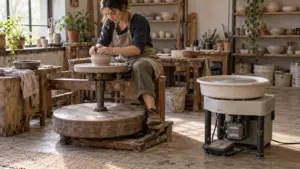
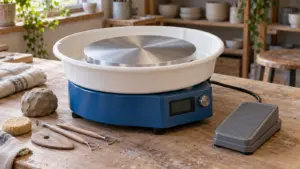
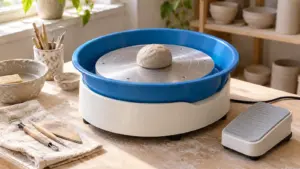
A child-size wheel isn’t automatically necessary: an adult pottery wheel may be used with appropriate instruction and supervision, and the reviewed guidance sets no age for moving to one. Small craft-kit wheels and adult pottery wheels are different products, so check the specific product’s age guidance and supervision instructions before buying or using it.
Product ratings apply to the named products, not to pottery wheels in general. Homespun’s mini pottery wheel and Faber-Castell’s pottery studio are both listed for ages 8 and up. Those details describe the products, but they don’t establish that every child of the listed age is ready to use a wheel.
Choose by the specific wheel’s controls and the child’s fit, then follow that product’s age and supervision guidance.
What supervision and safety do kids need?
Check the studio’s rules and supervise based on the child and the specific wheel. A program’s general age range may not apply to wheel throwing.
Stay with young children throughout the session, and don’t leave them to use a wheel alone. Before they start, demonstrate the controls on that wheel and explain how to operate it safely. On a full-size electric wheel, check that the child can sit stably and reach and control the foot pedal.
Keep the motor, control box, and foot pedal dry, and don’t let the child grab the wheel head while it’s running or operate the wheel in loose clothing. The CPSC flags possible skin and ergonomic injuries from throwing wheels, so children need to understand the tools and follow safety precautions.
- Stay nearby: Young children shouldn’t use a pottery wheel unsupervised.
- Show the controls: Demonstrate the specific wheel’s operation before use.
- Check the fit: On a full-size electric wheel, confirm stable seating and control of the foot pedal.
- Keep parts dry: Protect the motor, control box, and pedal from water.
- Avoid contact risks: Keep hands off the moving wheel head and loose clothing away from operation.
Treat a craft-kit wheel and an adult pottery wheel as different equipment: follow the particular product’s age guidance and supervision instructions. The supplied evidence doesn’t establish one age limit or a universal safety checklist for all pottery wheels, so follow the studio’s rules and the manual for the wheel being used.
How should a child start using a pottery wheel?
A child should start with an adult-supervised session on a wheel they can sit at and control. Choose a suitable program and check the specific wheel.
Choose a suitable session. Check the studio’s minimum age and confirm the session includes wheel throwing, since a studio’s general children’s program may have a different age range from its wheel classes. Age rules vary between programs and products.
Check the wheel before the session. For a full-size electric wheel, the child needs to sit stably and reach and control the foot pedal. A child doesn’t automatically need a child-size wheel, but fit and supervision matter.
Have an adult demonstrate the controls. On the Skutt wheel described in its manual, the foot pedal controls speed and holds its position when the user removes their foot. Since controls can depend on the wheel, the adult should demonstrate the specific wheel before the child uses it.
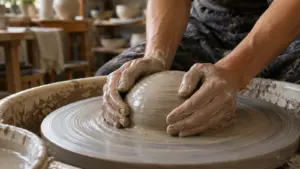
Keep an adult present and the area safe. Young children shouldn’t use a wheel unsupervised. Keep the motor, control box, and pedal dry, avoid loose clothing, and don’t grab the wheel head while it’s on.
Follow the session’s instruction before throwing. The supplied guidance doesn’t establish a first-session throwing sequence or specific clay-preparation steps. Have the instructor explain the wheel and tools, then guide the child through the activity; safe use calls for understanding how equipment operates and following precautions.
Frequently Asked Questions
What type of clay should kids use on a pottery wheel?
Use the clay specified by the wheel or instructor, since craft-kit wheels can have different requirements from full-size pottery wheels. Check the product instructions before choosing clay, and ask the studio instructor what clay to bring for a class.
How much does a pottery wheel for kids cost?
Prices vary by product, and the available product information doesn’t establish a typical cost. For studio use, ask whether the class fee includes wheel access and materials.
Should kids learn pottery at a studio or at home?
A studio is a practical place to start if you want an instructor to guide your child and help assess fit with the wheel. Studio age rules differ, and a general children’s program may not include wheel throwing. At home, stay with young children and follow the specific wheel’s instructions.
How do you clean a pottery wheel after kids use it?
Follow the wheel’s manual and keep its motor, control box, and foot pedal dry. Remove clay from the areas the manual permits using its recommended method; avoid spraying or pouring water over electrical parts. If you’re unsure how to clean a particular wheel, ask the studio instructor or manufacturer before wiping it down.
How long should a child use a pottery wheel at first?
Start with a short, adult-supervised session, then stop if your child loses focus or can’t follow directions. The available guidance doesn’t set a first-session time limit, so follow the instructor’s plan and the specific wheel’s safety instructions. Keep young children supervised throughout use.
Conclusion
If your child can sit steadily, reach and control the pedal, and follow directions, book a supervised session and ask the instructor to demonstrate that wheel’s controls. If any of those checks fail, choose a different setup or wait, then reassess later. Before the session, confirm that it includes wheel throwing, check the studio’s age rules, and follow the wheel’s instructions.
Sources
- Kid Classes | Iris & Stone Pottery Studio (irisstonepottery.com)
- curioartstudio.com (curioartstudio.com)
- nwpotterycollective.com (nwpotterycollective.com)
- northernclaycenter.org (northernclaycenter.org)
- thatpotteryplacepittsburgh.com (thatpotteryplacepittsburgh.com)
- homespunceramics.com (homespunceramics.com)
- fabercastell.com (fabercastell.com)
- schoolspecialty.com (schoolspecialty.com)
- dairybarn.org (dairybarn.org)
- skutt.com (skutt.com)
- cpsc.gov (cpsc.gov)
- theartofeducation.edu (theartofeducation.edu)
- thinkbluemarble.com (thinkbluemarble.com)
- soyouceramics.com (soyouceramics.com)